Analysis of the Results of Social Programs in the Southeast
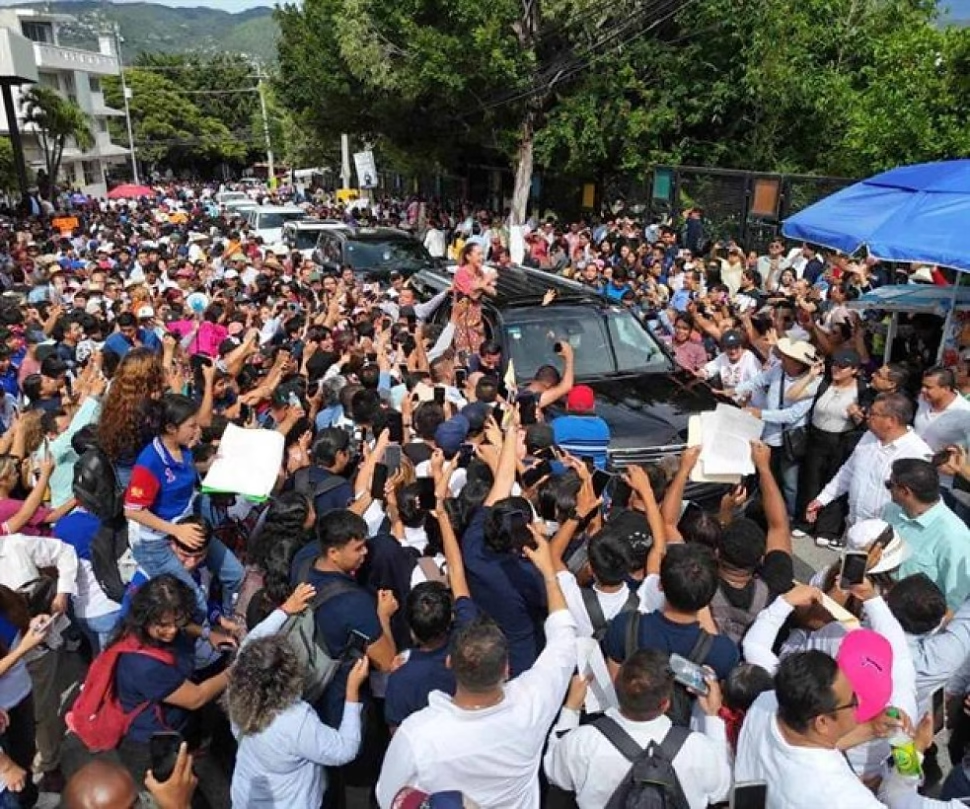
The President of Mexico, Claudia Sheinbaum Pardo, during her accountability tour through the southeast of the country, presented a detailed report on the impact of public policies implemented under the framework of the Fourth Transformation. From Villahermosa, Tabasco, the president presented quantitative data that, according to her administration, demonstrate a significant reduction in poverty rates and a substantial injection of resources through the various Welfare Programs.
The analysis of presidential statements indicates that in the state of Tabasco there has been a decrease in poverty of 22 percent in a period of six years. This statistical contraction is attributed, according to the official discourse, to two fundamental pillars: the sustained increase in the minimum wage and the direct distribution of economic support. The annual investment reported for these social assistance programs in the entity amounts to 21,261 million pesos, directly benefiting 739,579 people.
Breakdown of Social Investment and Strategic Projects
The report provides a meticulous breakdown of the distribution of these resources, offering an accurate view of the scope of each initiative. According to official data, in Tabasco, 213,316 older adults receive a pension; 25 thousand people with disabilities are beneficiaries of another support program; and 35,089 young people are enrolled in the Youth Building the Future program. Additionally, support for education is detailed, with 10,512 scholarships for higher education and 105,046 Benito Juárez scholarships for basic education.
In the productive sector, the figures indicate that 31,775 producers benefit from the Production for Well-being program and 30,78 receive free fertilizers. The Sembrando Vida program, focused on reforestation and rural development, has 52,685 participants in the entity. Other initiatives such as Milk for Wellbeing support 88,184 families, and Bienpesca support 15,958 fishermen. The School is Ours program has provided resources to 1,590 basic education schools and 116 high schools. A notable fact is the Women’s Welfare Pension, which reaches 53,592 Tabasco residents.
Beyond monetary transfers, the federal administration emphasized strategic infrastructure and economic development projects. The policy of purchasing cocoa at fair prices was highlighted for the production of “Wellbeing Chocolate”, distributed in a national network of 26 thousand stores. The future construction of a “Wellbeing Chocolate Factory” in the state was announced, with the stated objective of increasing local added value and improving the income of small producers. In terms of public works, crucial projects were listed such as the new Roberto Ayala-Dos Bocas branch of the Interoceanic Train, the modernization of the Port of Dos Bocas, the repaving of federal highways and the construction of the Macuspana-Escárcega highway.
Likewise, flood protection works were mentioned in the Grijalva and Usumacinta rivers, the expansion of higher secondary education schools, a new campus of the Rosario Castellanos National University and the replacement and equipment of general hospitals in Macuspana, Teapa and Cárdenas. The housing sector was also addressed, with the commitment to build 20 thousand homes through Conavi and 40 thousand more through Infonavit, along with the forgiveness of debts for 71 thousand 328 families.
Political Context and Future Projection
In her speech, President Sheinbaum addressed the political context, stating that the Fourth Transformation movement maintains its strength and roots in the population. He noted that, despite what he described as “slander” invented by political adversaries and business sectors opposed to the transformation agenda, citizen support for the project remains solid. This rhetoric establishes a clear dichotomy between a government that presents itself as a promoter of popular well-being and opponents characterized as defenders of previous privileges.
The tour of Campeche served to complement the panorama with specific data from that entity. There, 301,867 people are beneficiaries of social programs, with an annual investment estimated at 9,200 million pesos. The breakdowns for Campeche reflect a similar support structure, with pensions for older adults (79,451), people with disabilities (16,000), and a wide range of programs for youth, students, producers and fishermen, including the implementation of new initiatives such as the Women’s Wellbeing Pension, the Rita Cetina scholarship and the Casa por Casa Salud program.
In conclusion, the accountability tour of the Mexican southeast functions as a strategic communication mechanism to present numerical evidence of the deployment of social policy. The data presented seeks to support the narrative of a government that prioritizes social investment and infrastructure development as drivers for poverty reduction and regional economic reactivation. The long-term success of these policies will depend on their financial sustainability and their ability to generate permanent structural changes in the economy of beneficiary families.
Did you find these figures about social policy revealing?Share this analysis on your social networks to contribute to an informed conversation and explore more content related to the economic and social development of Mexico on our portal.