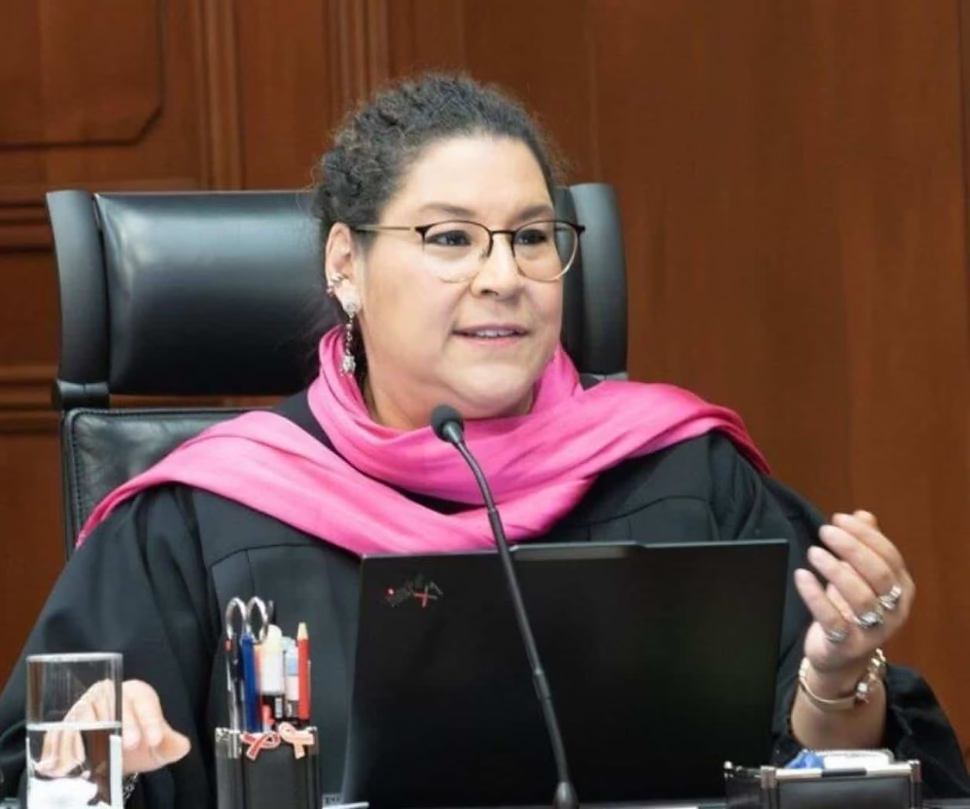
The justification of Lenia Batres
The Minister of the Supreme Court of Justice of the Nation (SCJN), Lenia Batres Guadarrama, defended her vote in favor of applying the Income Tax (ISR) to the resources of inherited retirement accounts. He argued that taxes are the only mechanism to achieve the redistribution of wealth.
“The only mechanism our world has to redistribute this wealth is the payment of taxes. That is why we consider it fair that taxes should be paid on inheritances and legacies,” he stated in a video column.
Batres cited OECD data: 24 countries charge an inheritance tax that represents 0.5% of total tax revenue. Of them, 21 apply it according to the degree of relationship and three directly tax the value of the deceased’s property.
The Court’s decision
The plenary session of the SCJN resolved by majority that the resources from individual retirement accounts should not pay ISR, considering that they are part of the assets generated during life by the worker. The original proposal of Minister Sara Irene Herrerías Guerra was withdrawn to develop a new project that protects the beneficiaries.
Batres recognized that the imposition of a tax is not the power of the High Court, but of the Congress of the Union. He insisted that inherited money does not come from the efforts of the recipient and called on the Court to promote social equity.
The minister pointed out that 50% of the world’s population owns less than 2% of the wealth, while 10% concentrates more than 76%. With his vote, he sought to move towards greater tax justice.