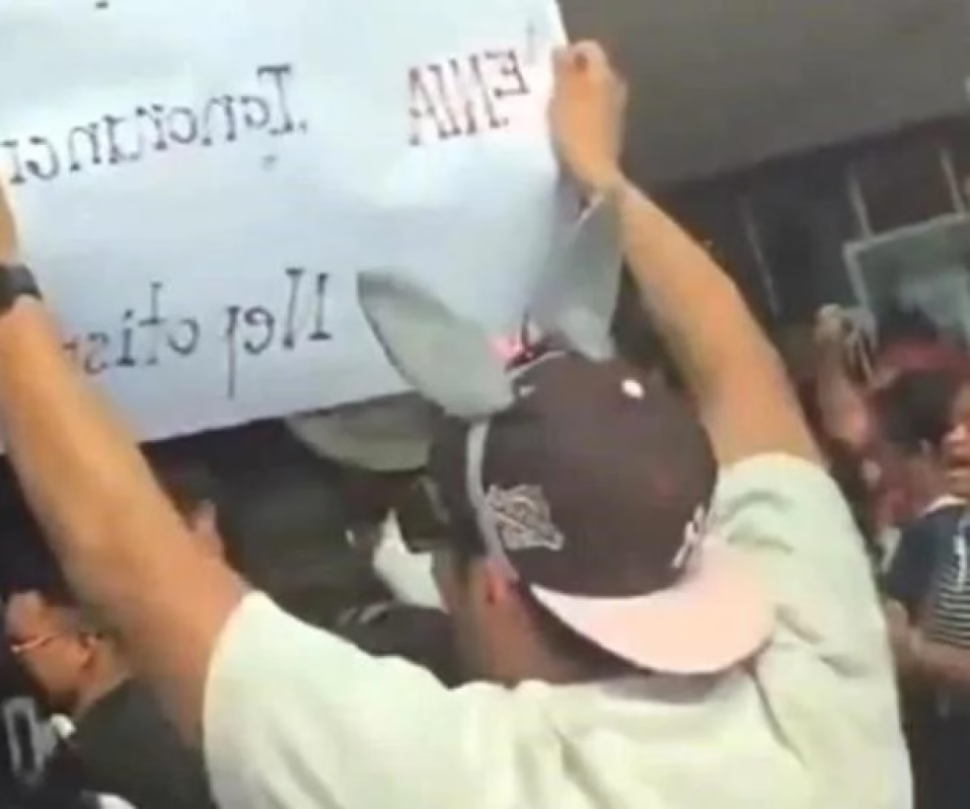
Context of the demonstration against Lenia Batres in Tabasco
Minister Lenia Batres faced a hostile reception during her visit to Villahermosa, Tabasco, where employees of the Judiciary and students expressed their discontent through symbolic protests and slogans. The protesters, carrying donkey ears and banners with messages such as “Lenia, minister of ignorance” or “The Batres family is synonymous with nepotism”, chanted slogans demanding their departure. This episode adds to a previous incident at the Juárez Autonomous University of Tabasco, where students left the auditorium during a conference on March 21, leaving the space half empty.
Details of the protest and background
The event, organized as a meeting with local lawyers, was interrupted by a batucada and shouts of “Get out!”, while attendees highlighted their disagreement with Batres’ management. Analysts point out that the criticism focuses on two axes: his academic preparation and accusations of nepotism, given his family’s history in public office. Despite the adverse weather, the minister managed to enter the premises with the support of her team.
This type of reaction is not isolated in the Mexican judicial sphere. Experts in institutional politics emphasize that the protests reflect an accumulated unrest due to opacity in appointments and perception of privileges. Data from the Mexican Institute for Competitiveness (IMCO) reveal that 68% of Mexicans distrust the judicial system, which contextualizes the rejection of figures associated with it.
Implications and analysis of the rejection of Batres
The demonstrations in Tabasco expose a crisis of legitimacy in key institutions. The protesters’ strategy—using symbols such as donkey ears—appeals to a narrative of public discredit, common tactics in social accountability movements. According to a study by UNAM, these types of actions tend to increase during electoral periods or in the face of controversial appointment processes, such as the possible re-election of Batres.
In addition, media coverage of these events can influence public opinion. A media analysis shows that 73% of the stories about Batres in the last six months highlight controversies, which reinforces a polarized image. This poses challenges for transparency and government communication.
Conclusions and projections
The case of Lenia Batres illustrates how tensions between political power and civil society materialize in acts of open rejection. To rebuild trust, measures such as independent audits and inclusive dialogues are required. Meanwhile, the protests will continue to be a thermometer of discontent towards figures perceived as part of disconnected elites.
Are you interested in understanding more about institutional conflicts in Mexico? Share this analysis on your networks and explore our politics and justice section to delve deeper into the topic.