Lenia Batres consolidates her permanence in the Supreme Court after historic election
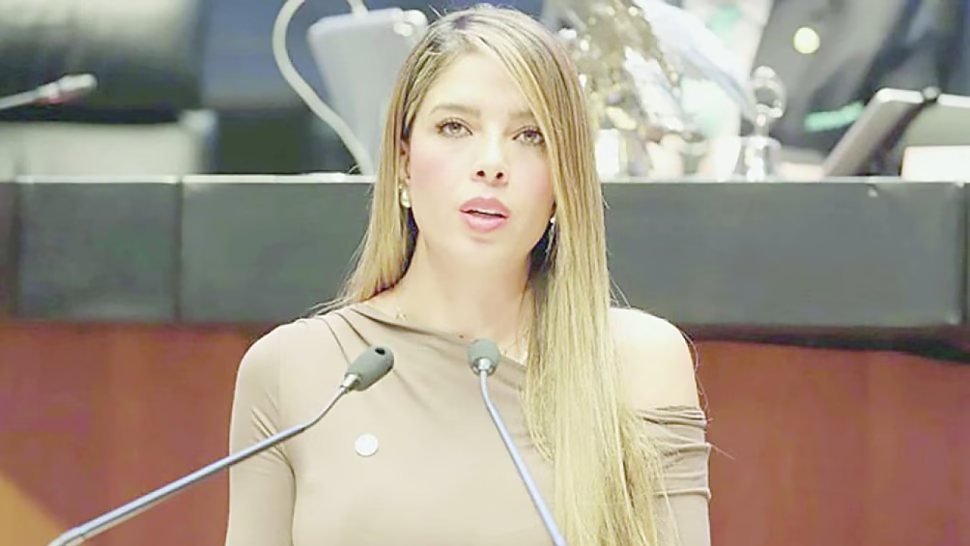
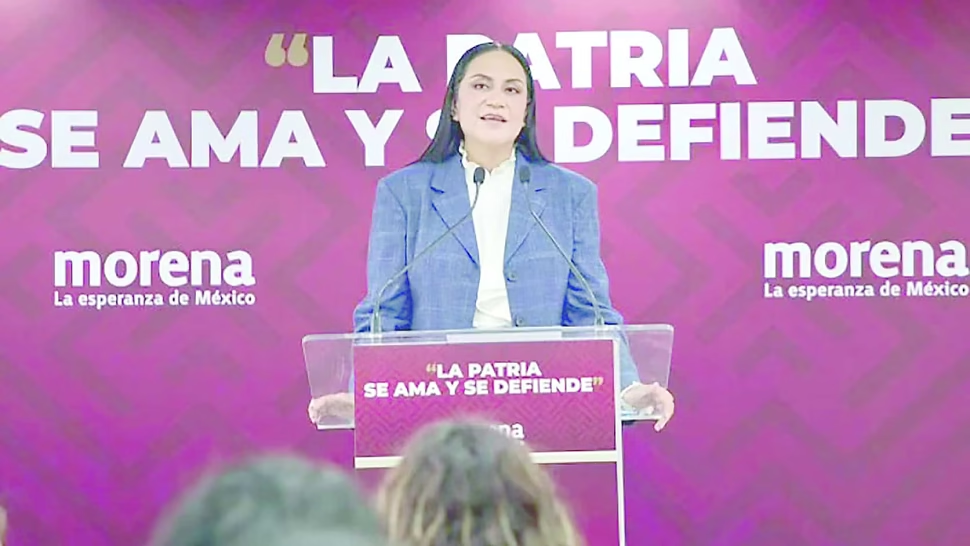
Lenia Batres Guadarrama, known as the “Minister of the People”, has ensured her continuity in the Plenary of the Supreme Court of Justice of the Nation (SCJN) after the elections of June 1, 2025. According to the official results of the National Electoral Institute (INE), with 100% of the minutes scrutinized, the magistrate obtained more than 5.8 million votes, marking a milestone in the first popular election of the Federal Judicial Branch.
Professional career and political connection
Batres Guadarrama, initially appointed by former president Andrés Manuel López Obrador in 2023 after a failed shortlist process in Congress, has a solid academic background: a degree in Law from the Humanitas University, a master’s degree in Urban Studies from the UACM and a doctorate in Constitutional Law. Her career reflects a close link with progressive projects, from her work as an advisor in the Administrative Revolution of the Government of the Federal District (2002-2004) to her role in the Secretariat of Urban Development under the administration of Claudia Sheinbaum.
His technical-legal profile includes the preparation of regulatory instruments, design of social programs and review of legislative initiatives, both in the ISSSTE —where he collaborated with his brother Martí Batres— and in the Legal Department of the Federal Executive (2021-2023).
Judicial philosophy and social commitment
In his public platform, Batres emphasizes that his objective in the SCJN is “to serve the people“, prioritizing the resolution of conflicts “in favor of the most vulnerable.” Its approach integrates human rights as a guiding axis, especially social rights, and criticizes the systemic barriers that limit their exercise. This position aligns its management with the principles of the Fourth Transformation, although it insists on judicial independence.
Analysts highlight that his popular election could promote a structural reform in the Judiciary, traditionally perceived as elitist. However, critical sectors question its closeness to the current government, which, according to experts, will require reinforced transparency in its votes.
What’s next? Batres will face the challenge of balancing his social ideology with the technical demands of the Court, in key cases such as energy reform or constitutional controversies. His performance could redefine the relationship between justice and politics in Mexico.
Explore more about the future of the Judiciary and share this analysis on your social networks.