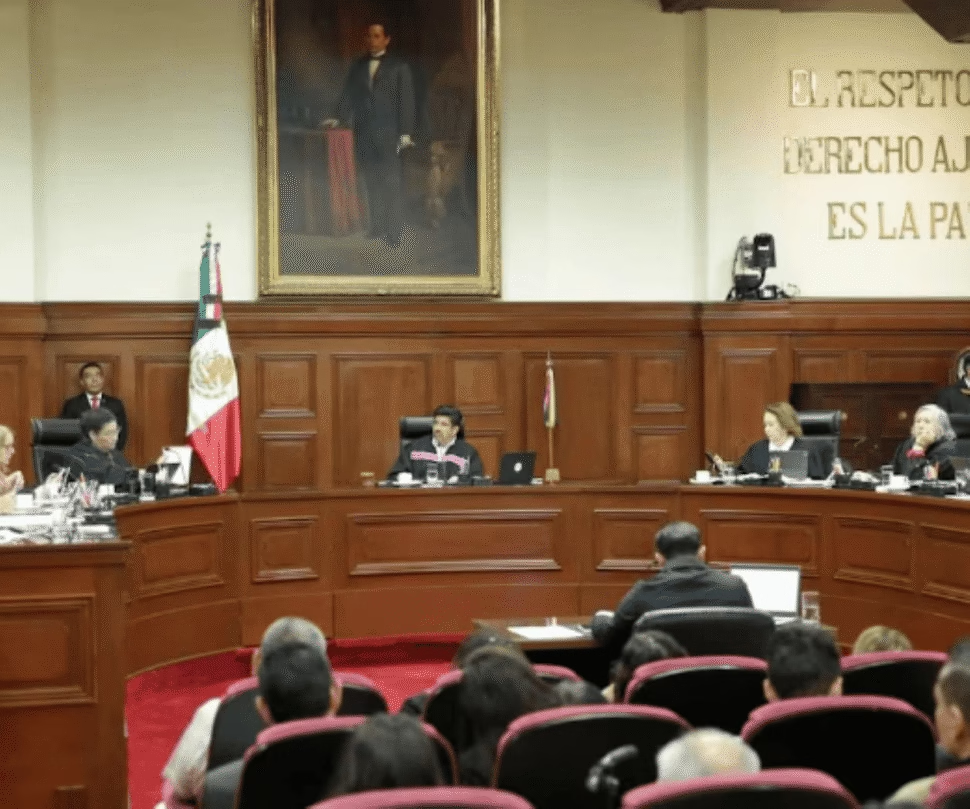
The Supreme Court of Justice of the Nation (SCJN) decided by majority that the resources from individual retirement accounts delivered to the beneficiaries should not pay Income Tax (ISR). The plenary session considered that these funds are part of the assets of the deceased worker and seek to provide economic protection to their designees.
The court considered that establishing a different tax treatment between beneficiaries named by will and those recognized by law would be an unjustified difference. In both cases, the resources have the same origin and purpose.
The decision arose from a contradiction between two Collegiate Courts. One argued that Afore resources are taxed income, as they do not fit into the inheritance exemption of article 93 of the Income Tax Law. The other considered them comparable to inheritance or legacy, exempt from tax.
Minister President Hugo Aguilar Ortiz stated:
“I am sure that the amount that an Afore has is infinitely less than the inheritance… We are talking about millionaire inheritances exempt from taxes, but taxes are paid on a small fund that the worker accumulated throughout his working life. If we add to that the fact that this fund is intended for the worker to survive in his old age or for his family members to benefit, it seems to me that we will not do an act of justice if we go in the direction of taxing these funds.”
The plenary session withdrew the matter to prepare a new project that includes the considerations of the debate. The contradiction in criteria is still pending final resolution. The original project of Minister Sara Irene Herrerías Guerra proposed taxing the Afore amounts of deceased workers with ISR when they were delivered to their beneficiaries.