Cuban artist Luis Manuel Otero arrives in Miami after release

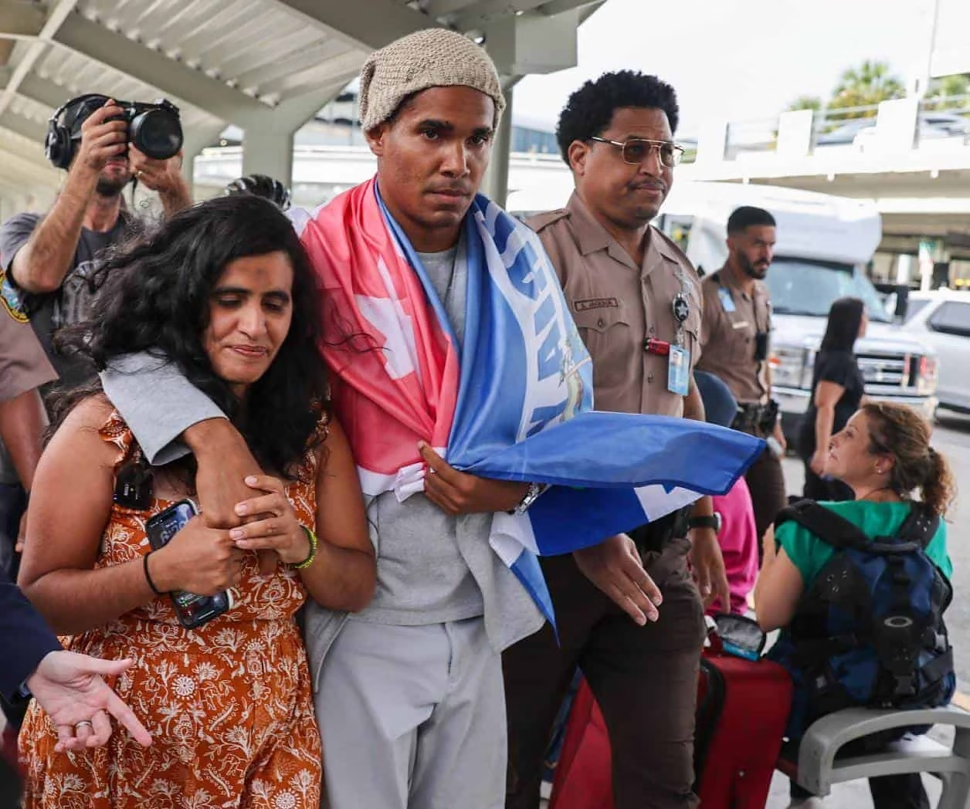
The Cuban activist was received by supporters in Miami after leaving Cuba.

Arrival in Miami

The Cuban artist and activist Luis Manuel Otero Alcántara landed this Saturday at Miami International Airport. He was received by dozens of people who cheered him, wrapped him in a Cuban flag and chanted “Patria y Vida”, a song that earned him a shared Grammy and has become an emblem of the opposition to the Cuban government.

Otero Alcántara, 38, was released from a five-year prison sentence on the condition that he leave Cuba. According to those close to him, the United States granted him a visa to enter the country at the beginning of the week. He accepted exile as the only alternative to leave persecution behind and continue his artistic work and activism.

RelatedThe United States carries out a military operation and captures Maduro in Venezuela

He was one of the founders of the San Isidro Movement, made up of artists and writers critical of the government. Arrested during the protests of July 11, 2021, a year later he was convicted of public disorder, contempt and disrespect for national symbols. Organizations such as Amnesty International considered him a political prisoner, while the Cuban government defended the legality of his process.

During his confinement in a maximum security prison, family and defenders did not know his whereabouts until he boarded the flight to the United States. The Cubalex organization promoted a habeas corpus to locate him.

Already in the United States, Otero announced that his first visit will be to the Sanctuary of Our Lady of Charity to make an offering. He brought with him a broken statue of the Virgin Mary, described by him as a symbol of hope and reconstruction. Supporters reiterated the call for other imprisoned activists, such as Maykel “Osorbo” Castillo Pérez, to be released.
Puerto Rico: chiefs of staff resign due to allegations of irregularities

The governor announces departures from her team after accusations of interference in contracts.

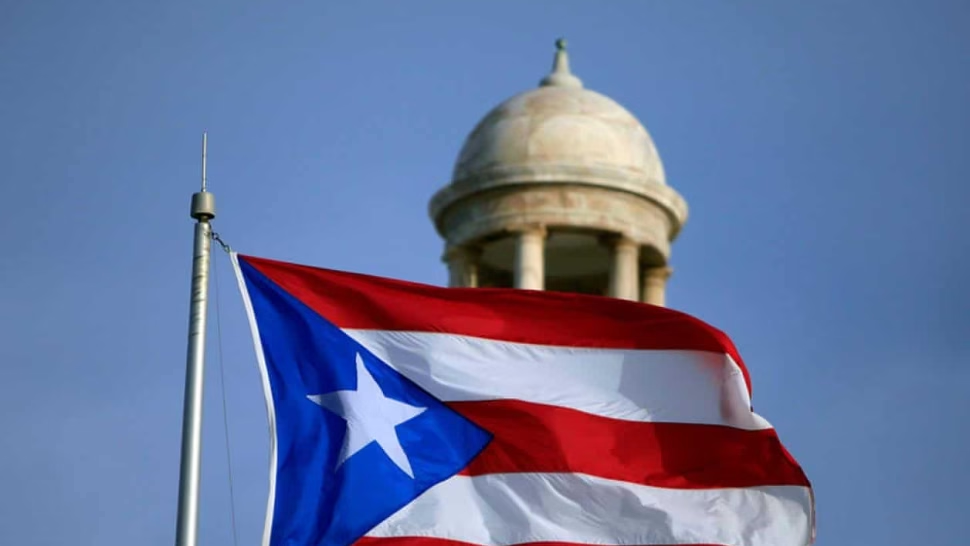
The political crisis in Puerto Rico

Governor Jenniffer González announced that her chief of staff, Francisco Domenech, and deputy chief, Itza García, will leave their positions in August. Both are investigated by an independent state agency after allegations of irregularities in the Permit Management Office.

Domenech also serves as executive director of the Financial Advisory Authority and Tax Agency. The accusations arose when former economic development chief Sebastián Negrón resigned in May and alleged government interference in the agency. More than ten officials also resigned.

Negron accused Domenech of contract irregularities and improper interference, which he has denied. García was singled out for pressuring Negrón to appoint the wife of the president of Politank—a lobbying firm that Domenech founded—to the permitting office.

“I return to my private life with the peace of mind of having served with integrity,” said Domenech.

García said that he grew professionally in the position and that his stage concludes, but not his commitment to the island. The governor thanked her for her work and loyalty, stating that she would not allow her administration to be “silenced” by “agendas and attacks.”

Domenech filed sworn statements against Negron alleging corruption, which Negron has denied. On Friday, Domenech said the Office of the Special Independent Prosecutor Panel is investigating him following allegations he called “riddled with lies.”

Federal lawmakers have questioned the use of federal funds. Juan Dalmau, of the Puerto Rican Independence Party, criticized the departure: “It is a discarded whitewash. Allowing notable officials to leave almost with State honors is a mockery.”

Domenech will leave office on August 7 and García on August 15. No replacements have been announced yet.

Continue reading

Trump authorizes direct flights to Lebanon after decades

The US president will allow commercial flights to Lebanon and meets with the Lebanese president to promote peace.

Direct flights and diplomatic dialogue

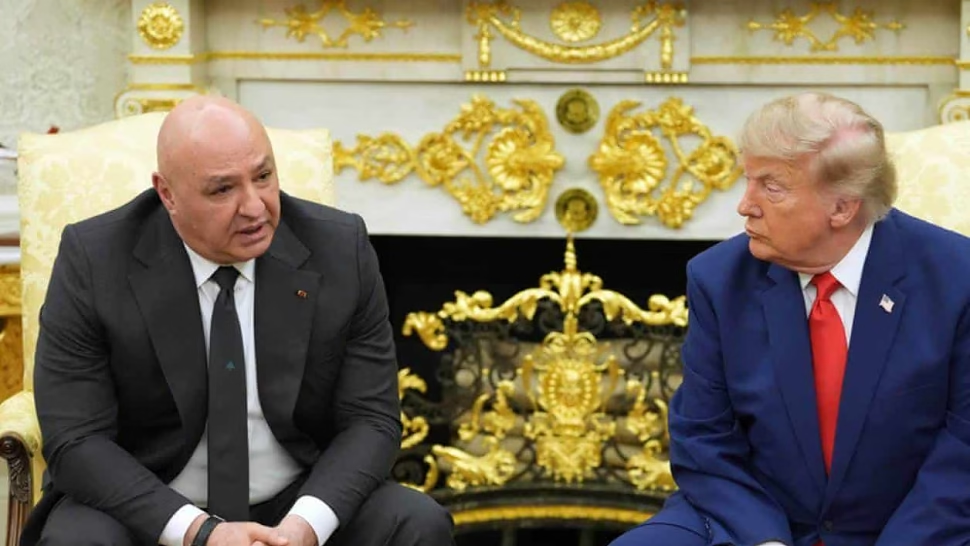
President Donald Trump announced that his administration will allow the resumption of direct flights between the United States and Lebanon, suspended since 1985 after the hijacking of TWA Flight 847. The measure became known after his meeting at the White House with the Lebanese president, Joseph Aoun.

“I am ordering my Administration to allow all US airlines to fly directly to Lebanon so that Americans can easily visit this beautiful land,” Trump wrote on social media.

During the meeting, Trump promised to “help a lot” to Lebanon. Aoun is the first Lebanese leader to visit Washington since 2009. The visit occurs in a context of regional tension, after months of conflict between Israel and the armed group Hezbollah, backed by Iran.

Progress towards a framework agreement

Lebanon and Israel signed a framework agreement on June 26 that provides for the withdrawal of Israeli forces from the south of the country and the disarmament of Hezbollah. The implementation began in pilot areas such as Zawtar al-Gharbieh, where the Lebanese army has already begun to deploy. However, disagreements remain: Israeli forces fired warning shots during the operation, although both sides differ over the location of the incident.

Secretary of State Marco Rubio backed the deal: “How do you replace Hezbollah? You defeat them and replace them with a government strong enough to be the only armed force in the country.” He warned that Lebanon will not be at peace until the issue of the armed group is resolved.

Trump mentioned that he would speak to Hezbollah personally if Aoun asked him to, and even raised the possibility of Syria intervening against the organization. Both options are unpopular in Lebanon.

Caution on the ground

Abed Ezzeldine, mayor of Zawtar al-Gharbieh, sounded cautious: displaced residents will be able to check their homes, but not stay because of the destroyed infrastructure. “The houses have been demolished. They (the Israelis) have destroyed the streets,” he declared.

Israel plans to maintain a prolonged military presence in a “security zone” in the south. Meanwhile, the Lebanese government, emerged from a reformist campaign in 2025, insists that Israeli withdrawal and international financial support are essential for a sustainable solution. The recent conflict left more than 4,000 dead and 1.2 million displaced in Lebanon.

Continue reading

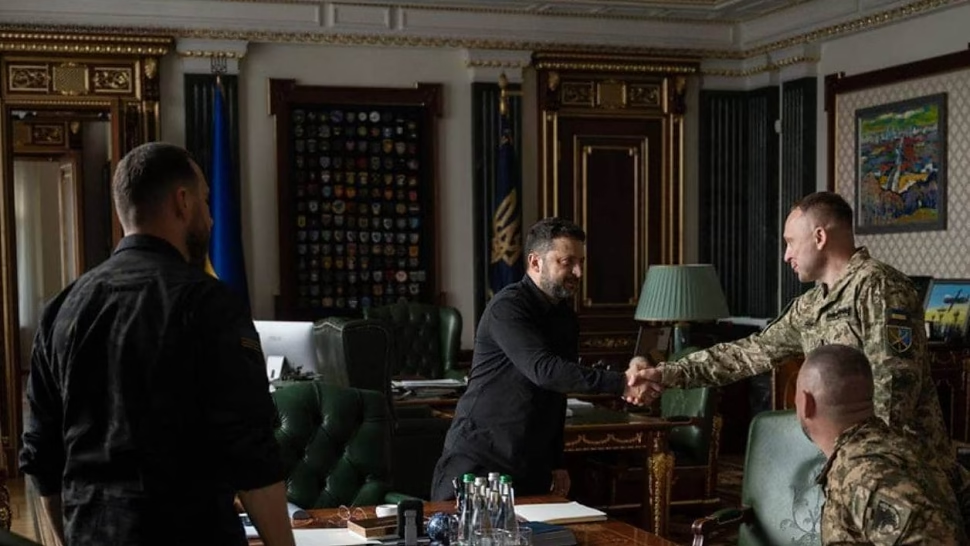
Zelenskyy dismisses Syrskyi amid protests in Ukraine

The change in high command responds to citizen pressure and internal criticism.

Ukrainian President Volodymyr Zelenskyy dismissed General Oleksandr Syrskyi as commander-in-chief of the armed forces, following several days of protests in kyiv and other cities demanding his ouster. In his place, he appointed Mijailo Drapatyi, according to an official statement.

“Our shared desire is one: victory over the enemy,” Zelenskyy declared.

Citizen pressure and internal changes

It was Zelenskyy’s second major turn under pressure from public opinion. The protests also demanded the reinstatement of former Defense Minister Mikhailo Fedorov, seen as a driver of military modernization. Syrskyi was criticized for representing a Soviet-style command culture.

Zelenskyy thanked Syrskyi for the defense of kyiv and the operations in Kharkiv and Kursk. He then introduced Drapatyi as the new boss.

Drapatyi wrote on Facebook:

“Serving Ukraine has always been an honor for me… I will work with responsibility, with focus and with respect for the people who defend our State today.”

Fedorov congratulated Drapatyi and called the appointment “a new hope in the struggle of free peoples for freedom and justice.” Zelenskyy offered Fedorov a position to unify the technology sector, but it was not confirmed whether he accepted.

Fedorov had publicly criticized Syrskyi, saying that he was blocking his reforms and that he should be replaced. After the impeachment, he called Syrskyi to thank him for his contributions, but noted that the country must move faster and correct mistakes.

Continue reading