Trump accelerates new tariff strategy after court ruling

The White House seeks to replace global tariffs by July 24.

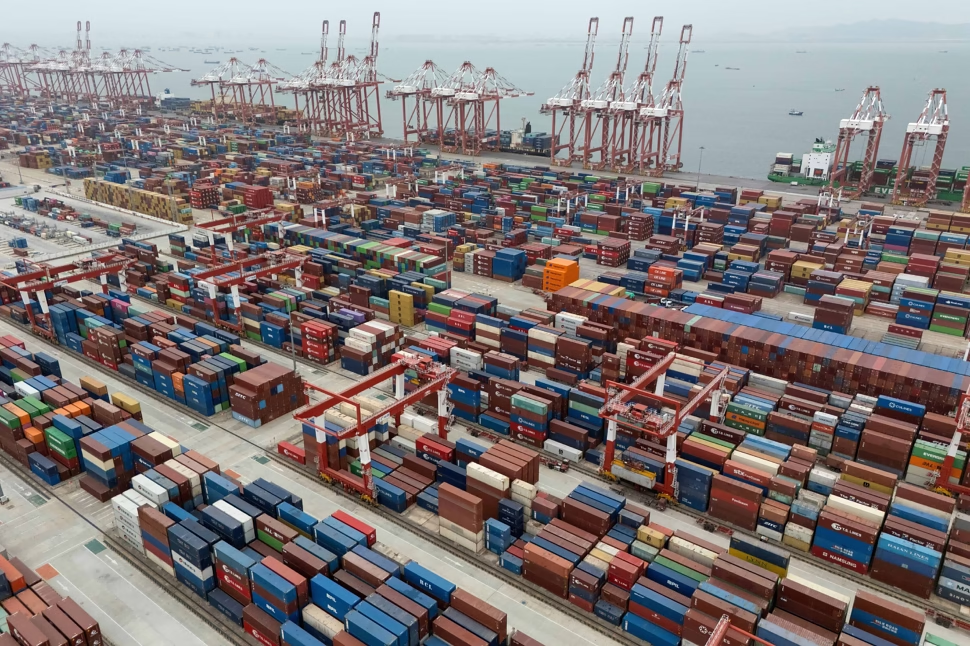
Donald Trump’s government is accelerating a new strategy to maintain tariff revenue. The Supreme Court in February invalidated the broader levies imposed under the International Emergency Economic Powers Act (IEEPA). The decision forced the Treasury to refund billions to importers.

After the ruling, the administration turned to Section 122 of the Trade Act of 1974. This rule allows global tariffs of 10%, but only for 150 days. The deadline expires on July 24. For this reason, the White House is seeking more permanent measures under Section 301, which authorizes sanctions against countries with unfair practices.

RelatedFederal court allows Trump to keep tariffs in place during appeal

International trade specialists believe that the government will manage to implement the new tariffs before the deadline. Trump has already announced 25% tariffs on imports from Brazil. In addition, it maintains investigations into the trade practices of dozens of countries to justify new taxes under the current legal framework.

Revenue from tariffs reached a maximum of $31 billion last October. But they fell after the Court’s resolution. A slight deficit was recorded in May. In June, losses amounted to $25.6 billion, because refunds exceeded the collection of levies still in force.

Section 301 offers a stronger legal basis. However, analysts warn that establishing universal tariffs with this standard could face new legal challenges. Uncertainty over US trade policy continues to cause concern among companies and investors. They expect greater clarity on international trade rules in the coming months.
Syria intercepts advanced weapons destined for Hezbollah

Syrian authorities seize a truck with rockets and advanced weapons from Iraq.

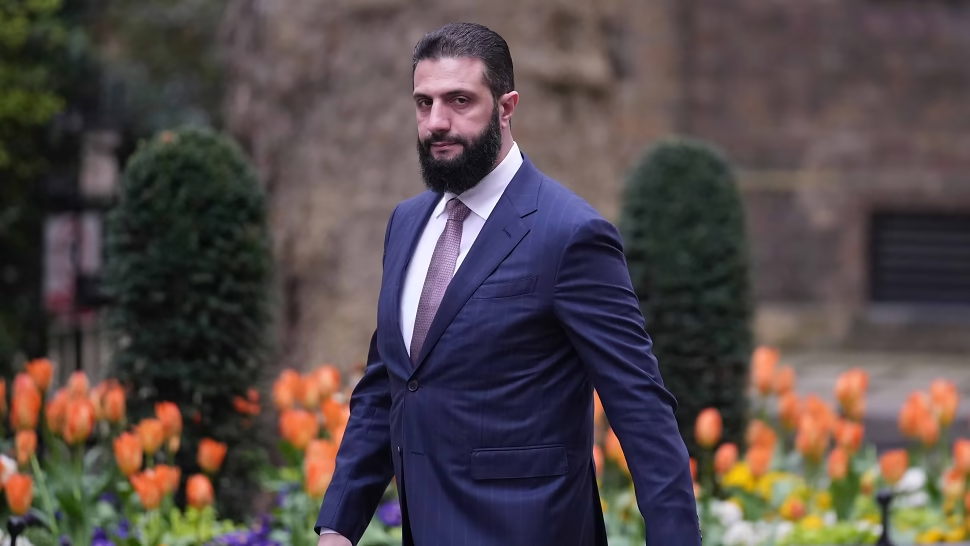
Syrian authorities reported that they foiled an alleged arms smuggling attempt to the Lebanese group Hezbollah. The shipment was intercepted in a truck carrying advanced weapons and rockets from Iraq.

According to the state agency SANA, initial investigations indicate that the weapons were destined for the Shiite organization backed by Iran. The seizure occurred as part of the new government’s actions to strengthen border security and combat the illicit trafficking of weapons and drugs.

An official from the Syrian Ministry of the Interior, who asked not to be identified, said that this operation reflects the authorities’ commitment to control the flow of weapons in the region. Concern grows over Hezbollah’s link with Tehran and its influence in the Syrian conflict.

The discovery includes rockets and high-capacity war material. No arrests have been reported so far, but investigations continue to identify those responsible for the smuggling network.

This incident underlines the challenges that Syria faces in controlling its borders, especially in a regional context marked by tensions between armed factions and external interests.

Continue reading

The skirt flies on the skate park in La Paz

In La Paz, Aymara girls and young people demonstrate that tradition and extreme sports can go hand in hand.

Tradition and skateboard

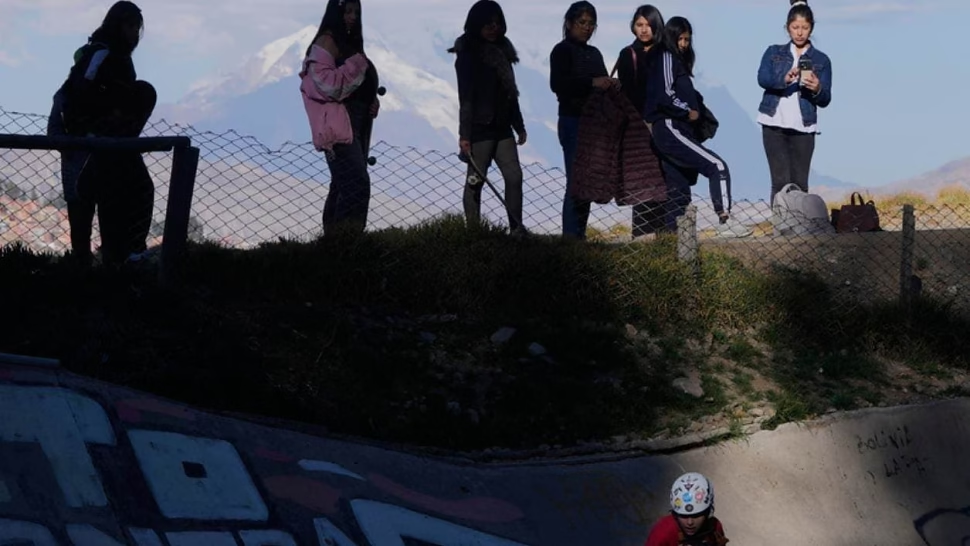
On a skate park 3,600 meters above sea level, a group of young Aymara people defy gravity and stereotypes. Dressed in the pollera, the traditional skirt of the Bolivian indigenous woman, they demonstrated their skill in a competition organized by the Warmis Sobre Ruedas movement.

The activity brought together about 20 girls and young people, from eight to 18 years old. The jury evaluated technique, creativity and clothing. The prizes: skateboards and equipment to continue practicing.

“I feel like I’m flying,” said Ana Lucía Calvep, 18, a member of the group. “The skirt is heavier, but it is an honor to wear it because it represents my grandmother,” she added.

Not all participants wear skirts, but there is a special category that rewards those who wear one and perform tricks. The objective is to vindicate the identity of indigenous women and make skateboarding an inclusive sport.

Family pride

Victoria Mamani accompanied her 10-year-old daughter, who competed in the beginner category. “I feel very happy that my daughter wears the skirt that my mother wears. I gladly bring it,” she said. “My mother even gets excited. This sport is not easy, every fall hurts me as a mother. But I have seen that it has made my daughter stronger.”

The competition began with basic exercises such as the so-called “crabs”—simulating walking on the board with your feet on each end—and increased in difficulty. Many fell, but all rose.

Skateboarding in Bolivia is gaining ground in the professional field, and these young women aspire to participate in international competitions, carrying the skirt as a symbol of identity.

Continue reading

Haaland’s footprint: 559 Peruvian babies bear her name

559 Peruvians registered their children with the name of the Norwegian forward after the 2026 World Cup.

The Haaland phenomenon in Peruvian civil registries

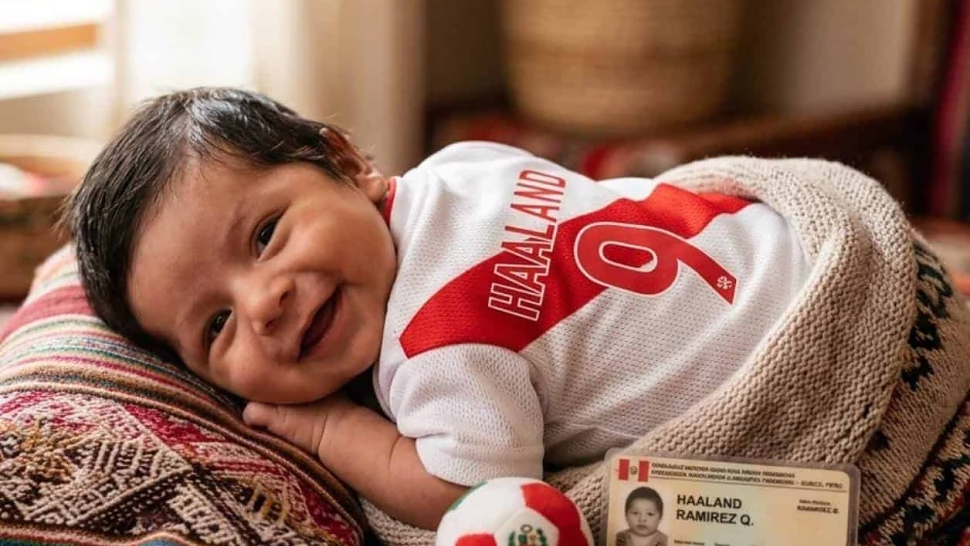
The impact of the 2026 World Cup is not only measured in goals. In Peru, at least 559 babies were registered with a name inspired by Norwegian striker Erling Haaland. This was reported by the National Registry of Identification and Civil Status (Reniec).

Of that total, 468 infantrymen were simply given “Haaland” as a name, while another 91 were registered as “Erling Haaland.” The figure could increase, since birth records are still open.

According to Reniec, the phenomenon gained strength after Haaland’s double in the round of 16 against Brazil. That 2-1 allowed Norway’s historic qualification to the quarterfinals of the tournament.

But Haaland is not the only footballer who inspires Peruvian parents. Reniec explained that in the country there are already 3,402 people named Messi, 1,185 with the name Cristiano Ronaldo and 1,241 registered as Yamal, in reference to the Argentine star, the Portuguese and the Spanish attacker.

The absolute record, however, is held by the Brazilian Neymar: almost 34 thousand Peruvians have that name on their identity document.

Continue reading