Trump proposes 200% tariffs on imported medicines

An unprecedented protectionist measure that could alter access to medical treatments and redefine global drug production.

A radical shift in US pharmaceutical policy

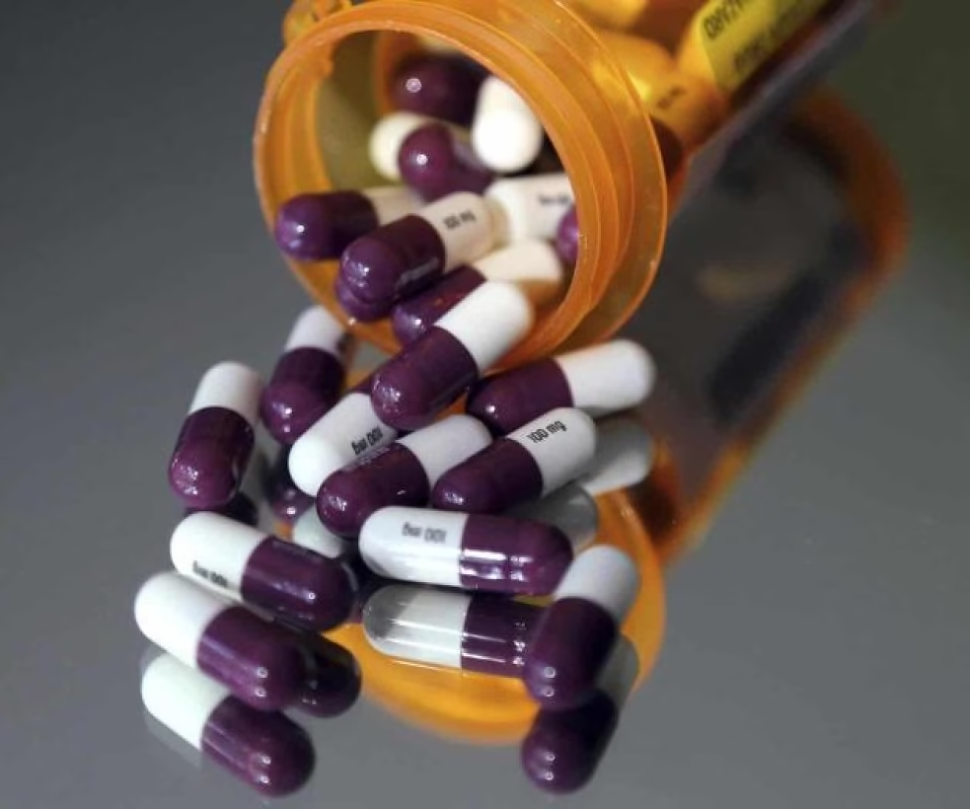
President Donald Trump’s administration has begun an unprecedented chapter in international trade policy by turning its sights toward a historically protected sector: the pharmaceutical industry. After imposing tariffs on products such as steel, aluminum and automobiles, the Republican president has announced his intention to apply tariffs that could reach 200% on imported medicines, breaking with decades of tariff exemptions for these types of products.

This analysis meticulously examines the implications of a measure that represents a paradigmatic shift in the economic and public health strategy of the United States. For more than half a century, pharmaceutical products entered the United States tariff-free, a policy designed to guarantee access to essential medicines. The new proposal disrupts this fundamental principle.

RelatedTrump announces 100% tariffs on imported medicines

The implementation mechanism and its schedule

U.S. and European leaders recently detailed a trade deal that includes a 15% tariff rate on some European goods, including pharmaceuticals. However, Trump’s threat goes considerably further, promising taxes that multiply that percentage by more than thirteen. According to Maytee Pereira of the tax and consulting firm PwC, these plans generate “shock and amazement” among drug manufacturers, who would go “from zero tariffs to the potential of 200%.”

The president has indicated that he would delay the implementation of these levies between twelve and eighteen months, granting pharmaceutical companies a grace period to accumulate inventories and transfer their manufacturing operations to US territory. David Risinger, an analyst at Leerink Partners, confirmed in a July 29 report that most laboratories have already increased their imports and could maintain between six and 18 months of inventory in the United States.

Economic and public health consequences

Paradoxically, while Trump has promised Americans to reduce their drug costs, analysts anticipate that this measure could have the opposite effect. Diederik Stadig, a health economist at financial services firm ING, warned in a recent analysis that “a tariff would hurt consumers most of all, as they would feel the inflationary effect directly when paying for prescriptions at the pharmacy and indirectly through higher insurance premiums.” Stadig added that low-income households and the elderly would experience the most severe impact.

The analyst estimates that even a 25% tax – substantially lower than proposed – would gradually increase drug prices in the United States by between 10% and 14% as accumulated reserves are depleted. Jefferies analyst David Windley projects in recent research that the full effects of the tariffs, if implemented in the second half of 2026, could extend into 2027 or 2028 precisely because of this inventory buildup.

The geopolitical and national security background

This initiative does not arise in a vacuum. The experience of the COVID-19 pandemic highlighted the strategic risks of relying on globalized supply chains for critical medical products. During the crisis, multiple countries restricted exports of protective equipment and medical supplies, revealing the vulnerability of the United States in this sector.

In April 2024, the administration launched an investigation under Section 232 of the Trade Expansion Act of 1962, which allows the president to impose tariffs on national security grounds, to determine how the importation of drugs and active pharmaceutical ingredients affects the country’s security. Marta Wosinska, a health policy analyst at the Brookings Institution, explains that tariffs can play a role in securing critical medical supplies, citing the example of the Biden administration, which successfully imposed taxes on foreign syringes when cheap imports from China threatened to wipe out domestic producers.

The United States trade deficit in medicinal and pharmaceutical products reached almost 150 billion dollars last year, a figure that reflects the magnitude of external dependence. For decades, pharmaceutical companies moved operations overseas to take advantage of lower costs in countries like China and India, and tax benefits in jurisdictions like Ireland and Switzerland.

Corporate reactions and productive realignment

Faced with this new regulatory reality, pharmaceutical giants have already begun a process of strategic adaptation. The Swiss laboratory Roche announced in April an investment of $50 billion to expand its operations in the United States. Johnson & Johnson, for its part, will dedicate $55 billion within the United States over the next four years. Joaquin Duato, general director of the company, recently indicated that the objective is to supply medicines for the US market completely from facilities located in the country.

Many sector analysts, however, remain skeptical about the final implementation of the measure. They anticipate that the administration could settle for a tariff significantly lower than the announced 200%, and speculate that the policy could include exemptions for critical products such as low-margin generic drugs, which account for approximately 90% of prescriptions dispensed in the United States but only 18% of pharmaceutical spending.

Trump’s proposal thus represents a complex balance between the stated objective of repatriating pharmaceutical manufacturing, strengthening national security and reducing dependence on China – a key geopolitical rival – against the tangible risk of increasing healthcare costs for American consumers and potentially disrupting supply chains for essential medicines.

Has this analysis of the global implications of trade policies in the health sector been revealing to you? Share this article on your social networks to contribute to an informed conversation and explore more content on economics and public policy in our specialized section.
Xi y Kim acuerdan profundizar la cooperación estratégica bilateral

Xi visita Pyongyang por primera vez en siete años para reforzar alianza estratégica.

Visita clave de Xi a Pyongyang

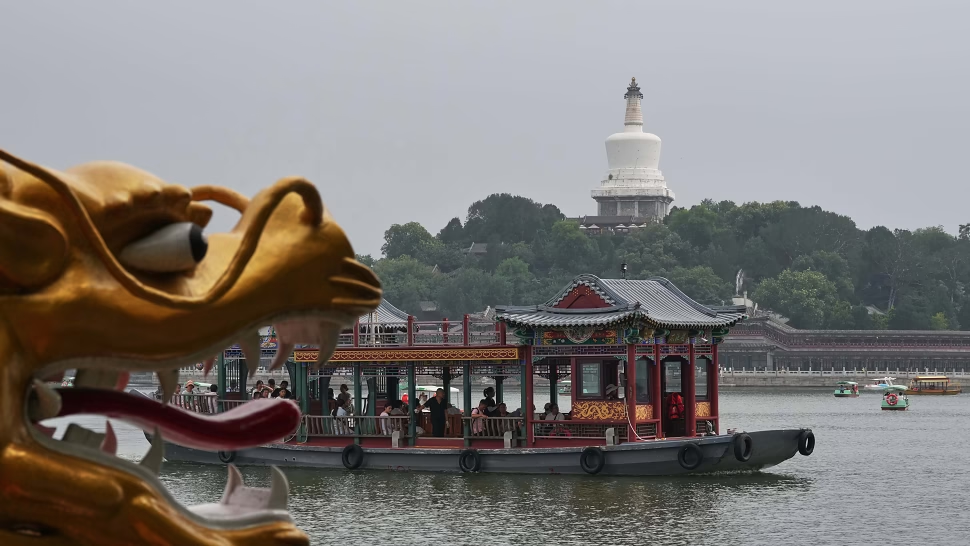
El presidente chino, Xi Jinping, y el líder norcoreano, Kim Jong Un, reafirmaron su compromiso de fortalecer la cooperación en una reunión celebrada el lunes en Pyongyang. Se trata de la primera visita de Xi a Corea del Norte en siete años.

La jornada comenzó con una fastuosa bienvenida en el aeropuerto internacional. Xi y su esposa, Peng Liyuan, fueron recibidos por Kim y Ri Sol Ju, quienes sonrieron y aplaudieron. Más tarde, una ceremonia en la plaza principal incluyó una guardia de honor, miles de personas con globos y banderas de ambos países, junto a retratos gigantes de los mandatarios.

RelatedNorth Korea tests hypersonic missiles for its nuclear arsenal

Compromisos y acuerdos

Durante el encuentro, Xi expresó la disposición de China de ampliar la cooperación en comercio, agricultura, construcción e infraestructura, según la televisión estatal CCTV. El mandatario chino subrayó la necesidad de reforzar la cooperación estratégica y defender mutuamente los intereses de soberanía y seguridad.

Kim señaló que la visita “demuestra claramente cuán inquebrantable” es la relación bilateral. La Agencia Central de Noticias de Corea indicó que ambos líderes alcanzaron un amplio acuerdo para fortalecer la coordinación estratégica. Kim también reiteró el apoyo de Pyongyang al principio de “una sola China”.

Contexto geopolítico

La visita ocurre en un momento en que ambos países buscan recomponer su alianza tradicional frente a tensiones con Estados Unidos. China ha sido el principal respaldo económico y diplomático de Corea del Norte. Sin embargo, en los últimos años, Pyongyang ha priorizado la cooperación con Rusia, enviando soldados y armas para la guerra en Ucrania a cambio de asistencia económica y militar.

Expertos consideran que Xi intenta restablecer su influencia exclusiva sobre Corea del Norte para ganar ventaja en sus gestiones con Donald Trump. “Aplicar las resoluciones del Consejo de Seguridad de la ONU no parece ser prioritario para China”, comentó Leif-Eric Easley, profesor de la Universidad Femenina Ewha.

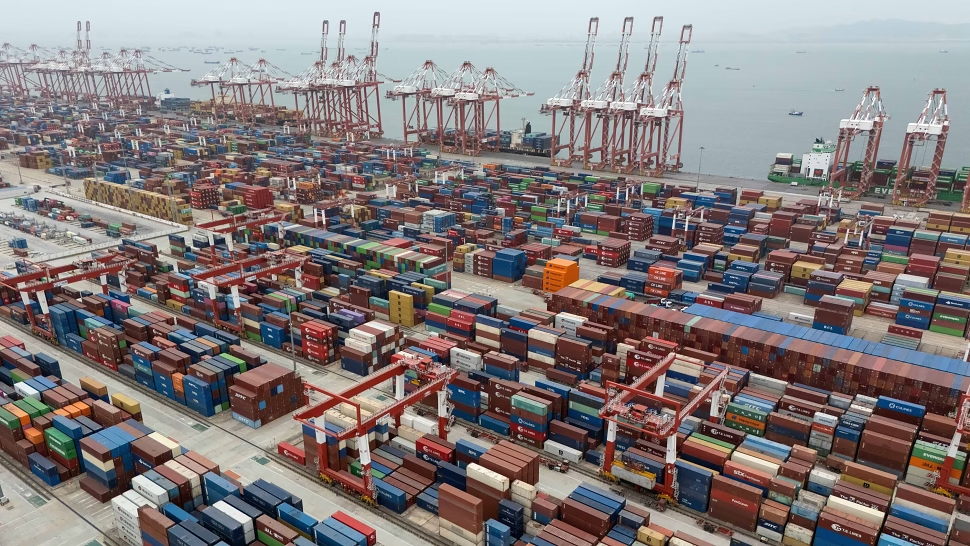
El volumen comercial bilateral se recuperó a niveles prepandemia el año pasado. Además, se reanudaron vuelos directos y trenes de pasajeros. Xi instó a aprovechar esta reapertura para ampliar los intercambios.

La cuestión nuclear

Kim busca que Xi acepte a Corea del Norte como Estado nuclear. China evita pronunciarse abiertamente sobre la desnuclearización, aunque la mantiene como objetivo a largo plazo. La hermana de Kim, Kim Yo Jong, calificó la presión estadounidense como un “sueño anacrónico”.

El presidente surcoreano Lee Jae Myung afirmó que Corea del Norte produce suficiente material para entre 10 y 20 bombas. Kim se ha enfocado en modernizar su arsenal nuclear desde el fracaso de las negociaciones con Trump en 2019.

Analistas prevén que Xi ofrecerá paquetes de ayuda, como arroz, fertilizantes y la reanudación del turismo chino. “Corea del Norte no puede depender solo de Rusia. Necesita alinearse con China”, resumió Kwak Gil Sup, director de One Korea Center.

Continue reading

Sismo de 7.8 en Filipinas: 35 fallecidos y alerta de tsunami

Un sismo de magnitud 7.8 en el sur de Filipinas dejó al menos 35 víctimas y olas de tsunami de hasta un metro.

Impacto del sismo en el sur de Filipinas

Un sismo de magnitud 7.8 sacudió el lunes el sur de Filipinas, con epicentro en el mar frente a Mindanao. El movimiento telúrico cobró la vida de al menos 35 personas y dejó más de 200 heridos. Provocó un tsunami de un metro que golpeó las costas cercanas.

El sismo derribó edificios en la ciudad portuaria de General Santos y afectó infraestructura clave. En Glan, municipio de Sarangani, un deslizamiento de tierra causó 13 fallecidos, según René Punzalan, funcionario de mitigación de desastres. Otras cuatro personas perdieron la vida en Sarangani.

RelatedSismo de 7.8 sacude Filipinas; alerta de tsunami en el Pacífico

Teresito Bacolcol, director del Instituto Filipino de Vulcanología y Sismología, calificó el evento como el peor sismo del año en el país. Advirtió sobre réplicas y pidió a la población no regresar a edificios dañados sin revisión.

Reacción de la comunidad y autoridades

En Malita, provincia de Davao Occidental, más de 100 estudiantes y una docena de maestros vivieron el sismo durante una ceremonia escolar. La directora Rosavel Cachuela relató: “Su emoción en el primer día de clases se convirtió en trauma”. La mayoría de los niños permanecieron quietos, lo que evitó lesiones.

En General Santos, al menos cuatro personas estaban desaparecidas. Equipos de rescate buscaban atrapados en un supermercado, un almacén y una escuela primaria que colapsaron. El aeropuerto internacional cerró temporalmente y se cancelaron 17 vuelos.

El presidente Ferdinand Marcos Jr ordenó la suspensión de clases y movilizó a agencias de desastres. “El gobierno nacional está actuando y no dejaremos a Mindanao atrás”, declaró.

Evolución de la amenaza de tsunami

El Centro de Alerta de Tsunamis del Pacífico informó que el peligro pasó cinco horas después del sismo. Filipinas levantó su advertencia a media tarde. Se reportaron olas de hasta 1.4 metros en Kiamba, Sarangani. También se detectaron tsunamis menores en Indonesia, Palaos y Japón.

Filipinas está en el Cinturón de Fuego del Pacífico, por lo que es propensa a sismos y erupciones volcánicas. Además, sufre unos 20 tifones al año.

Continue reading

Tormentas Cristina y Boris azotan el Pacífico

Cristina y Boris: dos tormentas tropicales activas en el Pacífico. Alertas en Centroamérica y México.

Dos tormentas activas en el Pacífico

La tormenta tropical Cristina se formó el lunes frente a la costa de Nicaragua, informó el Centro Nacional de Huracanes de Estados Unidos (NHC). Presenta vientos máximos sostenidos de 75 km/h y se localiza a 160 km al oeste-suroeste de Managua.

Se espera que Cristina deje entre 10 y 20 cm de lluvia, con acumulados de hasta 30 cm, en zonas costeras de Nicaragua, Honduras, El Salvador y Guatemala hasta el jueves.

RelatedBoris se vuelve tormenta tropical y amenaza el Pacífico mexicano

Paralelamente, la tormenta tropical Boris se ubicaba a 135 km al sureste de Acapulco, con vientos de 65 km/h y desplazamiento lento hacia el noreste. Provocaría precipitaciones de 10 a 25 cm en Guerrero y Oaxaca, y tocaría tierra el martes.

“Estas lluvias pueden producir inundaciones y deslaves que pongan en peligro la vida, especialmente en zonas de terreno escarpado”, advirtió el NHC.

Hay alerta de tormenta tropical desde Laguna de Chacahua, Oaxaca, hasta Tecpan de Galeana, Guerrero, con condiciones esperadas en 24 horas.

Boris es la segunda tormenta con nombre de la temporada del Pacífico, que inició el 15 de mayo. La primera fue Amanda, el 3 de junio, sin amenazar tierra. En el Atlántico, la temporada comenzó el 1 de junio pero aún no se han formado ciclones.

Continue reading