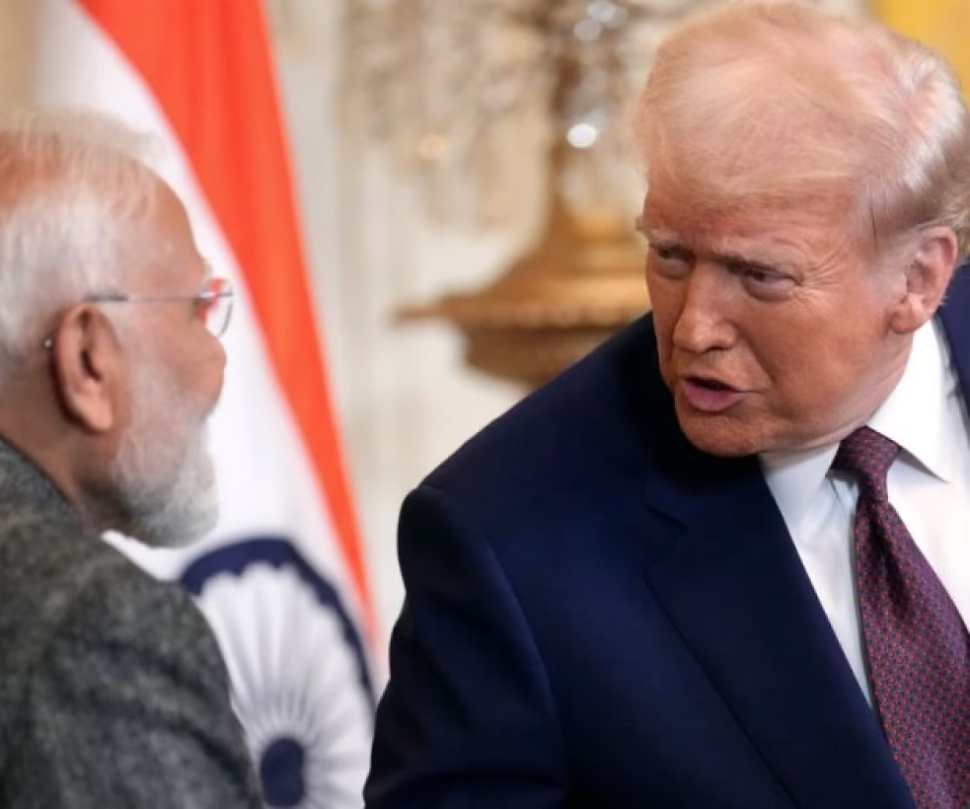
Tariff bomb in geopolitics: Trump raises the price for India
It seems that the sales season has ended abruptly for India. President Donald Trump, in what we can only describe as a move from his particular geopolitics reality show, on Wednesday signed an executive order to slap an additional 25% tariff on India. The reason? That the country dared to do what we would all do: buy Russian oil when it is on sale. This tax, added to the existing ones, raises the bill to an epic 50%. Basically, it is charging India half the value of its products just for misbehaving, according to its peculiar rule book.
But, plot twist: the tariffs would not come into effect until 21 days after signing. In other words, he is giving India and Russia exactly three weeks to get their act together and negotiate. An ultimatum with a reality TV flavor, because who doesn’t love a good countdown to increase the drama?
The unexpected consequences of playing Risk with the global economy
This move by Trump could completely alter the economic trajectory of India, which until five minutes ago was the darling of American companies that wanted to flee China. The comical (or tragic, depending on your sense of humor) detail is that Beijing also buys oil from Moscow, but for some reason known only to Trump, it escaped the order. Favoritism? Strategy? A whim? Who knows. The fact is that, as part of his negotiations with China, Trump has imposed 30% tariffs on them, a rate that, surprise, is lower than the one threatening New Delhi. Coherence is conspicuous by its absence.
On Tuesday, Trump had already released the spoiler to journalists: the tariffs were imminent. And during an event in the Oval Office with Apple CEO Tim Cook (because what better time to talk about taxes than with the head of the company that avoids them the most), he confirmed the 50% figure. When asked if he would remove tariffs if there was a deal between Russia and Ukraine, his response was as vague as a WhatsApp status: “We will make that decision later.” But be careful, because “right now they are paying a 50% tariff.” Thanks for clarifying, I guess.
Meanwhile, the White House dropped another bombshell: Trump could meet in person with Russian President Vladimir Putin next week. Because, of course, what better way to negotiate the end of a war than by imposing tariffs left and right? The Indian government, for its part, declared Wednesday that the additional tariffs are “unfortunate.” Wow, what a polite way to say “this is crazy.” Randhir Jaiswal, spokesperson for the Ministry of External Affairs, went a little further: “We reiterate that these actions are unfair, unjustified and unreasonable.” He added that India would take all necessary measures to protect its interests. Translation: the counterattack is coming.
Jaiswal also recalled that Indian imports are based on market factors and are part of an overall objective of guaranteeing energy security for its 1.4 billion inhabitants. In other words, India is not buying Russian oil to be annoying, but because it needs energy so that 1.4 billion people are not left in the dark. But hey, who needs context when you can throw tariffs around like confetti?
Ajay Srivastava, a former Indian trade official, noted that the latest tariff puts the country among Washington’s most heavily taxed trading partners, far above rivals such as China, Vietnam and Bangladesh. “The tariffs are expected to make Indian products significantly more expensive, with the potential to reduce exports to the United States by approximately 40% to 50%,” he said. Basically, you’re giving a parking ticket to an entire economy.
But the best part was when Srivastava pointed out that Trump’s decision was “hypocritical” because China bought more Russian oil than India last year. “Washington avoids attacking Beijing because of China’s influence over crucial minerals that are vital to American defense and technology,” he said. In other words, it all comes down to China having the minerals that the United States needs for its gadgets and its defense. Geopolitics or a game of thrones with raw materials? You decide.
In 2024, the United States had a trade deficit of $45.8 billion with India, meaning it imported more than it exported, according to the country’s Census Bureau. American consumers and businesses purchase pharmaceuticals, gemstones, textiles and clothing from India, among other goods. In other words, he is putting tariffs on the things he himself buys. Does anyone else see the irony?
India, the country with the most inhabitants in the world, represented a way for the United States to counteract China’s influence in Asia. But New Delhi has not supported sanctions by Washington and its allies against Moscow over the war in Ukraine, even though Indian leaders have said they want peace. Now, with this move, Trump could be pushing India into other arms. Because nothing says “let’s be friends” like a 50% tariff.
Meanwhile, the United States and Beijing are in trade negotiations. Washington has imposed a 30% tariff on Chinese goods and faces a 10% retaliatory tax from the Chinese government on American goods. An exchange of poisoned gifts that no one asked for.
The most ironic thing about all this is that the tariffs planned to be imposed on India contradict efforts by former President Joe Biden’s government and other Group of Seven nations, which encouraged India to buy cheap Russian oil through a price cap imposed in 2022. The nations collectively capped the price of Russian oil at $60 per barrel at a time when market prices were significantly higher. The intention was to deprive the Kremlin of revenue to finance the war in Ukraine, forcing the Russian government to sell its oil at a discount or funnel money into an expensive alternative shipping network.
The price cap was implemented with equal parts skepticism and hope that the policy would keep Putin’s invasion of Ukraine at bay. But, as expected, Russia has been able to evade this by shipping oil in a “ghost fleet” of old ships, using insurers and trading companies located in countries that do not apply sanctions. In other words, the system had more holes than Swiss cheese, but now India pays the price.
In summary, Trump has just dropped a tariff bomb that not only affects India, but could reconfigure global economic alliances in the midst of war tension. Because what could go wrong when you mix oil, tariffs and a war? Absolutely everything.
Did you like this analysis? Share it on your social networks and tag whoever you think needs to understand this geopolitical drama. And don’t forget to explore more content related to the global economy in our current affairs section.