7.1 magnitude earthquake shakes Venezuela and raises alerts

7.1 tremor shakes Venezuela; tsunami warning in Puerto Rico.

7.1 tremor in Venezuela activates tsunami alert

A 7.1 magnitude earthquake was recorded this Wednesday in Venezuela, according to the United States National Oceanic and Atmospheric Administration (NOAA). The earthquake occurred at 22:04 GMT with the epicenter located 21 kilometers east of Morón, in the state of Carabobo.

The depth of the earthquake was 9.6 kilometers, which increased its perception on the surface. NOAA issued a tsunami warning for Puerto Rico and the Virgin Islands, although so far no major damage has been reported in those areas.

Related7.5 magnitude earthquake shakes remote Drake Passage

Aftershocks and affected areas

The tremor unleashed scenes of alarm in Caracas, where residents took to the streets after feeling the movement. It was also noticed in several cities in Colombia, such as Bogotá, Barranquilla and Bucaramanga, although without serious consequences.

Local authorities evaluate possible effects. Venezuela is located in an area of ​​moderate seismic activity, and events of this magnitude are rare. No casualties or significant structural damage have been reported as of press time.

Colombia and the Amazon: a turn towards extractive development

De la Espriella's triumph in Colombia raises questions about the future of the Amazon rainforest in the region.

Abelardo de la Espriella’s victory in Colombia’s presidential elections marks a possible change in environmental policy in the region. The businessman, backed by Donald Trump, defeated Iván Cepeda by just 251,000 votes, according to official results.

What will happen to the Amazon?

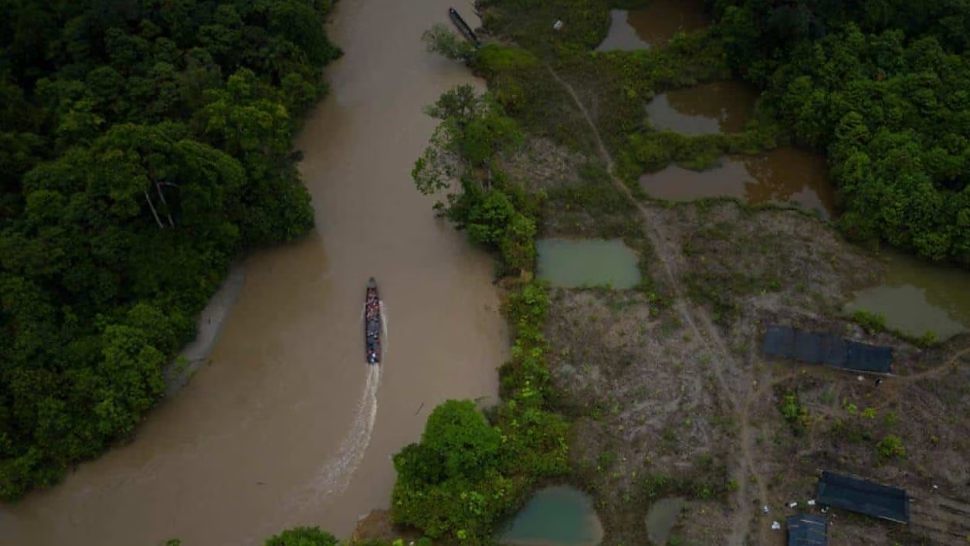
The Amazon rainforest, which absorbs carbon dioxide and slows climate change, faces a new scenario. Around 40% of Colombian territory is in the Amazon basin. During the government of Gustavo Petro, the country positioned itself as a defender of the jungle. De la Espriella promises to reactivate the oil sector, support fracking and further exploit natural resources.

Elizabeth Dickinson of the International Crisis Group noted that many governments now believe that economic development and conservation can move forward together. However, environmentalists warn that expanding fossil fuel production could increase pressure on sensitive ecosystems.

Peru and Brazil also join this trend. Keiko Fujimori, close to winning in Peru, supports mining. In Brazil, the election between Flávio Bolsonaro and Lula will define the direction of deforestation. Cristiane Mazzetti of Greenpeace Brazil said: “The elected administration sets budget priorities and regulates exploitation. The result is measurable, as shown by the rate of deforestation.”

Illegal gold mining is one of the biggest drivers of destruction in the Amazon. Dickinson added: “It’s very hard to disagree with going after illegal mining, one of the most damaging industries.” But he warned that governments often focus on seizing equipment, without dismantling criminal networks.

Julio Cusurichi, indigenous leader in Peru, stated: “Biodiversity and our territories can help climate change. In our territories we do governance for the planet.” Indigenous organizations denounce that governments do not adequately consult them before approving extractive projects.

Analysts such as Sergio Guzmán indicate that environmental concerns will compete with economic ones. “Many emissions concerns will take a backseat to energy self-sufficiency,” he said. He also mentioned that aerial fumigation of coca crops could resume, affecting Amazonian communities.

In Leticia, the Ticuna indigenous Arnaldo Rufino expressed his fear: “That means cutting down the trees that allow humanity to breathe.” The future of the Amazon will depend on the decisions made by the new governments in the region.

Continue reading

Evacuation of ships in Hormuz: 11 thousand sailors leave under UN plan

The UN coordinates the staggered departure of cargo ships stranded in the Strait of Hormuz.

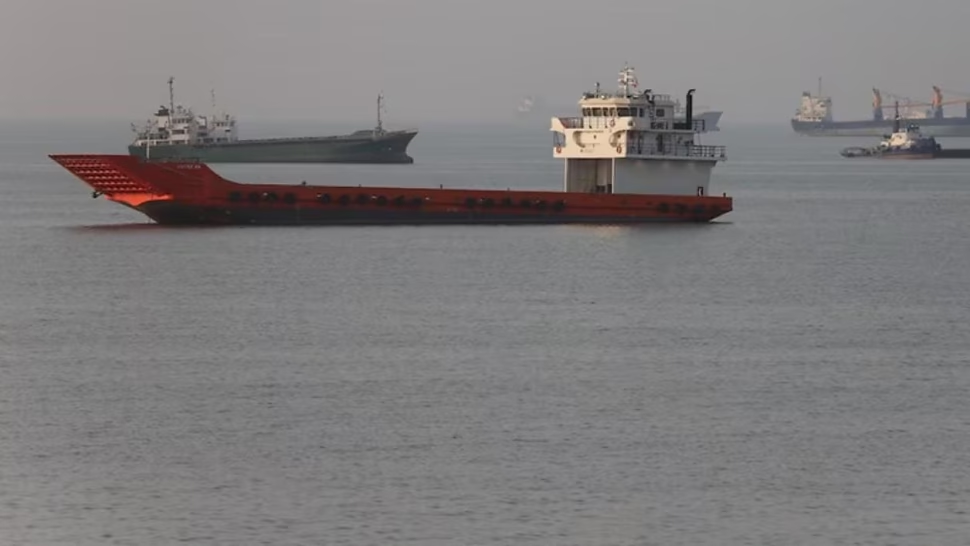
The Strait of Hormuz begins to free its first stranded ships. Since this Wednesday, several cargo ships have left the area under a security scheme designed by the International Maritime Organization (IMO), an arm of the UN.

The measure seeks to evacuate thousands of civilian crew members who were trapped for months by hostilities between the United States, Israel and Iran. After a memorandum of understanding between Washington and Tehran, the flow of oil and LNG tankers picked up.

Priority for bulk carriers and general cargo

The UN humanitarian plan gives priority to bulk and general cargo ships that entered before the closure of the passage in March. According to Reuters data, the first vessels are already sailing in the Arabian Sea, while another thirty are waiting their turn.

The IMO roadmap plans to free about 11,000 sailors, out of a total census that exceeded 20,000 stranded people. To avoid risks from maritime mines in the strait—barely 30 kilometers wide—conventional traffic was suspended. The ships advance in a staggered manner through corridors coordinated by Iran and Oman.

Security protocol and energy markets

Captains must keep their automatic identification systems (AIS) on and not maneuver without instructions from centers such as the British UKMTO or the French MICA.

In parallel, energy markets are stabilizing. The International Energy Agency reports that the region already exports 85% of its usual crude oil, with a barrel of Brent at $73, close to pre-crisis levels.

Continue reading

Kenya suspends construction of Ebola quarantine center

The project intended for Americans generates judicial controversy and local protests that have left people dead.

Suspension ordered by the Government

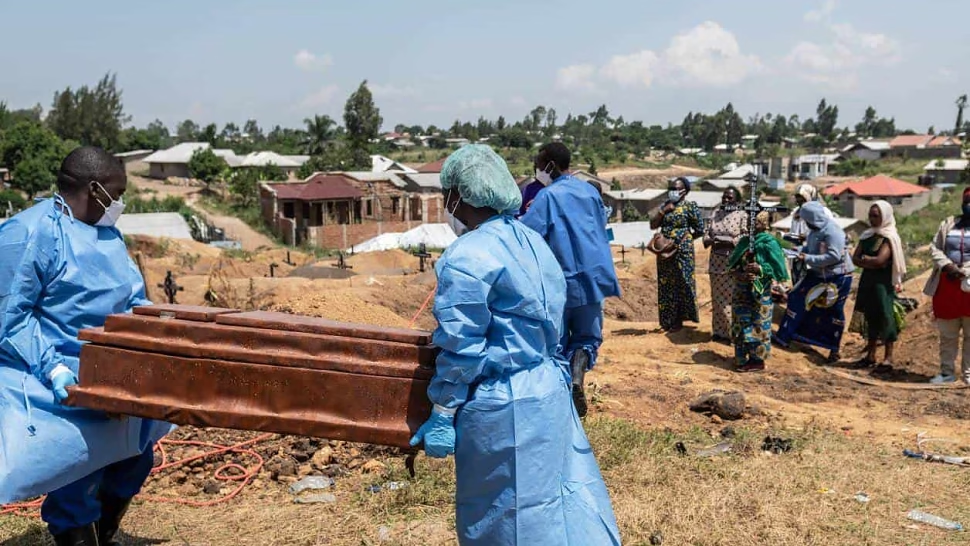
The Kenyan Ministry of Health ordered to stop the construction of an Ebola quarantine center for US citizens. Minister Aden Duale’s decision came a day after a court found him in contempt for allowing the project to continue, despite a previous court order requiring its stoppage.

The court had requested to stop the works while a lawsuit filed by civil and constitutional rights organizations is resolved.

Reactions and local context

The center was designed to receive Americans exposed to Ebola abroad, avoiding their direct repatriation to the United States. Protests in the local community have been intense and have left people dead in recent weeks, although official figures are not available.

The case reflects the tensions between the decisions of the Executive and the judiciary in Kenya, as well as citizen unrest regarding projects that they consider imposed from abroad.

Continue reading