US airstrikes in Iran
The recent US offensive against targets in Iran sparked a new escalation in the Middle East. Tehran responded with missiles towards countries in the Persian Gulf allied with Washington, which set off alarms in the region. Air defense systems were activated in Bahrain, Kuwait, Qatar and Jordan.
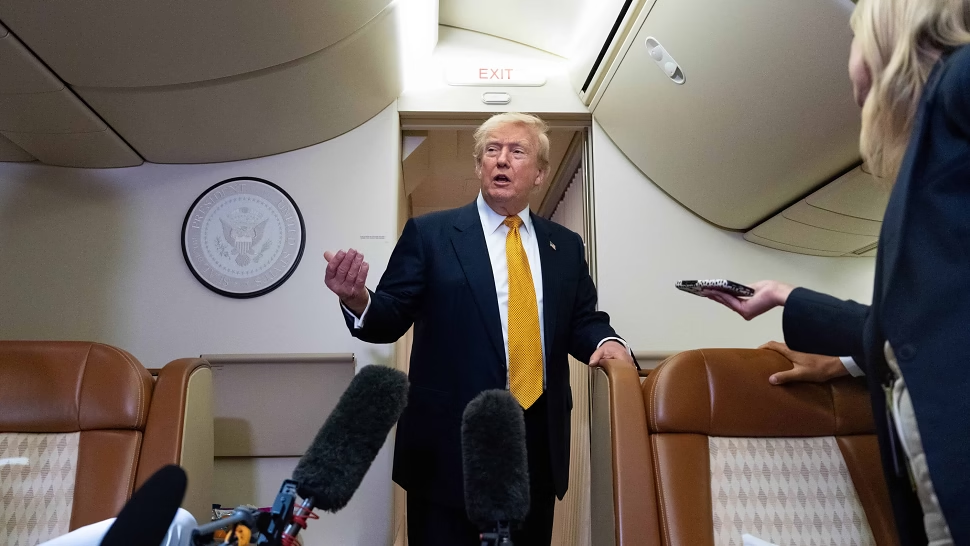
President Donald Trump justified the actions as a response to Iranian attacks on shipping in the Strait of Hormuz. He warned that any new aggression will receive a “much worse” response. Although he assured not to seek a prolonged war, he left open the possibility of intensifying military operations.
The US Central Command reported that it attacked around 90 military targets in Iranian territory to reduce Tehran’s ability to threaten shipping in that key sea route for the global oil and gas trade. Iranian authorities reported at least 14 dead and 78 injured after the bombings, in addition to explosions near the Bushehr nuclear power plant and in other cities.
Reactions and consequences
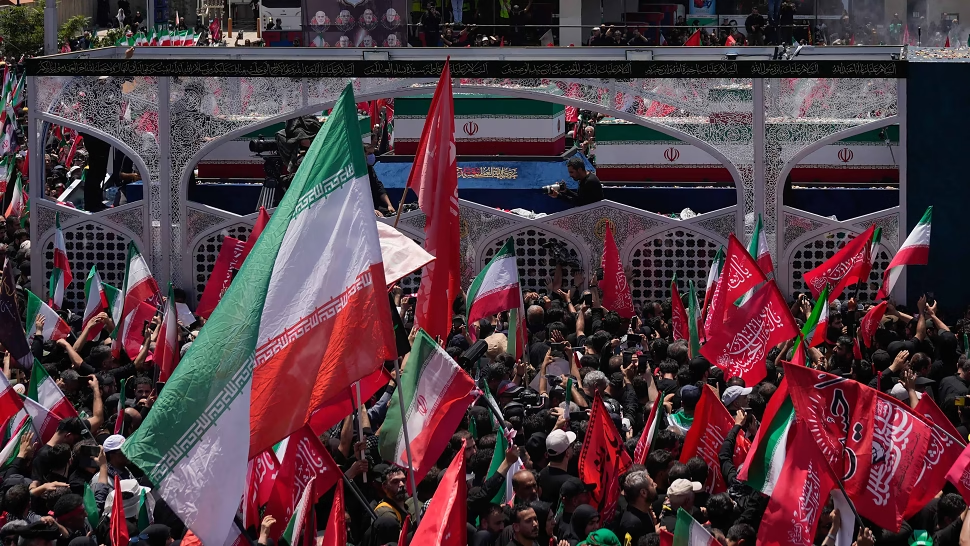
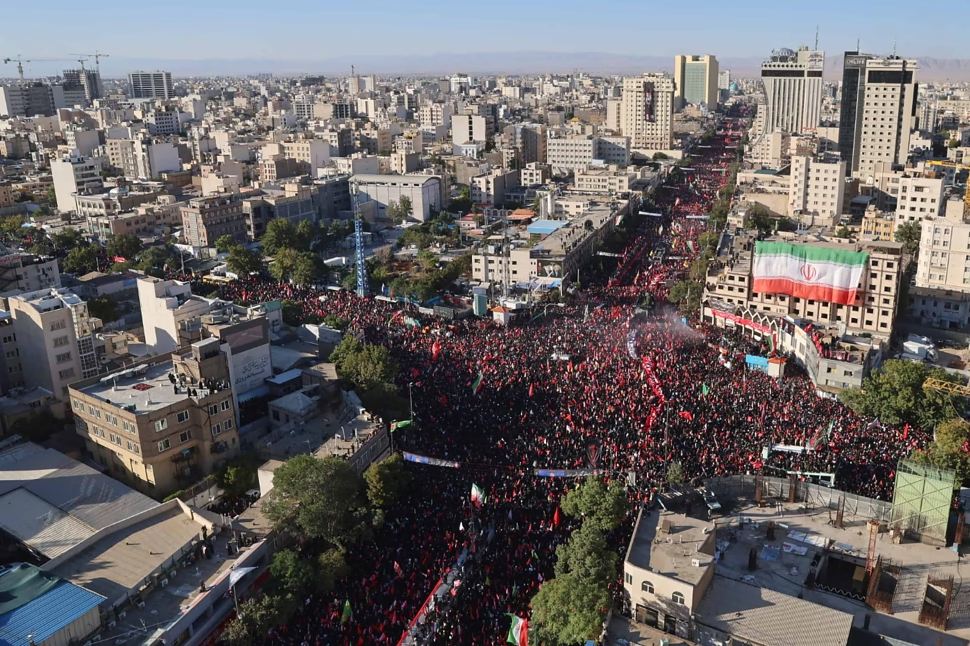
Iran accused Washington of breaking previous commitments. The speaker of the Iranian Parliament, Mohammad Bagher Qalibaf, stated that his country will not give in to pressure and threatened retaliation if the attacks continue. The new escalation occurs while differences persist over the future of the provisional agreement.
The clashes rekindle fears of a regional war affecting global energy supplies. The Strait of Hormuz, through which a significant part of the oil trade transits, remains under pressure. Negotiations for a definitive agreement remain in a scenario of high uncertainty.