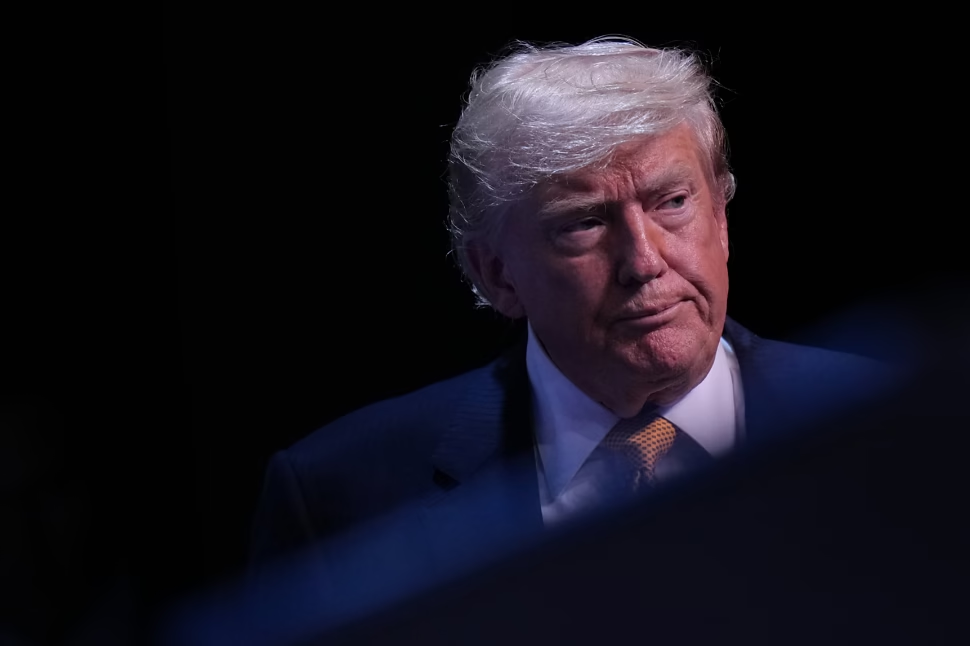
Trump questions the ceasefire with Iran and raises tension

The American president sows doubts about the ceasefire with Iran and does not rule out more military action.

The statements of the President of the United States, Donald Trump, about the conflict with Iran once again generated uncertainty. He assured that he considers the ceasefire reached between both nations to be over, although he ruled out that the recent US attacks represent a return to a protracted war.

The president affirmed that he is no longer seeking a new agreement with Tehran and maintained that Washington could “finish the job” if the situation requires it.

RelatedTrump says he talks to Iran; Tehran denies it and tension persists

Uncertain course after the ceasefire

Trump’s shifting stance has cast doubt on the conflict, just weeks after both sides reached a tentative deal. While he toughens his speech and authorizes new military operations against Iranian targets, several countries maintain emergency efforts to prevent the collapse of the ceasefire and stop a new escalation in the Middle East.

Diplomatic sources indicate that Pakistan, Qatar, Egypt, Türkiye and Saudi Arabia are leading efforts to rescue the agreement. The United States accuses Iran of attacking ships in the Strait of Hormuz and delaying negotiations over its nuclear program. Tehran, for its part, maintains that Washington has failed to comply with the agreed commitments and has not guaranteed respect for the ceasefire on other fronts, such as Lebanon.

Specialists believe that Trump could use military pressure as a negotiating tool. Michael Eisenstadt, an analyst at the Washington Institute for Near East Policy, said the presidential threats seek to strengthen the US position in the talks, although he warned that an escalation could lead to a larger conflict. Ali Vaez, of the International Crisis Group, warned that coercive pressure can trigger the war that it is intended to avoid.

In addition to the military implications, a new escalation threatens to raise international oil and fuel prices, which would affect Republicans ahead of the legislative elections in November. Trump minimized that risk and defended the need to prevent Iran from developing nuclear weapons, although he recognized that the oil market directly influences the US economy.
Ebola expands to new areas in Congo; There are 600 deaths

Suspected cases in Tshopo and Haut-Uele raise the Ebola alert in the Democratic Republic of the Congo.

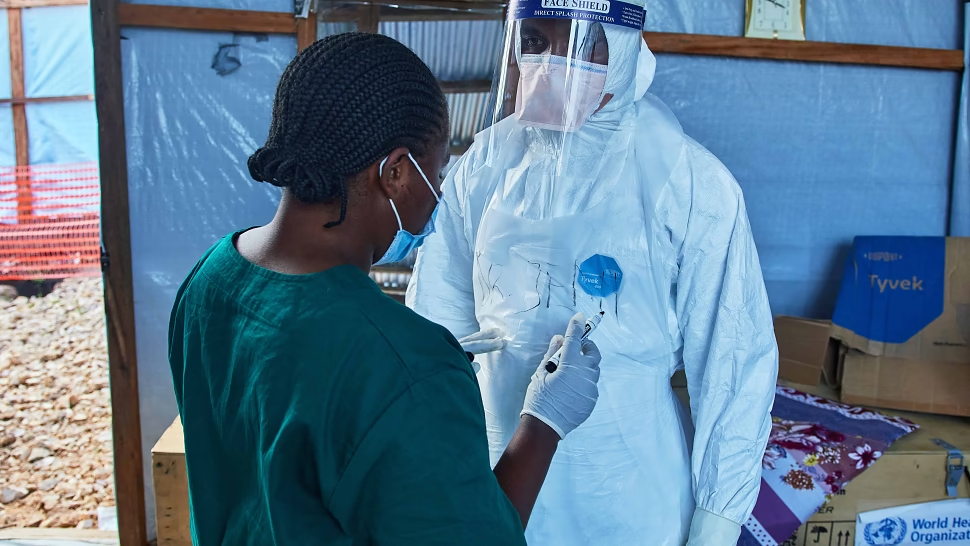
Authorities in the Democratic Republic of the Congo warned this Thursday that the Ebola outbreak could have reached new regions. Suspected cases were detected in the provinces of Tshopo and Haut-Uele. The death toll rises to 600, while confirmed infections total 1,759.

Measures and current situation

The Ministry of Health reported two possible cases in the city of Kisangani, Tshopo province. One is linked to the Nia-Nia area, in Ituri, where the outbreak began. The other has no apparent connection with previous outbreaks, so it is already being investigated.

The government declared a health emergency on May 15, after the virus circulated for several weeks without being detected. The outbreak corresponds to the Bundibugyo variant, a rare strain of Ebola for which there are still no vaccines or approved treatments.

Given the seriousness of the situation, clinical trials began last week to evaluate possible treatments. It is hoped to find an effective alternative that contains the spread of the virus and reduces mortality.

Continue reading

Ukraine intensifies offensive against Russian oil infrastructure

kyiv attacked fuel depots and two ships in the Sea of ​​Azov.

Ukraine hits Russian oil infrastructure

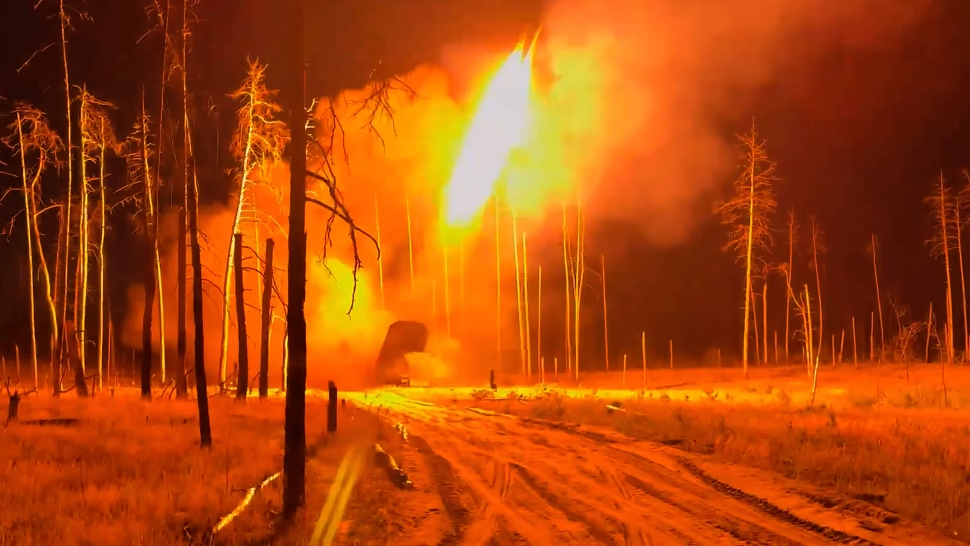
kyiv intensified its drone offensive against Russian fuel depots this Thursday. The impacts hit facilities in the Tver and Stavropol regions, as well as two oil tankers in the Sea of ​​Azov. Russian authorities reported large fires.

The escalation comes a day after US President Donald Trump announced that he will grant Ukraine a license to manufacture Patriot air defense systems. Moscow claimed its air defenses shot down 73 Ukrainian drones. For its part, kyiv noted that Russia responded with 94 attack drones and two ballistic missiles against Ukrainian territory.

Russian response and dynamics of the confrontation

The Ukrainian attacks directly affect Russia’s ability to manage its energy infrastructure. Images of the fires on oil tankers circulated widely, evidencing the impact of the offensive. Russia’s response was immediate, increasing the use of drones and missiles in its counteroffensive.

This dynamic reflects the growing tension in the region. Both countries continue to exchange blows, which makes the situation of the confrontation even more complex.

Continue reading

Calabria maintains Cuban doctors despite pressure from the US

More than 200 Cuban doctors continue working in Calabria hospitals despite warnings from Washington.

Cuban doctors in Calabria: key support for regional health

The Italian region of Calabria continues to hire Cuban doctors to support its health system, despite pressure from the United States to cancel these agreements.

Currently, more than 200 professionals from the island work in hospitals in this area of ​​southern Italy. Its arrival, starting in 2023, has been decisive in reversing the closure of services due to lack of personnel.

Local health authorities report that Cuban doctors managed to drastically reduce waiting times. At the Polistena hospital, for example, patients went from waiting up to 12 hours to being treated in less than an hour.

The shortage of medical personnel in Calabria was critical. The incorporation of these professionals allowed us to keep emergency areas open and improve general care. Despite warnings from Washington, Italian authorities defend cooperation as a pragmatic solution to an urgent need.

Continue reading