The escalation that no one knows how to stop
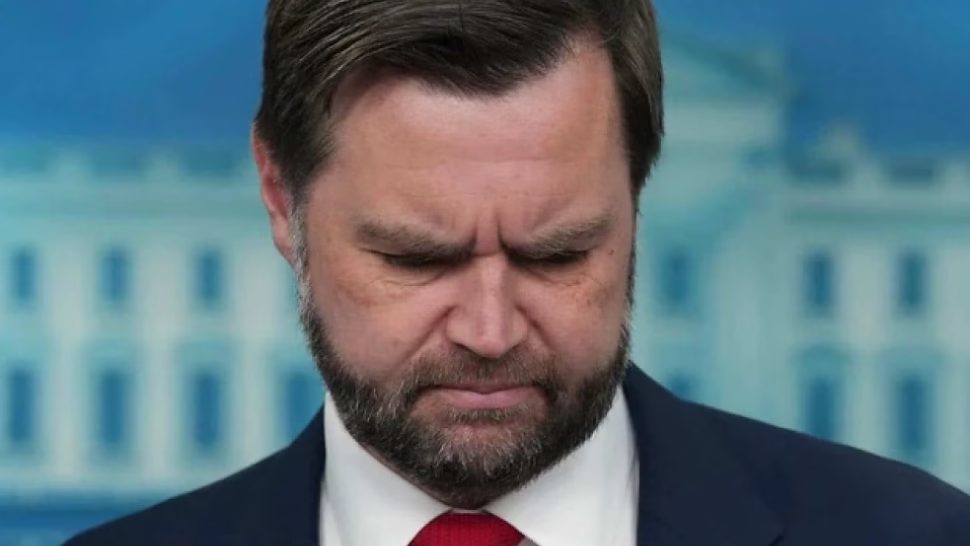
Monday dawned with more bombs. Israel and the United States continued to hit Iran, and Tehran responded by firing on Israel, Gulf nations and vital energy targets. President Donald Trump warned that this could last several weeks, perhaps longer.
“The hardest blows are yet to come from the United States military,” said Secretary of State Marco Rubio.
The death of Iran’s supreme leader, Ayatollah Ali Khamenei, appears to have eliminated any hint of a truce. Places like Dubai, usually safe, have been hit. The chaos is total: hundreds of thousands of stranded passengers, skyrocketing oil prices and US allies helping to intercept missiles.
Energy infrastructure in the spotlight
With global markets already in shock, the attacks expanded to the heart of global energy production. Drones attacked the Saudi Ras Tanura refinery, with capacity for half a million barrels per day.
“The attack on Ras Tanura marks a significant escalation,” said Torbjorn Soltvedt, an analyst at Verisk Maplecroft. “The Gulf’s energy infrastructure is now clearly in the crosshairs.”
Qatar shot down two Iranian bombers and announced the indefinite cessation of its liquefied natural gas production. Gas prices in Europe shot up 40% instantly.
The Strait of Hormuz, through which a fifth of the world’s oil passes, is also the scene of attacks on ships. It is the bottleneck that everyone fears will close.
The front multiplies: Lebanon and nuclear issues
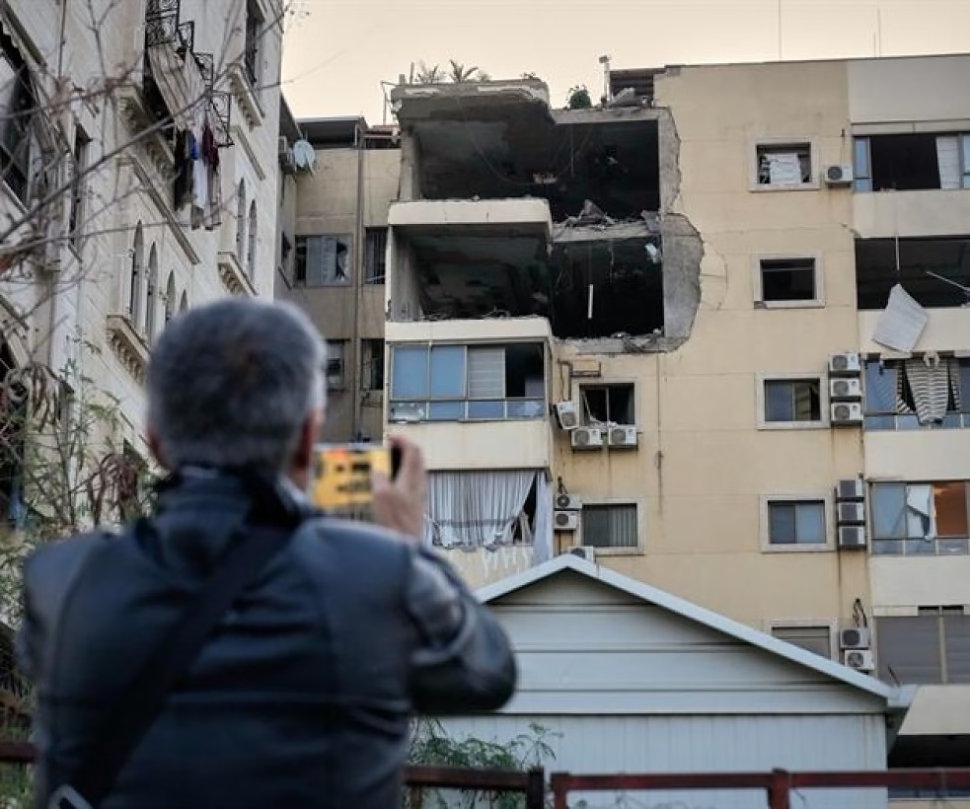
Hezbollah came into play. The group launched missiles from Lebanon toward Israel for the first time in more than a year, citing Khamenei’s death as the reason. The Israeli response was brutal: at least 52 dead in Beirut and southern Lebanon.
“We will not be done until the threat from Lebanon is eliminated,” declared Israeli Lieutenant General Eyal Zamir.
Meanwhile, Reza Najafi, Iranian ambassador to the international nuclear body, denounced air strikes against the Natanz enrichment facility.
“Their justification that Iran wants to develop nuclear weapons is simply a big lie,” Najafi said.
Israel has not acknowledged the attack, but does claim to be hitting Iran’s “leadership and nuclear infrastructure.”
The human cost grows and the streets become empty
The figures are grim. The Iranian Red Crescent reports at least 555 dead from the bombings. In Israel 11 people have died; in Lebanon, dozens. Six American soldiers have lost their lives.
Heartbreaking images circulate on social networks. Iranian Minister Abbas Araghchi shared an aerial photo of rows of graves, claiming they were for more than 160 girls killed in an attack on a school.
In Jerusalem, three minor victims of an Iranian missile were buried on the Mount of Olives.
In Tehran, the streets are practically deserted. People take shelter as the Basij paramilitary force sets up checkpoints. A student in Babol expressed the collective confusion to the AP:
“We don’t know whether to be happy about the elimination of the criminals who oppress us or to remain silent in the face of the war… and the terror that is happening.”
No plan or end in sight
US B-2 stealth bombers dropped 2,000-pound bombs on Iranian missile facilities. Trump claims to have destroyed the Iranian naval headquarters. But what is the final goal?Trump talks about destroying military capabilities and preventing a nuclear bomb. It also lists grievances dating back to 1979 and calls on Iranians to “take control” of their government. There are no signs of such an uprising.
Defense Secretary Pete Hegseth insists: “This is not Iraq. This is not endless.” But Danny Danon, Israeli ambassador to the UN, says it will continue “as long as necessary.” Including a possible ground invasion of Lebanon.
While leaders talk about weeks or months, the bombs are dropping today. And the world watches as a localized conflict transforms into a perfect storm with the potential to paralyze the global economy.