El Niño could be one of the most intense since 1950, NOAA warns

NOAA warns that El Niño could be one of the most powerful since 1950.

NOAA Forecast

The El Niño phenomenon is heading towards an intensity that could be historic. The National Oceanic and Atmospheric Administration (NOAA) of the United States reported that there is an 81% probability that it will reach the “very strong” category during the fall of 2023. If so, it would become one of the most powerful recorded since 1950.

According to specialists, El Niño quickly went from a weak to moderate phase and continues to strengthen with no signs of slowing down. Equatorial Pacific Ocean temperatures are at record levels for this time of year. This increase is driven by both the natural phenomenon and global warming derived from human activity.

RelatedEl Niño 2026: high probability of strong intensity

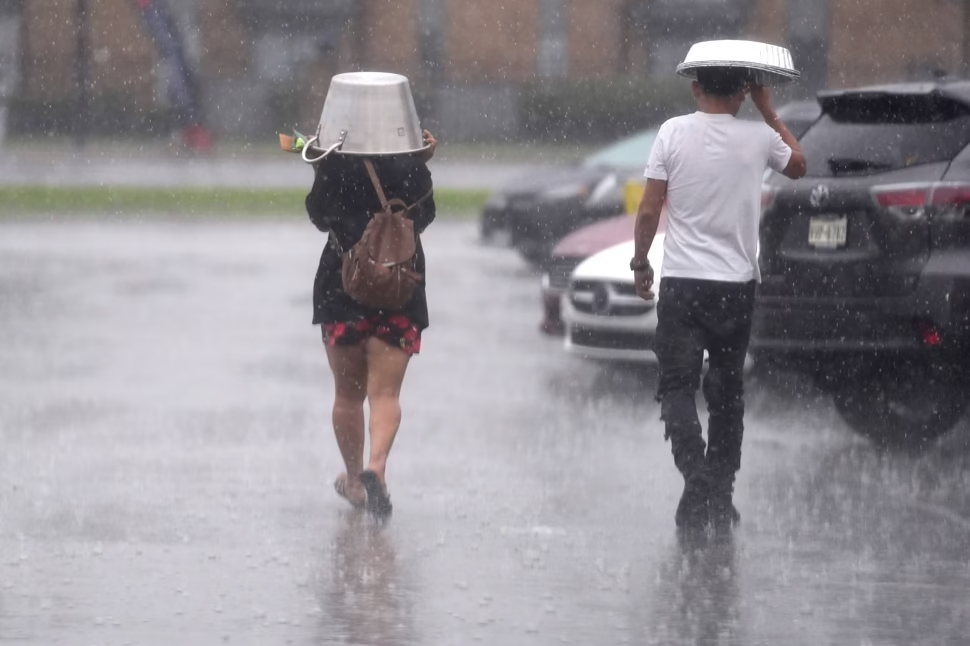
The most intense effects are expected for autumn and winter. Droughts, torrential rains, heat waves and alterations in weather patterns are expected in various regions of the planet. In the United States, the forecast calls for a wetter winter in the south and warmer temperatures in the north. On the other hand, the Atlantic could experience a below-average hurricane season.

Calabria maintains Cuban doctors despite pressure from the US

More than 200 Cuban doctors continue working in Calabria hospitals despite warnings from Washington.

Cuban doctors in Calabria: key support for regional health

The Italian region of Calabria continues to hire Cuban doctors to support its health system, despite pressure from the United States to cancel these agreements.

Currently, more than 200 professionals from the island work in hospitals in this area of ​​southern Italy. Its arrival, starting in 2023, has been decisive in reversing the closure of services due to lack of personnel.

Local health authorities report that Cuban doctors managed to drastically reduce waiting times. At the Polistena hospital, for example, patients went from waiting up to 12 hours to being treated in less than an hour.

The shortage of medical personnel in Calabria was critical. The incorporation of these professionals allowed us to keep emergency areas open and improve general care. Despite warnings from Washington, Italian authorities defend cooperation as a pragmatic solution to an urgent need.

Continue reading

Storm Maysak leaves 39 dead in Guangxi, China

Storm Maysak leaves at least 39 dead and 9 missing in Guangxi.

Floods in Guangxi

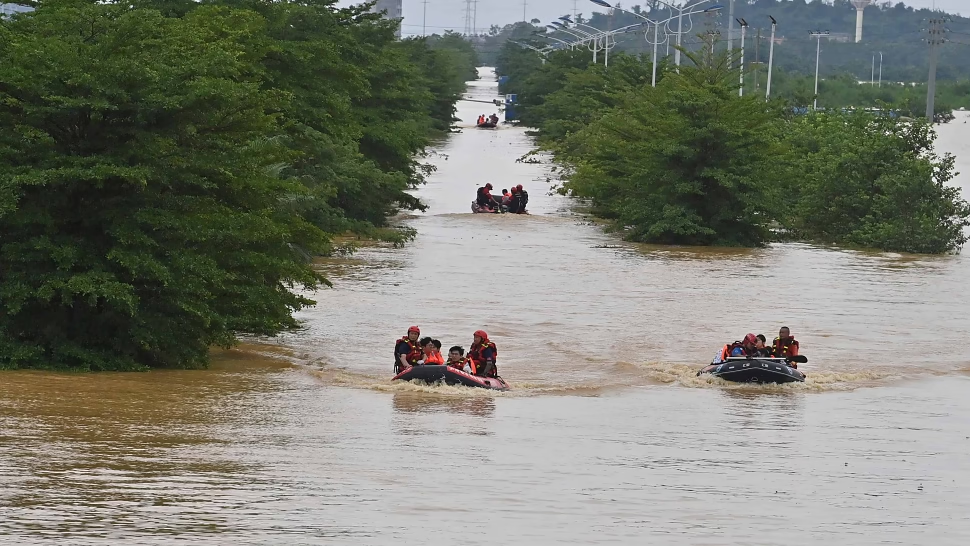
At least 39 people died and nine remain missing after severe flooding caused by Tropical Storm Maysak in the Chinese region of Guangxi, authorities reported this Thursday.

Most of the deaths occurred in the city of Hengzhou, where the partial collapse of a dam unleashed a flood of water that devastated entire communities.

Record rains, which began over the weekend, caused reservoirs to overflow, left thousands of people trapped and forced approximately 130,000 residents to evacuate.

Continue reading

The United States attacks targets in Iran and tensions escalate

New US airstrikes in Iran raise regional tension and put the ceasefire at risk.

US airstrikes in Iran

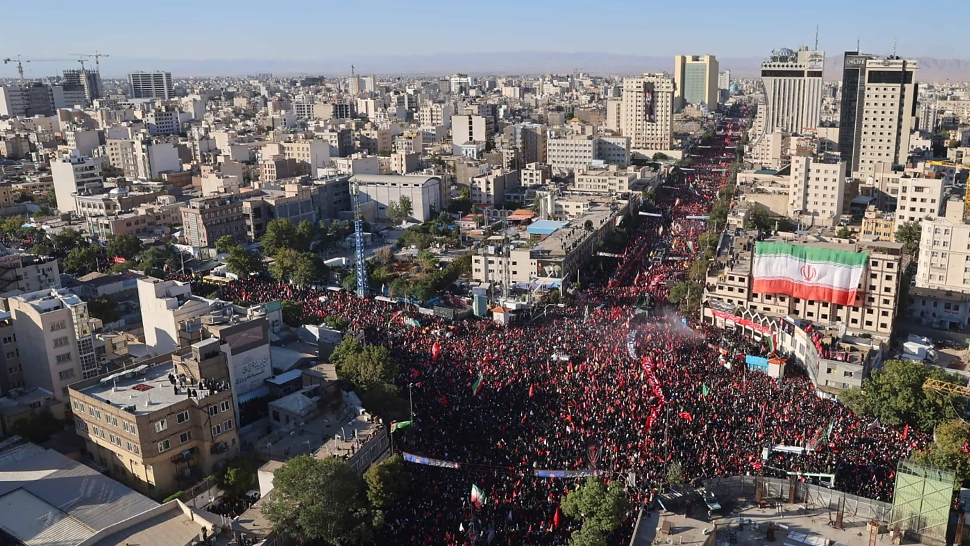
The recent US offensive against targets in Iran sparked a new escalation in the Middle East. Tehran responded with missiles towards countries in the Persian Gulf allied with Washington, which set off alarms in the region. Air defense systems were activated in Bahrain, Kuwait, Qatar and Jordan.

President Donald Trump justified the actions as a response to Iranian attacks on shipping in the Strait of Hormuz. He warned that any new aggression will receive a “much worse” response. Although he assured not to seek a prolonged war, he left open the possibility of intensifying military operations.

The US Central Command reported that it attacked around 90 military targets in Iranian territory to reduce Tehran’s ability to threaten shipping in that key sea route for the global oil and gas trade. Iranian authorities reported at least 14 dead and 78 injured after the bombings, in addition to explosions near the Bushehr nuclear power plant and in other cities.

Reactions and consequences

Iran accused Washington of breaking previous commitments. The speaker of the Iranian Parliament, Mohammad Bagher Qalibaf, stated that his country will not give in to pressure and threatened retaliation if the attacks continue. The new escalation occurs while differences persist over the future of the provisional agreement.

The clashes rekindle fears of a regional war affecting global energy supplies. The Strait of Hormuz, through which a significant part of the oil trade transits, remains under pressure. Negotiations for a definitive agreement remain in a scenario of high uncertainty.

Continue reading