A pain that crossed oceans
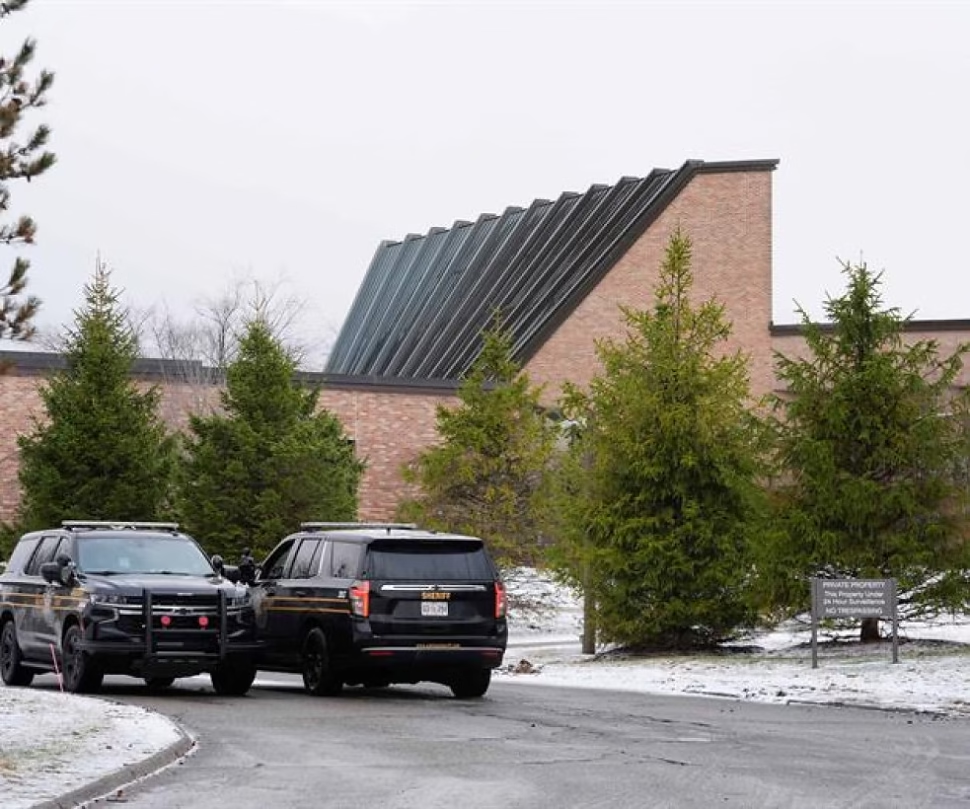
The news came from West Bloomfield, Michigan, with that coldness that the first dispatches have. A vehicle crashed into the Temple Israel synagogue. But the story, the real one, began days before and thousands of kilometers away.
Ayman Mohamad Ghazali, 41, was a US citizen born in Lebanon. Days before the incident in Michigan, he lost four family members in an Israeli airstrike in his native country. It is impossible not to see the dotted line that connects both points on the map.
From Lebanon to Michigan
Authorities are investigating the act as violence directed against the Jewish community. According to reports, the man rammed the building with his car, moved down a hallway and the vehicle ended up catching fire inside the premises.
The attacker was killed by security personnel after the attack.
This is where journalism gets awkward. How is this covered? As an isolated act of hate? As the direct consequence of an international conflict that reaches the streets of the United States? The answer probably lies somewhere in between, but that nuance is often lost.
Temple Israel is one of the largest Reform congregations in the country. A place where families go to pray, to find community. Now it is also the scene where a personal pain, inflamed by a distant war, erupted in the most tragic way.
When a global conflict leaks into everyday life like this, leaving victims on both sides of the ocean, we have to ask ourselves not only what happened, but why it continues to happen. Cycles of violence rarely remain contained within their original boundaries.