An Analysis of the Repercussion of Miguel Bosé’s “Importante Tour” on the Texas Border
The phenomenon of the tour “Importante Tour” by the Spanish singer and composer Miguel Bosé continues its journey, analyzing itself as a case study in the permanence and evolution of an artist in the contemporary music industry. His presentation on Saturday, October 18, 2025 at the Payne Arena in Hidalgo, Texas constitutes an empirical testimony of his validity and the deep connection he maintains with his audience after more than five decades of professional career. This event, located in a strategic border enclave, brought together a crowd of thousands of followers, a quantitative figure that reflects a sustained success.
The methodology of the concert can be broken down into a structure deliberately designed to evoke a chronological and emotional journey. With a duration that exceeded two hours, the show functioned as an applied musicological investigation, methodically covering the different creative eras of the artist. It was not a simple succession of songs, but a carefully orchestrated narrative to provoke a specific emotional response in the audience, based on collective memory and nostalgia.
Deconstruction of the Repertoire and the Public Response
The analysis of the setlist reveals a dual strategy: consolidating the pillars of his legacy while reaffirming themes from different generations. The opening, after a formal thank you that established a personal connection with the audience, gave way to a repertoire that included everything from compositions that defined the Madrid scene and pop in Spanish of the 80s, to works from more recent times. Melodies like “Mirarte” and “El Hijo del Capitán Trueno” acted as sound artifacts of an era, triggering immediate recognition.
Subsequently, the sequence continued with songs such as “Aire Soy”, “Bambú” and “Este Mundo Va”, demonstrating the stylistic versatility of the artist and his ability to transition between pop, introspective ballads and songs with a social message. This segment of the concert evidenced Bosé’s lyrical and compositional evolution, allowing us to observe a common thread that goes from new wave experimentation to the maturity of his artistic proposal.
The climax of the interaction was reached with the interpretation of massive hits, those that have transcended to become part of the Hispanic collective imagination. Songs like “Amante Bandido”, “Don Diablo” and “Te Amaré” were received with a collective choreography phenomenon, where attendees were not mere spectators, but active participants who completed the performance with their voices. This information is crucial to understand the depth of the artist-public bond; The lyrics of these songs are so internalized in the sound biography of the followers that their performance becomes a community act.
The Border Context and the Survival of a Musical Legacy
The choice of Hidalgo, Texas, as the headquarters is not a minor element. Located in the Rio Grande Valley, this border town represents a cultural microcosm where Mexico and the United States meet. The presentation of a Spanish pop icon on this stage underscores the universality of his music and its ability to act as a cultural bridge. The massive attendance demonstrates that Bosé’s legacy has a significant penetration in Hispanic communities that, regardless of their geographical location, identify with the narratives of his songs.
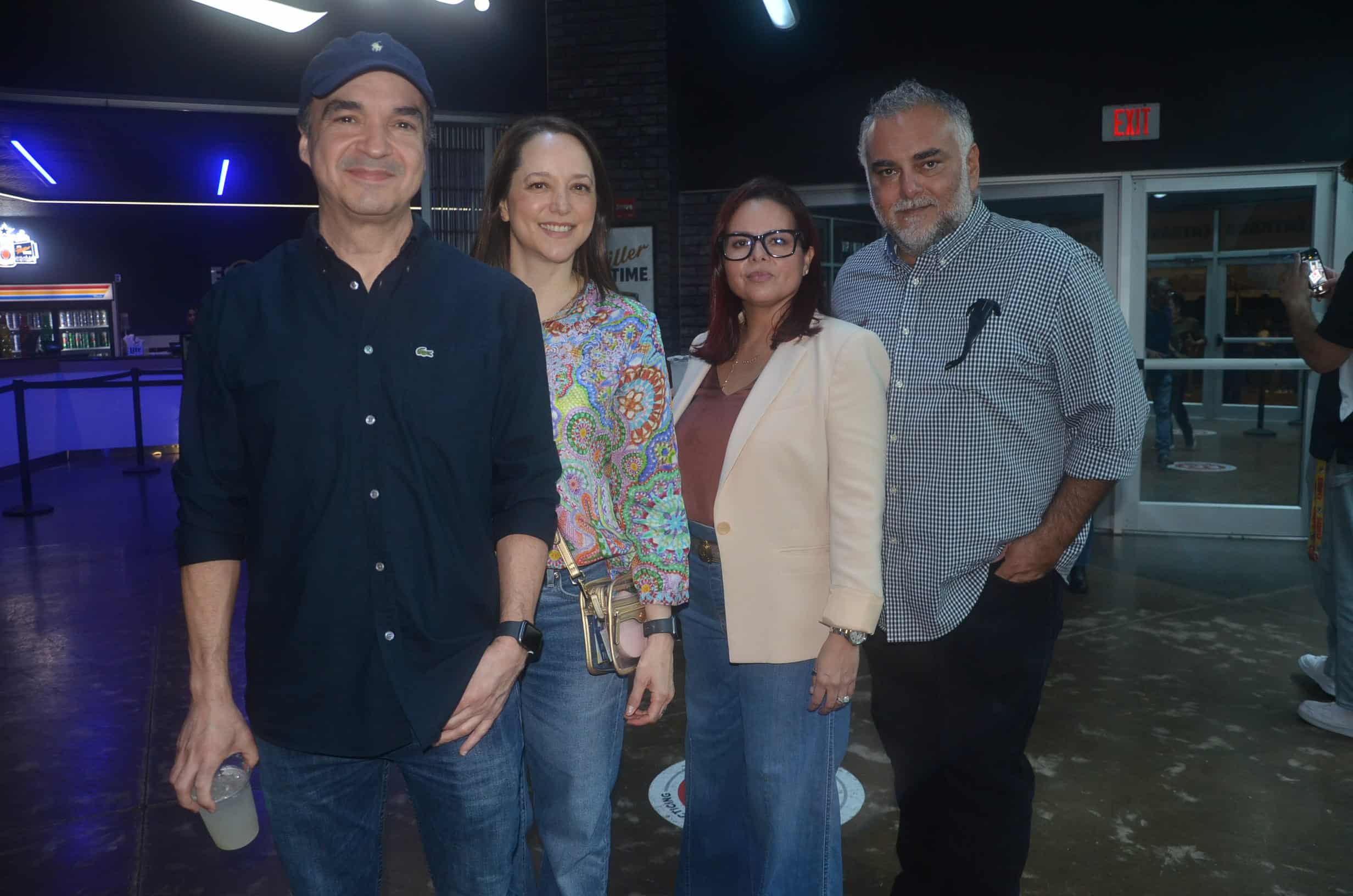
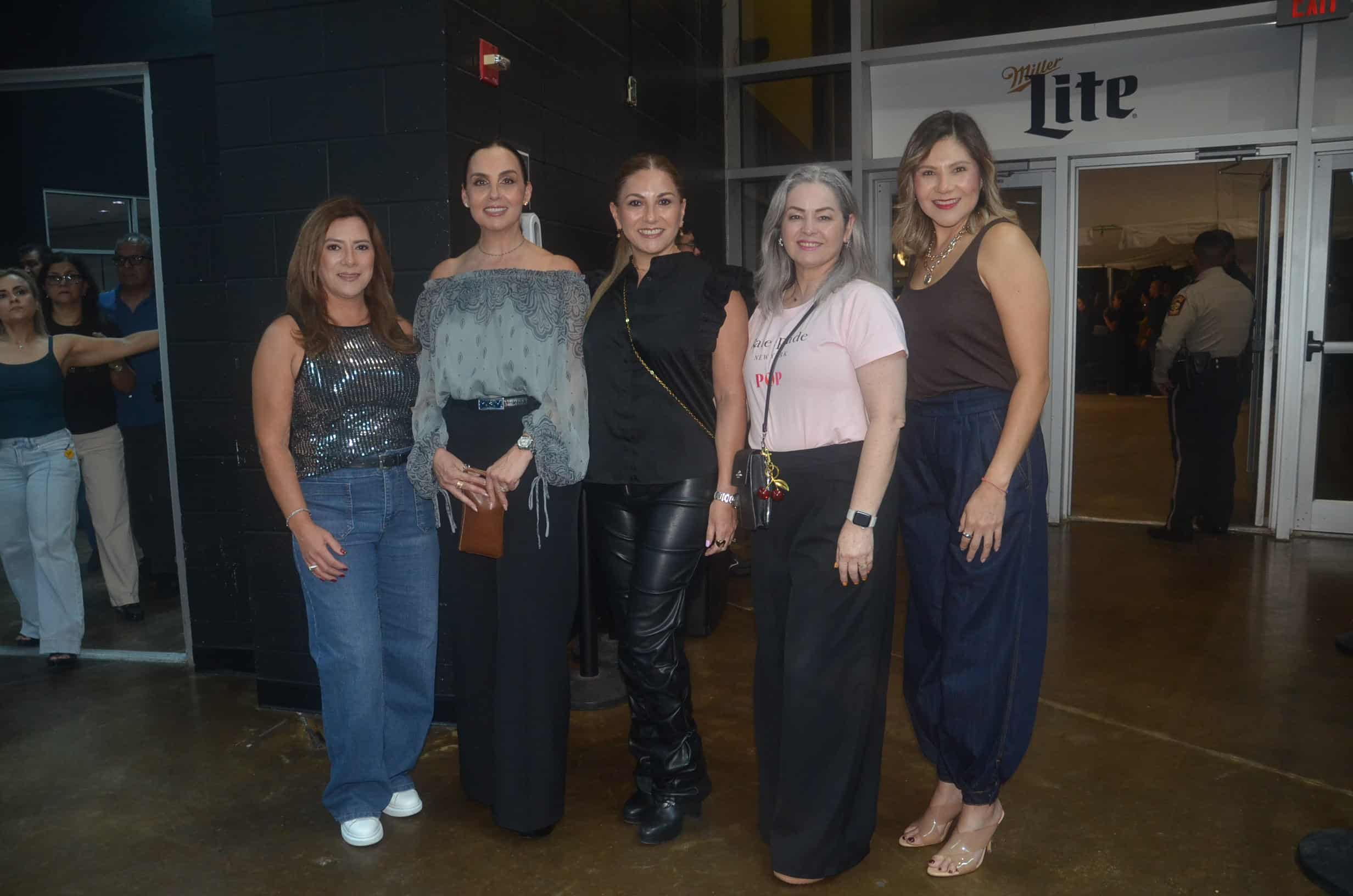
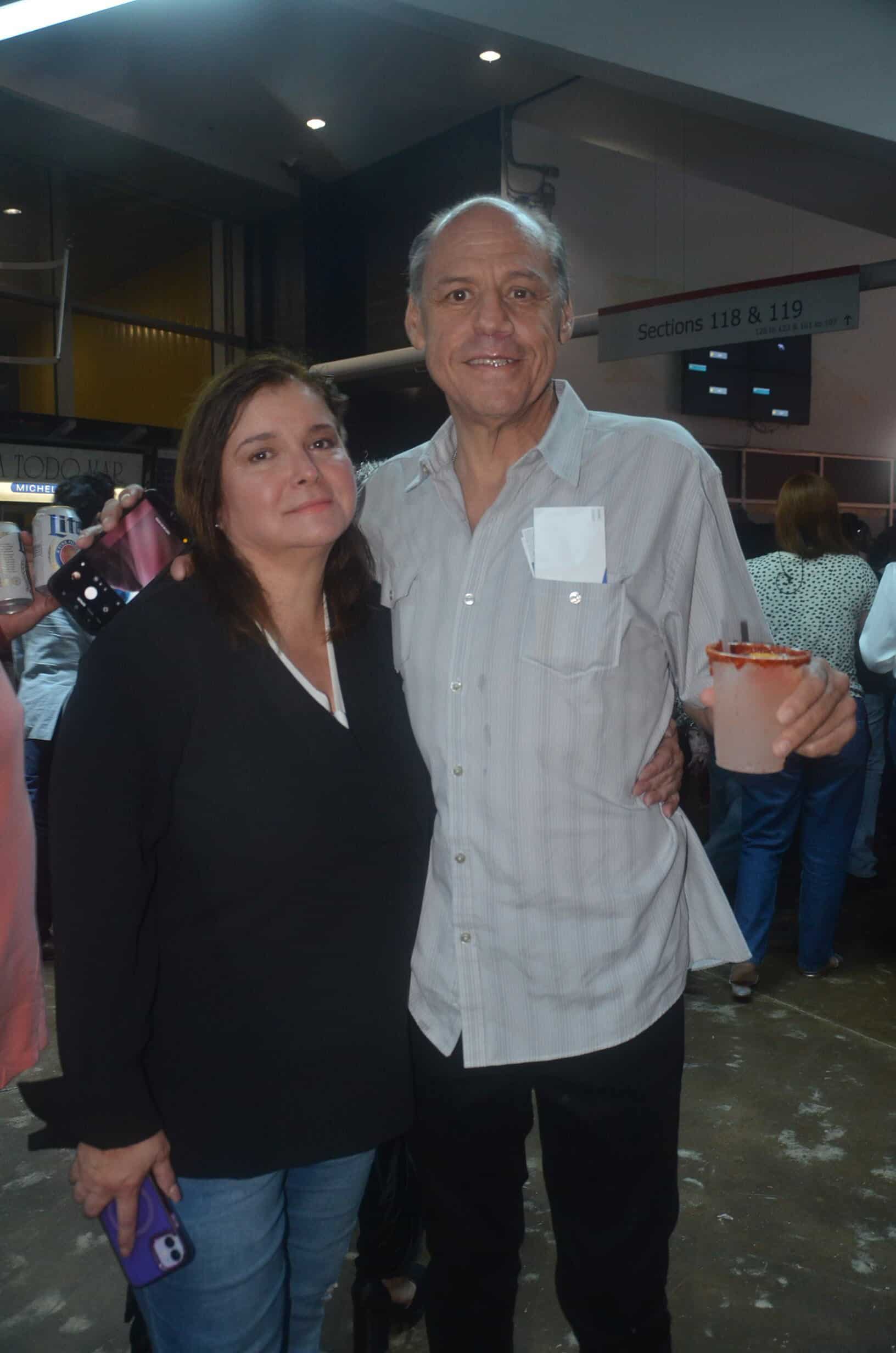
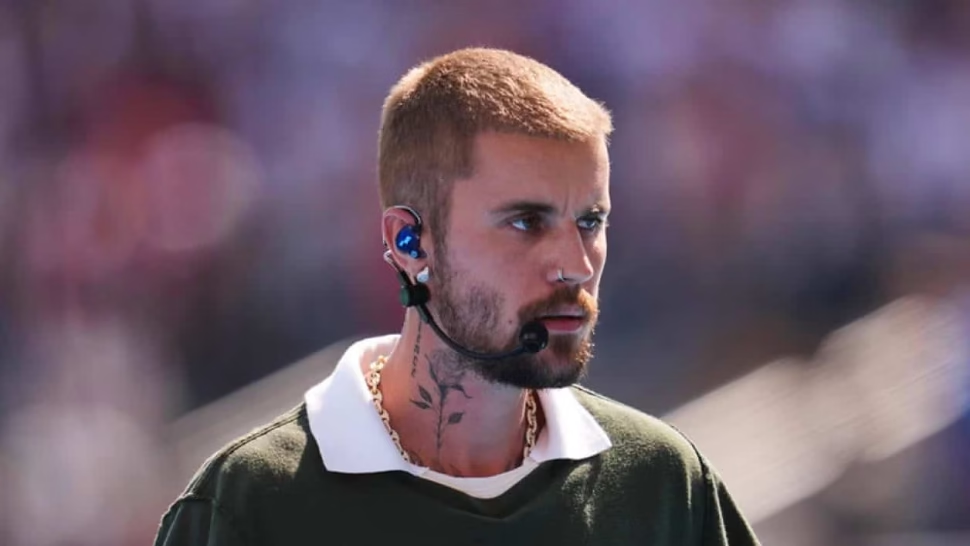
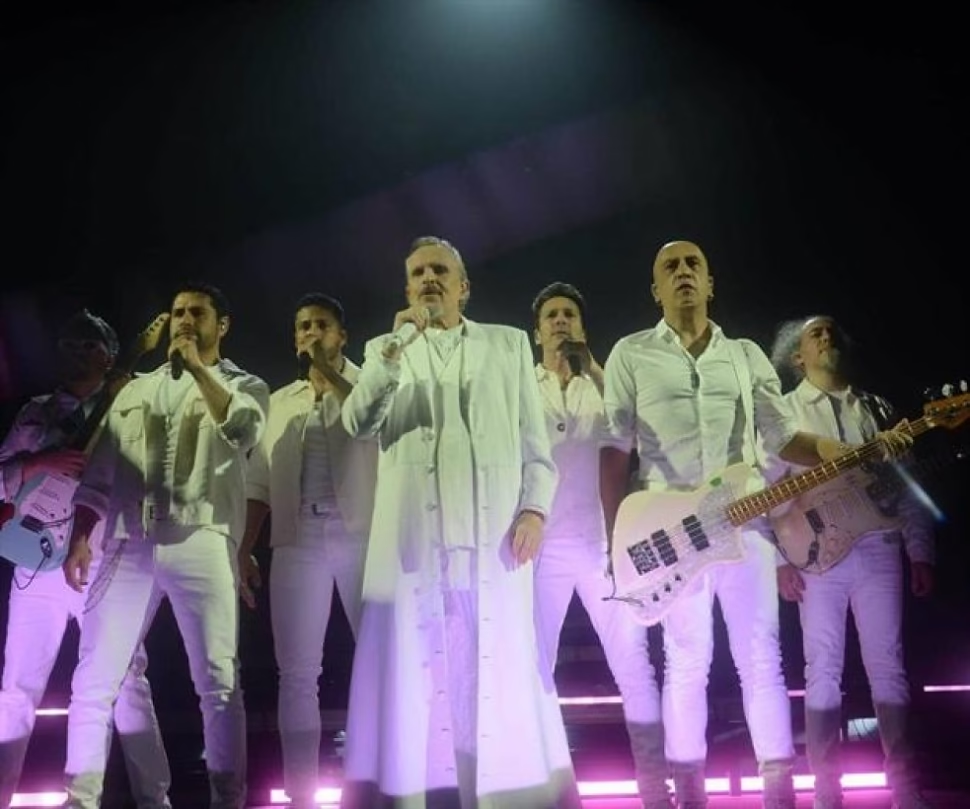
From a technical and production perspective, the concert at Payne Arena was characterized by a majestic staging, a term that refers to a high-end audiovisual production, with lighting, sound and visuals that complemented the experience without overshadowing the centrality of the musical performance. The event’s photo gallery captures moments of intense expression on the part of the artist and emotional communion with the audience, serving as documentary evidence of the energy exchanged during the evening.
In conclusion, Miguel Bosé’s presentation within the framework of his “Importante Tour” can be classified as a success in multiple dimensions: artistic, due to the impeccable execution of a vast and complex repertoire; emotional, due to the ability to generate a nostalgic and at the same time vibrant experience; and commercial, due to the overwhelming response of the public in a specific and symbolically relevant market such as the Texas border. This event only corroborates the hypothesis that Bosé’s music has a timeless quality, functioning as a living archive of emotions and memories for successive generations.
The investigation into the impact of his tour continues, but the data collected in Hidalgo, Texas, offers a solid preliminary conclusion: Miguel Bosé’s relevance is far from being a phenomenon of the past; is an active and resonant force in today’s musical landscape.
Did you witness this historic concert or has its musical legacy marked your life? Share this analysis on your social networks and help us expand the conversation about music that transcends borders. Explore more content about legendary artists and their tours on our platform.