The Overwhelming Success of a Masterpiece
On a night full of electricity and expectation, where the fate of Mexican seventh art hung in the balance, a monumental work emerged to devastate all predictions. The heartbreaking portrait of a forest ranger, an anonymous heroine willing to immolate herself on the altar of conservation, rose like a colossus at the 23rd edition of the Morelia International Film Festival. “La Reserva”, the debut feature of the visionary Pablo Pérez Lombardini, not only conquered the screen, but also captured the hearts of the jury and the public, achieving an epic triumph that will resonate in the annals of national cinematography.
The film, a cinematographic gem filmed in deeply evocative black and white, narrates the epic struggle of Julia, a forest ranger played with overwhelming strength by Carolina Guzmán. His character discovers, with the terror of someone who witnesses an unforgivable crime, that the natural sanctuary he swore to protect is being devoured by the shadows of illegal logging. But the plot takes a visceral turn when death threats begin to rain down on his life, tearing his soul at an existential crossroads: saving his own family or offering himself as the last shield of the nature he loves. This narrative, a desperate hymn to resistance, became the great winner of the evening, snatching the awards for Best Mexican Feature Film, Best Director and Best Actress.
The Verdict of the Cinema Gods
The jury, an assembly of titans chaired by acclaimed American director Ava DuVernay and made up of luminaries such as Spanish filmmaker Pablo Berger, producer David Linde and Italian director Andrea Pallaoro, was spellbound. In their deliberations, they called the winning film a “symphony of stillness and rupture,” a praise that barely captures the magnitude of its impact. They poured heavenly praise on the director, Pérez Lombardini, stating that he made the film “as if he were listening to the wind, the silence, the tremors inside the heart.” Every frame, every whisper of the wind through the trees, every desperate look of the protagonist, was woven with a sensitivity that transcended the screen to become an environmentalist war cry.
Upon ascending to Olympus to receive the award for best feature film, a visibly moved Pérez Lombardini turned all the spotlight on the true heroes of this story: the rangers of the El Triunfo Biosphere Reserve in Chiapas. It was they, with their quiet courage and unwavering devotion, who provided the foundation for this epic. With his voice charged with genuine emotion, the filmmaker declared that these guardians of the earth, in their daily struggle, can only “appeal to the conscience of the people”, illuminating the truth that they are the first beneficiaries of the environmental services that these wonderful spaces provide to the nation. His speech was a heartfelt tribute, an eternal “recognition and gratitude” to those anonymous defenders.
Other Protagonists of a Night of Glory
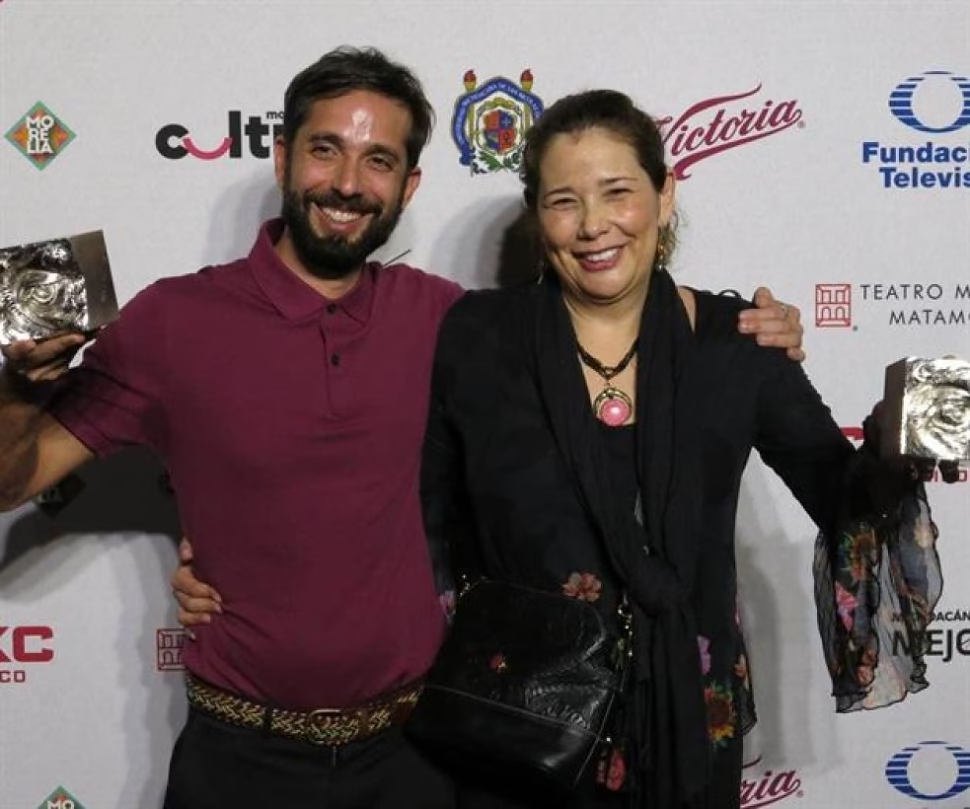
The absence of the award-winning Carolina Guzmán, who according to the director was recovering from health problems, added a veil of mystery and concern to the celebration. However, his triumph was undeniable. Meanwhile, in another corner of the drama, the actors Víctor Prieto and Osvaldo Sánchez saw their souls intertwine in an ex aequo award for Best Actor for their moving representation of the romance between a young man and a Mexican truck driver in “On the Road”, by director David Pablos. The absence of Sánchez, who preferred to celebrate his birthday with his daughter, was made up for by a moving message that Prieto read with pride: “This is what the movie ‘On the Road’ talks about: fatherhood, family ties and love.” A testimony that life and art often mirror each other. This same production was also awarded the Best Photography award for Ximena Amann, consolidating its success.
The tapestry of winners was completed with other threads of brilliance. “The Devil Smokes (and Keeps the Burnt Match Heads in the Same Box)”, a disturbing story about five siblings and their grandmother living in claustrophobic isolation in Mexico in the 90s, won the Best Screenplay award for Ernesto Martínez Bucio and Karen Plata. And in the realm of non-fiction, a ray of justice illuminated the room. Indira Cato won the award for Best Documentary Feature for “Llamarse Olimpia”, a fierce and necessary portrait of Olimpia Coral Melo Cruz, the young pioneer whose relentless battle against cyberbullying and digital sexual violence shocked the country and catalyzed the enactment of a historic law. His film also received an honorable mention, sealing its place as an instrument of social change.
It was an evening where Mexican cinema demonstrated, once again, that its power lies not only in entertaining, but in moving, denouncing and, above all, in transforming reality. “The Reserve” and its traveling companions are not simple films; They are chronicles of our time, mirrors of our struggles and beacons of hope in the darkness.
Were you moved by this triumph of cinema with conscience?Share this news on your social networks and make this story of courage and art reach every corner.Explore more about the winning films and discover the power of contemporary Mexican cinema.