Houthis attack Saudi oil tankers in the Red Sea and raise regional tension

Houthi rebels hit two Saudi ships in the Red Sea; There are no deaths reported.

Attack in the Red Sea

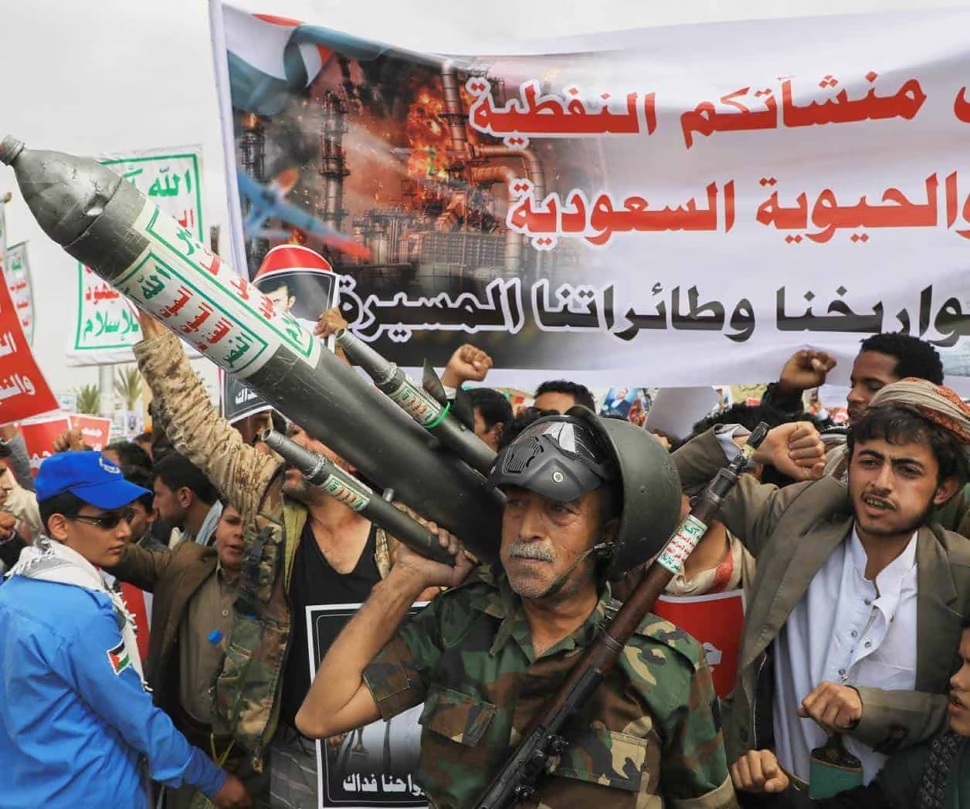
Yemen’s Iran-backed Houthi rebels claim to have hit two Saudi oil tankers in the Red Sea. The action raises tension in the Middle East and threatens to extend the regional conflict.

According to the Houthis, the ships Encelia and Layla were hit and caught fire. No deaths were reported.

RelatedHouthis attack Saudi oil tankers and crude oil exceeds $100

The incident occurs while the international price of oil exceeded $100 per barrel. Fear of new interruptions in energy supply intensifies.

It is the first hit against Saudi vessels since the rebels announced a maritime blockade in the Bab el-Mandeb Strait. This route is strategic for world trade and the transit of oil to various regions.

This attack could have significant repercussions on the global energy market. The Bab el-Mandeb Strait is crucial for the flow of crude oil. The international community is closely watching the Houthis’ next steps and Saudi Arabia’s response.

Cáritas distributes US humanitarian aid in Cuba

Hundreds of boxes with food and hygiene reach Cuban families.

The Cáritas organization began distributing hundreds of boxes with humanitarian aid sent from the United States. The first delivery occurred in the municipalities of Bejucal and Alquízar, near Havana.

The packages contain food and hygiene items. They seek to cover basic needs of vulnerable families on the island.

Context of assistance

The distribution occurs in the midst of a severe economic and energy crisis facing Cuba. It also coincides with the historic political tension between Washington and Havana.

Cáritas explained that the modules include rice, beans, spaghetti, oil, tuna, sardines, sugar and salt. In addition, soap, detergent, toothbrushes, sanitary towels, solar lamps and tablets to purify water.

The aid was sent from the United States. Local authorities and volunteers participate in the delivery logistics. It is expected that in the coming weeks it will spread to other communities.

The crisis in Cuba has generated shortages of basic products and electricity outages. Humanitarian assistance represents temporary relief for many families.

Cáritas is an organization linked to the Catholic Church. Their work in Cuba includes food support and attention to vulnerable sectors.

The delivery of these supplies reflects the humanitarian cooperation that persists despite the political differences between both countries.

Continue reading

Military helicopter crash in Czech Republic leaves one dead

A military helicopter crashes at a Czech base; one soldier dies and four are injured.

Accident at Námešt nad Oslavou air base

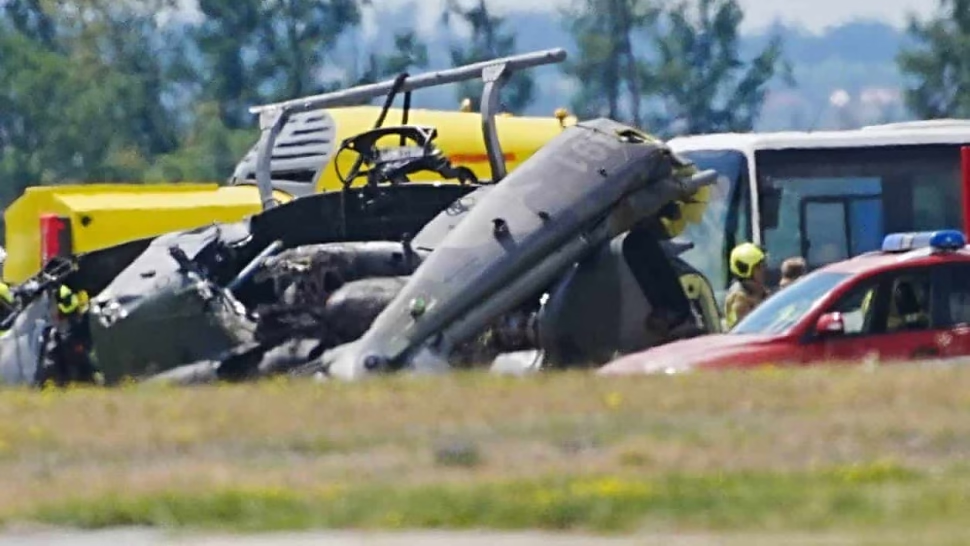
A Czech Army UH-1Y Venom helicopter crashed this Thursday at an air base located southeast of Prague. The accident occurred around noon at Czech Air Force facilities, according to authorities.

Emergency teams responded to the scene. They confirmed the death of one of the occupants, while four other soldiers were injured and taken to hospitals to receive medical attention.

Preventive suspension of flights

Following the accident, the Czech military ordered the temporary suspension of operations of its UH-1Y Venom and AH-1Z Viper helicopters, both of which are American-made. The measure is preventive while the causes of the collapse are clarified.

Authorities have not provided additional details about the condition of the injured or the possible causes of the accident. A preliminary report is expected to be issued in the coming days.

Continue reading

Drug trafficking advances on Ashaninka lands in the Amazon

The Ashaninka community faces armed invasions while asking for state protection in Brazil.

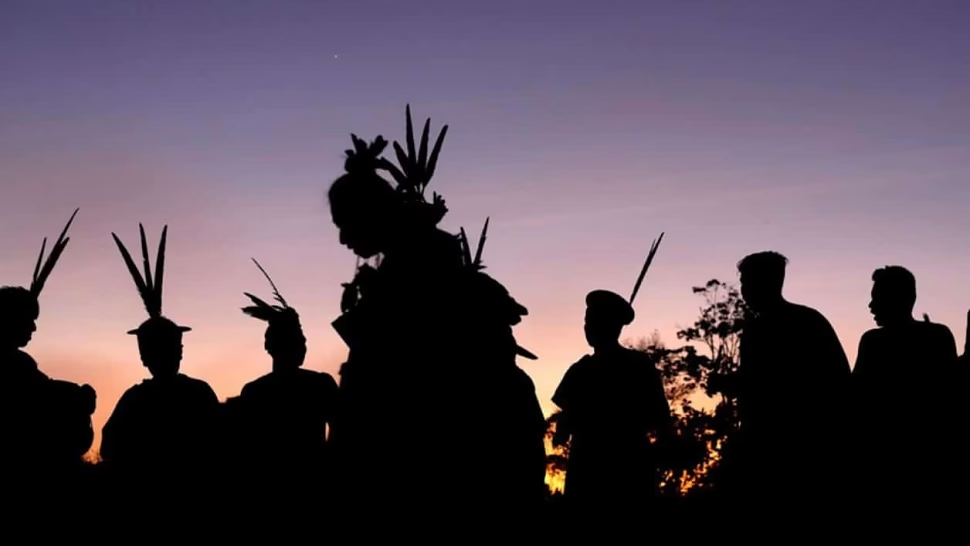
The Ashaninka indigenous community, which recovered its territory on the Brazilian border with Peru three decades ago, now faces a growing threat. Gangs and drug trafficking groups invade their lands, using the Amazon rivers to move drugs. Leaders have reported violent episodes, including this month, and demand protection from the Brazilian government.

The invasion is part of the expansion of criminal routes in the Amazon, known as the Solimões River route. Experts point out that indigenous territories are key to stopping deforestation, but they also offer attractive hideouts for traffickers.

Blind spot in security

Jonatas Soares, mayor of Tabatinga and police officer, said:

“There is an institutional and intercultural blind spot in the public security services provided to indigenous peoples. The State formally recognizes their territories, but fails to translate that presence into continuous protection adapted to their specific needs.”

The Solimões route—from the border with Peru to Manaus—is largely controlled by the Red Command, according to retired colonel César Mello, an expert in Amazon security. Mello warns that indigenous communities are vulnerable due to their remote location, lack of supervision and cultural differences.

Resistance and complaints

The Ashaninka have refused to collaborate with traffickers. In the past, they rejected the construction of a clandestine landing strip. Francisco Piyãko, coordinator of the Organization of the Indigenous Peoples of the Juruá River, related:

“We have a long history of opposing any type of illegal activity.”

On July 6, a group of five armed men—Spanish speakers with machine guns—invaded Kampa territory, threatening families and searching for leaders. Piyãko filed a formal complaint and security forces were deployed. “They came looking for our leaders, with the intention of killing them,” he said.

Brazil’s Indigenous Peoples and Justice ministries did not respond to requests for comment. The Foreign Ministry reported that they will receive the Ashaninka leaders in Brasilia to evaluate joint actions with Peru.

In previous months, Judge Flávio Dino ordered the federal government to intensify work against organized crime in the Amazon. Piyãko stressed that confronting these groups is not the responsibility of the indigenous people, but of the State: “They allowed this to happen due to their absence, so they bear that responsibility.”

Continue reading