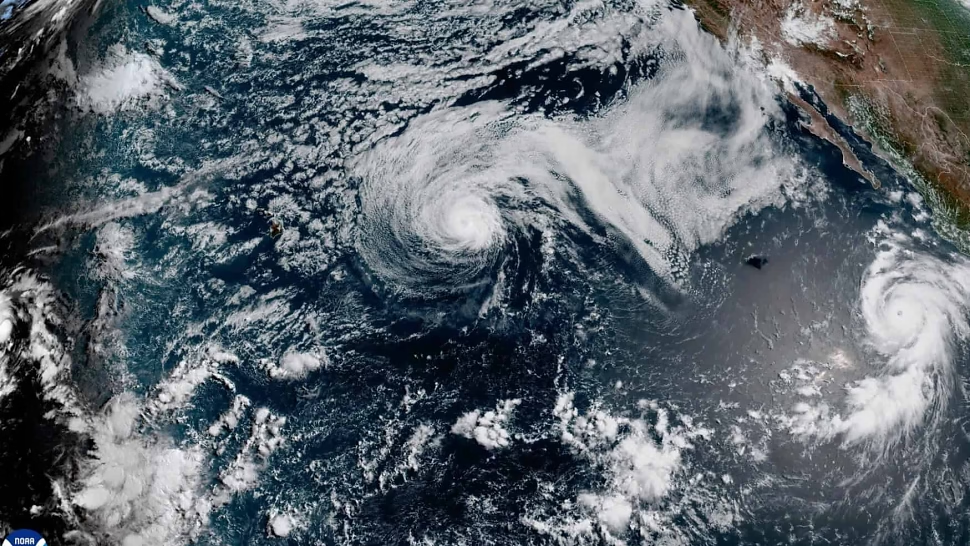
Analysis of the Impact of the Cold Front Number 13 in Mexico
The penetration of the Cold Front Number 13 into Mexican territory has generated a significant climate change in various regions, registering a marked decrease in thermal values, precipitation and wind gusts of considerable intensity. According to official reports from the National Meteorological Service (SMN), this frontal system interacts with a polar air mass that amplifies its effect, generating conditions conducive to frost, especially in areas of complex topography and mountain regions in the north and northeast of the country.
From a technical perspective, the interaction between the cold front and the polar air mass creates a pronounced barometric gradient, responsible for both the thermal drop and the intense winds. Civil Protection agencies have issued precise recommendations to the population, emphasizing the need for appropriate clothing, the prevention of sudden changes in temperature and the implementation of additional precautionary measures during this meteorological episode.
Detailed Forecast by Affected Regions
In the state of Tamaulipas, authorities have quantified the impact of the phenomenon. Luis Gerardo González de la Fuente, state coordinator of Civil Protection, specified that the event will last approximately seventy-two hours, with the most significant minimum values concentrated between Monday and Wednesday. “The lowest temperatures could be recorded in the northern area, particularly in the municipality of Nuevo Laredo, with values that could reach 6 degrees Celsius,” the official explained. The prospective analysis indicates that the most intense episodes of the winter season could occur towards the end of November and during December, with the probability of extreme conditions being recorded towards the middle of the last month of the year.
The situation in Chihuahua presents even more defined characteristics, with records below zero in multiple locations. The specialized monitoring of Chihuahua Severe Weather documented, during the morning of Monday, November 10, thermal values of up to -4.1°C in Majalca. Other locations that experienced frigid conditions included El Vergel and Namiquipa, both with -4.0°C, San Juanito with -3.4°C, and Temosachi with -2.2°C. The State Civil Protection Coordination (CEPC) activated preventive alert protocols since the weekend, anticipating the combined effects of the frontal system and the Arctic air mass, which generate a weather pattern characterized by cold to very cold mornings and afternoons with mild to warm conditions.
In the Yucatan Peninsula, the impact is predominantly manifested through intense winds. The capital, Mérida, has experienced gusts that reach 55 kilometers per hour, causing damage to urban trees and interruptions in the electricity supply in the historic center and various eastern and southern areas of the city. In the coastal region, where winds have exceeded 70 kilometers per hour, port authorities decreed the temporary closure of all facilities until conditions improve. The Secretary of Public Security (SSP) reported specific incidents, such as the felling of a tree on a vehicle parked in the Cielo Alto subdivision, in Kansín, evidencing the strength of the meteorological phenomenon.
This technical analysis of the Cold Front Number 13 demonstrates the regional variability in the manifestation of meteorological phenomena. While the north experiences significant thermal drops, the southeast region faces consequences related to the strength of the wind. Continuous monitoring by specialized institutions is essential for timely risk management and protection of the population.
Share this meteorological analysis on your social networks and explore more specialized content on climate phenomena on our portal.