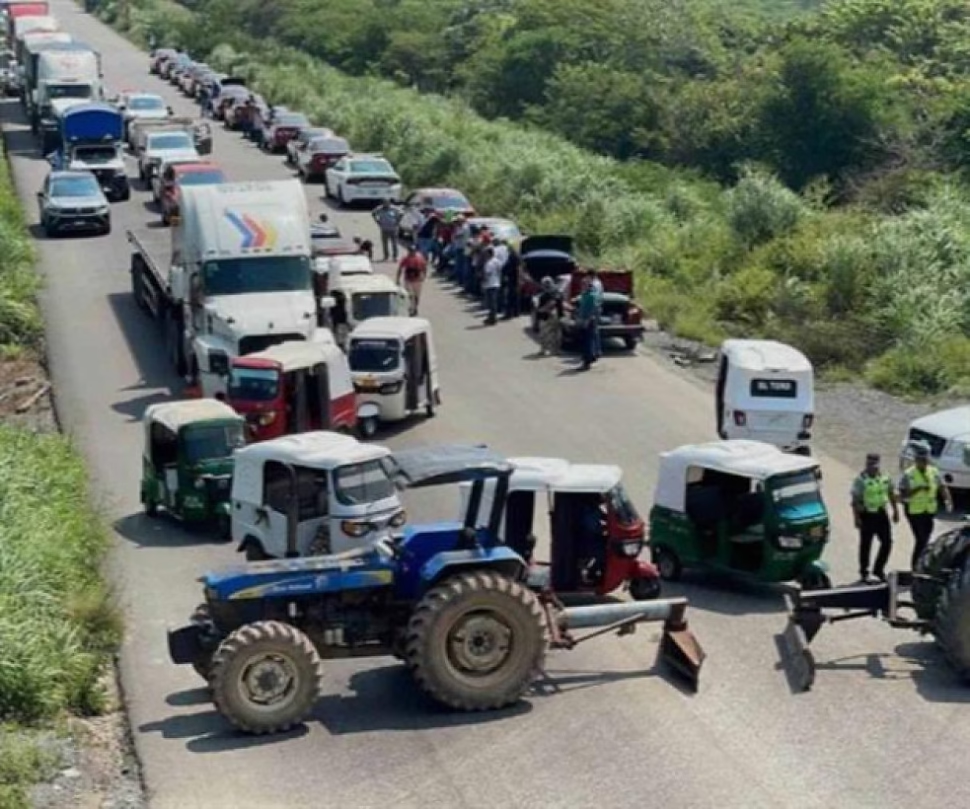
The curtain rises for a new act of tension
Transporters and farmers give no respite. They have just announced a new national strike for April 6, just after Easter. The reason is clear and forceful: the negotiation tables with the federal government, open since last year, have not borne fruit. His promise is to make his crisis visible “without affecting the days off.” A calculated gesture, but the warning is on the table.
Why now? The straw that broke the camel’s back
David Estévez, president of the National Association of Transporters (ANTAC), said it bluntly. The objective is “to paralyze everything”. It is not an air phrase. Behind it is a list of grievances that sound like a horror movie for someone who drives a truck: insecurity on the roads, disappearances of colleagues and extortion by… yes, authorities.
“The lack of official interest has generated frustration among the affected sectors,” said Estévez.
But here is a masterstroke in his speech. He connected two crises into one: the one in the countryside and the one in transportation. He warned that the increase in fuel prices is suffocating both sectors. And he furiously denied those businessmen who say they have reserves to cushion the blow of the conflict in the Middle East. For him, that statement is “not true.” It is a direct call to attention to the official narrative.
The final message is a time bomb. They seek to pressure the government before the effects on the economy and mobility worsen. Meanwhile, the authorities maintain a deafening silence, without commenting on preventive measures. The leaders insist: their demands must be heard to avoid a repetition of tension.
The stage is set. The actors have taken a position. It only remains to be seen if there will be last-minute dialogue or if on April 6 the country will wake up paralyzed.