A trip that is now history
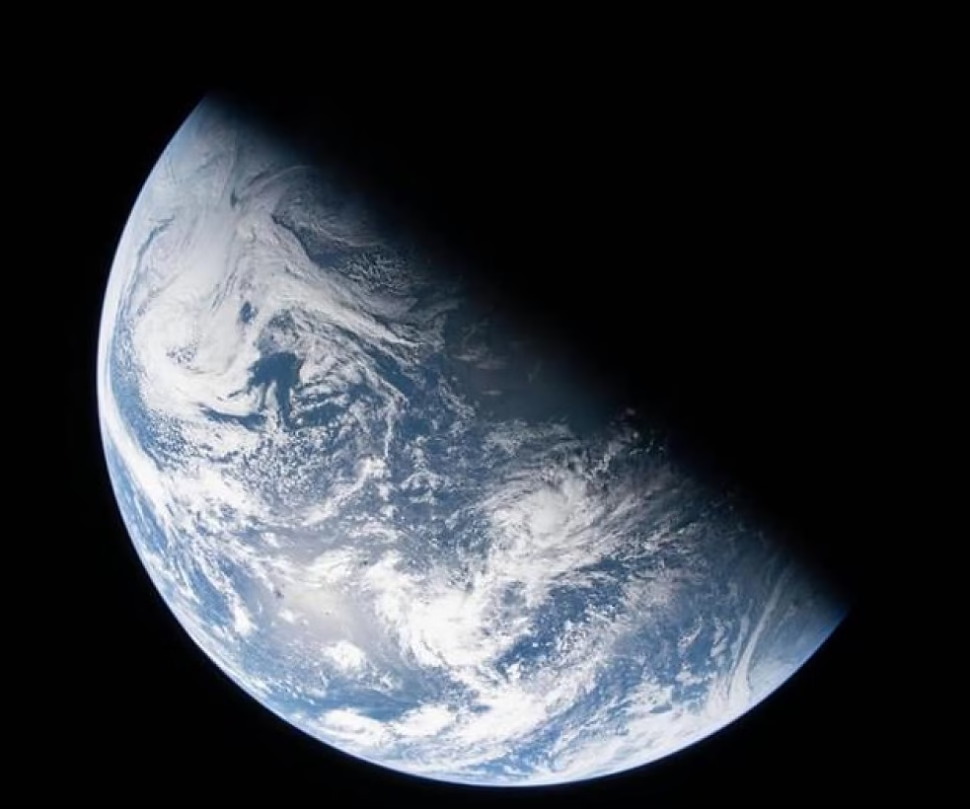
Halfway there, with the Earth shrinking in the rearview mirror and the Moon growing in the window. This is how pilot Victor Glover described the historic moment that the Artemis II crew is experiencing. Three Americans and a Canadian are about to become the first humans in half a century to see our satellite up close.
“The Earth is pretty small and the Moon is definitely getting bigger,” Glover noted from deep space.
This Monday, if all goes as planned, they will photograph the mysterious lunar far side as they speed by. They won’t stop or enter orbit—it will be a quick flyby before returning home.
Canada writes its own chapter
What makes this mission special goes beyond simply returning to the Moon. Jeremy Hansen, the Canadian astronaut, is breaking barriers as the first non-US citizen to fly to our natural satellite.
From Quebec, the Canadian Space Agency celebrated this milestone live. Its president, Lisa Campbell, could not contain her pride:
“Today is making history for Canada,” Campbell said. “As we watch him take this bold step into the unknown, may his journey remind us that Canada’s future is written by those who dare to aspire higher.”
The mission also marks other firsts: Christina Koch will be the first woman and Victor Glover the first black astronaut to reach the lunar vicinity.
Records and precedents
Artemis II is about to surpass a brand established decades ago. They will travel more than 400,000 kilometers from Earth—exceeding the distance of Apollo 13—before making that cosmic U-turn behind the Moon.
This nearly 10-day flyby is just the beginning. NASA has much more ambitious plans: establishing a sustainable lunar base with a lunar landing near the south pole by 2028.
Meanwhile, four people float in that capsule between two worlds, writing the next chapter of space exploration with their journey. When they land in the Pacific on April 10, they will have shown that after 53 years, humanity is still looking up.