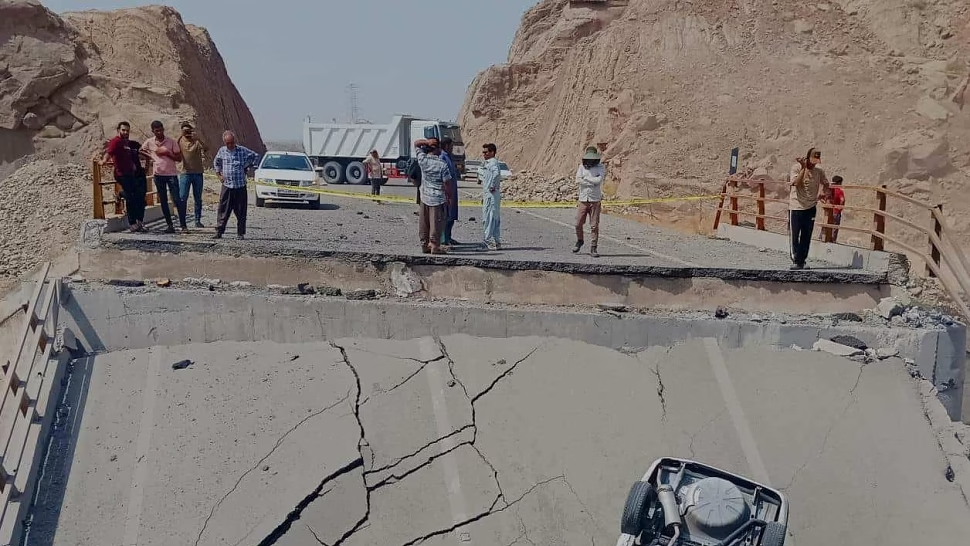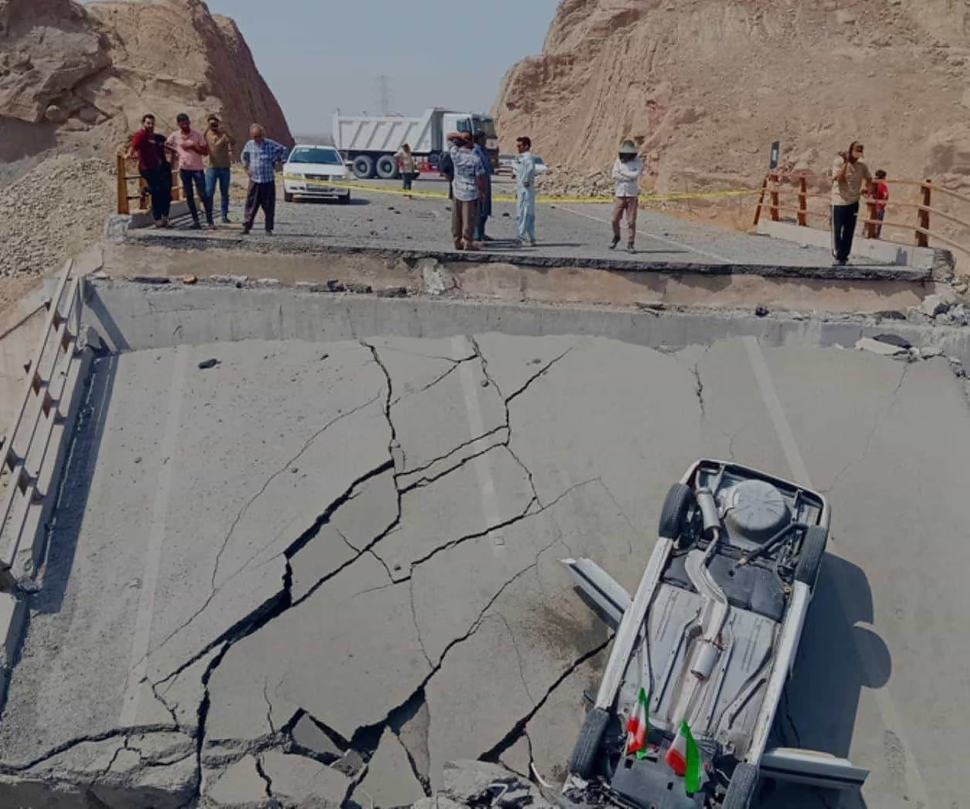
Tension between the United States and Iran escalates with new casualties

New US military death and bombings raise tension in the Middle East.

New hostilities in the Middle East

The United States reported the death of another soldier in Iraq during the controlled detonation of an Iranian drone. The number of American soldiers killed since the start of the war amounts to 17.

On Sunday, Washington launched more bombings against the Iranian Revolutionary Guard, in response to Friday’s attack in Jordan that left victims. The US Central Command reported that it hit coastal surveillance facilities, air defense and missile and drone warehouses, seeking to degrade Iran’s ability to control the Strait of Hormuz.

RelatedHormuz: Trump assures it is open, Iran closes it

Iran reported that the bombings hit a nuclear power plant construction site in Darkhovin, although the IAEA said the site was in the initial stages and without nuclear material.

In parallel, Iran launched missiles towards Jordan, which were shot down by Jordanian air defenses. The Israeli army warned that these projectiles could reach its territory, activating alerts in Eilat.

“We are prepared to immediately resume combat,” said the Israeli Chief of Staff, Lieutenant General Eyal Zamir.

Attacks on civil infrastructure

Kuwait reported a second attack on a power and desalination plant, vital to the supply of drinking water. The Gulf Cooperation Council accused Iran of war crimes for damaging civilian facilities.

The Strait of Hormuz, a key route for global oil, has seen maritime traffic fall drastically: just eight transits on Saturday, compared to a daily average of 140 before the conflict. The United States imposed a naval blockade on Iranian ports and has redirected six ships.

Iranian Supreme Leader Mokhtaba Khamenei warned of “unforgettable lessons” if attacks continue. Iran reported at least 50 deaths and 517 injuries in the recent bombings. Negotiations for a permanent ceasefire, initially agreed for 60 days, are stalled.
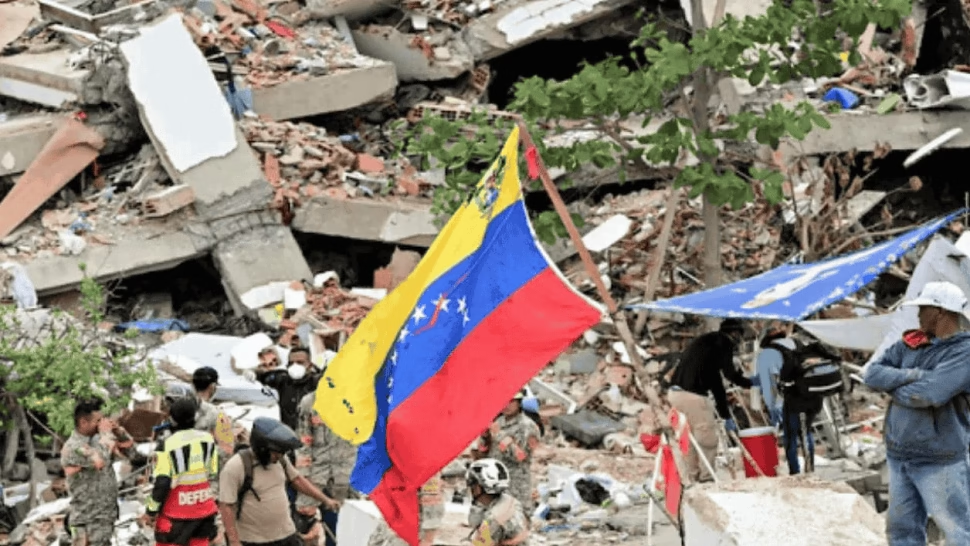
Venezuela withdraws 346 million dollars from the IMF to rebuild La Guaira

Venezuela accesses 346 million dollars from the IMF for reconstruction after earthquakes.

Own funds for the emergency

The executive vice president of Venezuela, Delcy Rodríguez, reported that the country obtained access to 346 million dollars of its own resources in the International Monetary Fund (IMF). The objective: attend to the recovery after the earthquakes of June 24.

The funds come from the reserve tranche. They are not a new loan, but rather resources that already belonged to the Venezuelan State. IMF Managing Director Kristalina Georgieva confirmed the move and explained that they worked with key counterparts “to help Venezuela access its own resources in the Fund for Urgent Humanitarian Needs.”

Support for families and reconstruction

Rodríguez explained that the money will be used for housing, infrastructure and essential public services for affected families. “This will allow affected families to be supported in housing, infrastructure, essential public services, among other requirements,” he wrote on his social networks.

Access to these resources came after the IMF and Venezuela resumed relations in April 2026, after seven years of suspension. At the beginning of July, the organization’s spokesperson, Julie Kozack, had already announced that there were talks to unfreeze the funds.

According to data from the president of the National Assembly, Jorge Rodríguez, the earthquakes left thousands of victims, including deaths, injuries and homeless families. The most devastated area was La Guaira, on the central coast, about 30 kilometers north of Caracas.

The Venezuelan government stated that these resources will strengthen the immediate response and contribute to the reconstruction of the impacted areas. The IMF reserve tranche functions as immediate liquidity, without conditionalities associated with financing programs.

Continue reading

Mayo Zambada receives life sentence in the US

Court in Brooklyn confirms life imprisonment for the historic leader of the Sinaloa Cartel.

Life sentence for El Mayo Zambada

A federal court in Brooklyn has handed down the final sentence for Ismael El Mayo Zambada, 76 years old. Judge Brian Cogan confirmed this Monday the life imprisonment for the historic leader of the Sinaloa Cartel.

Zambada pleaded guilty last year to drug trafficking conspiracy and directing a criminal organization. Prosecutors estimate that for decades he moved hundreds of tons of cocaine, heroin and fentanyl.

In addition to the sentence, the US government is demanding a fine of $15 billion as compensation for the damage caused. The figure reflects the scale of their illicit operations.

Zambada’s situation is now identical to that of his former partner, Joaquín El Chapo Guzmán, who has been serving a life sentence since 2019. Both led the most powerful criminal organization in Mexico for years.

The plea deal reached by Zambada included a key guarantee: the US Department of Justice agreed not to seek the death penalty. In exchange, the boss accepted the charges that carry mandatory life imprisonment.

The conviction closes a chapter in the fight against organized crime, but leaves open questions about the future of the Sinaloa Cartel and its trafficking routes to the United States.

Continue reading

US attacks on Iran raise tension in the Middle East

Bombings against the Iranian Revolutionary Guard escalate regional conflict.

On Sunday, the United States launched airstrikes against targets of Iran’s Revolutionary Guard. The action responds to the death of American soldiers in Jordan.

According to US Central Command, the attacks damaged coastal surveillance, air defense facilities and missile depots. The objective: to weaken Iranian control over the Strait of Hormuz, a key route for oil trade.

The offensive totals eight days. Washington has attacked Iranian strategic infrastructure. Tehran responded with bombings against facilities in Kuwait, in addition to threatening other US allies in the region.

US officials said the bombing was retaliation for an Iranian attack on a military base in Jordan. Two American soldiers died there, one is missing and four were wounded. Since the beginning of the conflict, the US reports 16 military deaths and more than 430 injuries.

Iran said the bombings left at least 50 people dead and more than 500 injured. Iran’s atomic energy agency confirmed that an attack hit the construction site of the Darkhovin nuclear power plant in the southwest of the country.

Impact on the Persian Gulf

Kuwait and Bahrain activated anti-aircraft defenses against Iranian drones and missiles. Kuwaiti authorities reported new attacks against a power and desalination plant, vital infrastructure for drinking water.

The United Arab Emirates called for restraint from all parties, after Iranian media broadcast threats against Emirati airports and ports. Tension remains high, with control of the Strait of Hormuz as a central factor.

Continue reading