


Less fear or more makeup?
The INEGI released its ENSU survey and, surprise, the perception of insecurity fell to 61.5%. Sounds nice, doesn’t it? It is the lowest figure of Sheinbaum’s six-year term. But before applauding, let’s review the fine print.
The numbers that sell peace
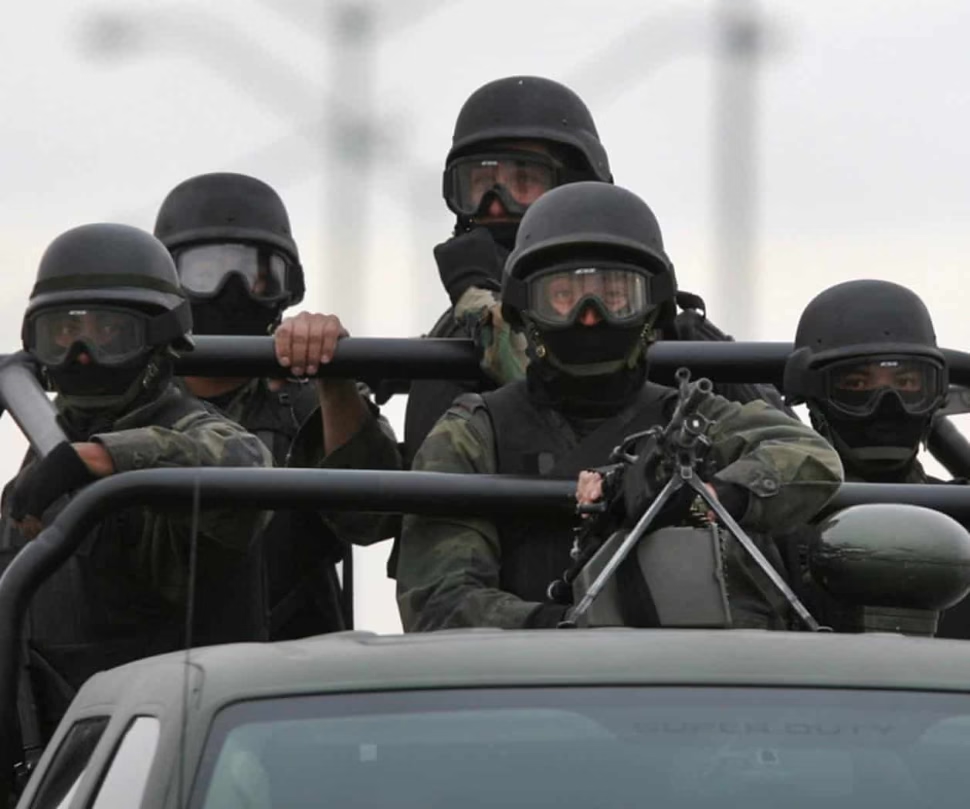
The Army has an 85.6% approval rating — its best score since 2021. The National Guard, with 78%, also rises. The Navy leads with 88% and the Air Force follows with 87%. Everything in green, everything in improvement.
But there is a crack: the gender gap. While 67.2% of women say they feel unsafe in their city, only 54.6% of men report it. In other words, almost two-thirds of women still live in fear. That’s not a minor detail.
“The change from 63.8% reported in December 2025 to the current 61.5% is a positive sign” —said Sheinbaum in his conference.
Of course, any drop is welcome when you come from stratospheric levels. But the president promises to “strengthen coordination” between levels of government. How many times have we heard that?
Selective memory
Here’s my daily dose of skepticism: these surveys measure perception, not criminal reality. Just because you feel safer doesn’t mean there are fewer robberies or extortions. And military institutions always score highly because they generate respect—or fear, depending on how you see it.
The current strategy is committed to militarizing public security, something that we have already seen fail in previous administrations with mixed results: a drop in homicides here, an increase there.
What’s missing?
Sheinbaum insists that “the objective is not only to reduce crimes, but to achieve citizen peace of mind.” Nice speech, but as long as women continue to feel vulnerable and the data shows a persistent gap, there is still a long way to go.
For now, the numbers smile at the government. But as I always say: statistics are like bikinis—they show a lot but hide the essentials.


