


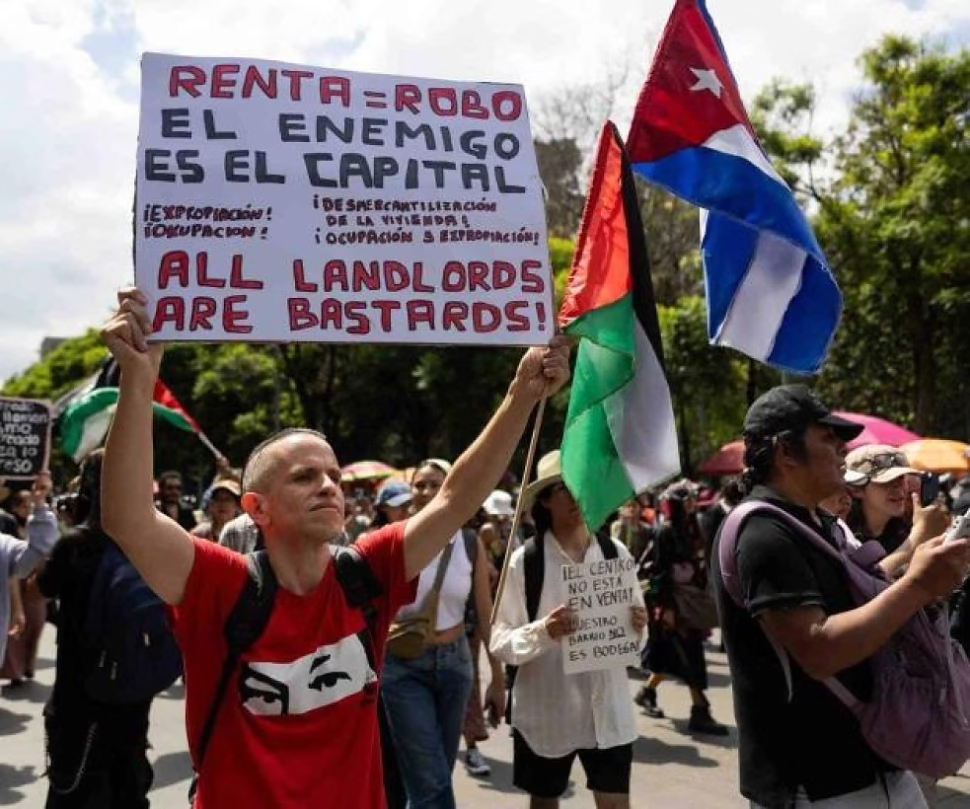
Protest against gentrification ends with positive results
The third edition of the march against social displacement and rising housing prices in Mexico City ended this Saturday without violent episodes, according to the official report. Approximately 200 protesters marched from the Hemiciclo to Juárez to the capital’s Zócalo between 2:00 p.m. and 5:00 p.m., in an operation that combined freedom of expression with containment measures.
Security device and findings
Elements of the Secretariat of Citizen Security seized potentially dangerous objects, including baseball bats, chains, blunt tools and a backpack with a handmade Molotov cocktail along with spray paint. The intervention was framed in the Action Protocol for Marches, which prioritizes the protection of public infrastructure and the physical integrity of participants and passersby.
A multidisciplinary team made up of the Undersecretary of Political Concertation, the Dialogue and Coexistence Group, and human rights specialists monitored the development of the event. This strategy allowed, according to the authorities, “to maintain open communication channels and avoid escalations of tension.”.
Medical care and institutional coordination
The Rescue and Emergency Medical Squad (ERUM) treated three people at the site, whose conditions did not require hospitalization. Previously, businesses and residents were notified about the itinerary, while 150 agents were deployed with non-lethal defensive equipment (helmets, shields and fire extinguishers) under deterrence criteria.
The administration of Clara Brugada reiterated its position against the criminalization of protests, emphasizing the balance between Article 6 of the Constitution (freedom of demonstration) and the application of the Manual on the Progressive Use of Force. They highlighted that 92% of the mobilizations in 2025 have concluded without arrests, following the “proximity police” model.
Context of gentrification in the capital
The protest reflects the discomfort over the 137% increase in rents in neighborhoods such as Roma and Condesa during the last decade, according to data from the INEGI. Collectives demand the regulation of vacation rental platforms and policies that stop the displacement of traditional residents to peripheries with less access to services.
Experts consulted point out that the phenomenon generates spatial segregation and pressure on the public transportation network, although they recognize progress in working groups to create an Accessible Housing Fund announced last June.
Are you interested in the urban impact of real estate dynamics? Share this analysis and follow our coverage on sustainable urban development. #CityForAll
Explore more content on urban policies: Subscribe to our weekly newsletter or share this article on your social networks to expand the debate.


