Analysis of the operation and the mobilization for 25N
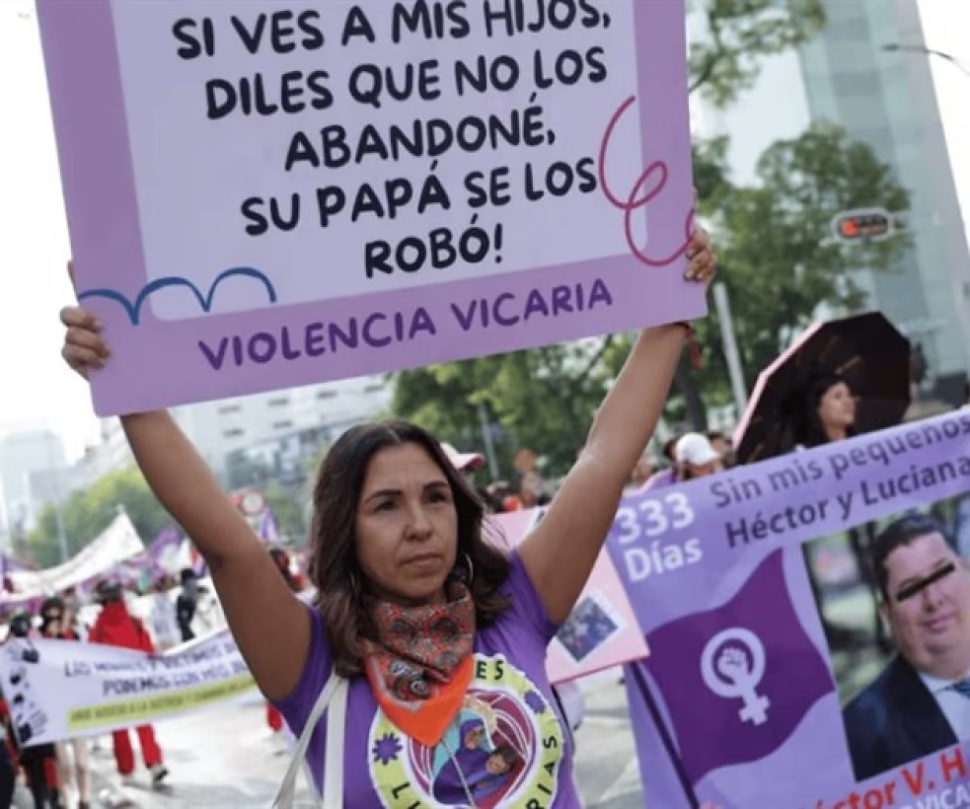
The commemoration of International Day for the Elimination of Violence against Women, known as 25N, took place in Mexico City with an estimated participation of one thousand people, according to official data provided by the Secretary of Government of the capital. The event culminated with a white balance, which denotes the absence of serious incidents or arrests reported by the authorities. This result was not accidental, but the direct consequence of a security strategy meticulously planned and executed.
During the journey, the presence of a specific contingent of approximately 20 women was observed wearing face masks or clothing that hid their faces. It should be noted that this group mobilized peacefully, without any alterations to public order or significant material damage. The analysis of the logistics deployed reveals that the SSC (Secretary of Citizen Security) implemented a protection operation of considerable magnitude, which was predominantly made up of 600 female police officers. Their role was to provide discreet accompaniment from a distance, prioritizing containment and deterrence, while wearing their regulatory personal protective equipment.
Inter-institutional coordination for the management of the protest
The authorities’ response was characterized by a multifaceted approach and notable inter-institutional coordination. To manage the impact on urban mobility, members of the Undersecretary of Traffic Control carried out the temporary closure and diversion of vehicular flow in the main arteries affected by the passage of the contingents of protesters. This measure, although disruptive to circulation, was essential to guarantee the physical integrity of the participants and the rest of the citizens.
The support structure was reinforced with the participation of specialized personnel from other key agencies. Among them, the Secretary of Works and Services (SOBSE), the Secretary of Comprehensive Risk Management and Civil Protection (SGIRPC) and the Human Rights Commission of Mexico City (CDHCM) were present. The presence of this last organization was particularly significant, since it acted as an independent observer to ensure respect for fundamental rights during the development of the social protest.
A crucial element of the strategy was the activation of the Dialogue and Coexistence Group. This dialogue mechanism was made up of representatives of various government entities, including the Undersecretary of Political Concertation, the General Directorate of Government, the Executing Body of the Comprehensive Human Rights System, the Unit for Attention to Sexual Diversity, the Comprehensive Protection Mechanism for Human Rights Defenders and Journalists, the Executive Commission for Attention to Victims and the Secretariat for Women. The primary function of this group was to maintain an open and permanent communication channel with the protesters, prioritizing dialogue as the main tool for the prevention and peaceful resolution of potential conflicts. This proactive approach underscores a public demonstration management model that seeks to balance the right to protest with the maintenance of public order.
The successful conclusion of this mobilization, without regrettable events, establishes an important precedent for the management of future mass concentrations. It demonstrates that a combination of a well-structured security operation, constant dialogue and respect for the rights of assembly and expression can lead to results where public safety and freedom of protest are not mutually exclusive concepts, but complementary in a democratic society.
Did you find this analysis on the management of public demonstrations useful?Share it on your social networks to expand the conversation and explore more content related to civil rights and citizen security on our site.