Kuwait accuses Iran of attempting attack on Bubiyan Island

Kuwait detains alleged Iranian infiltrators on strategic island with Chinese investment.

The shadow of Tehran reaches Bubiyan

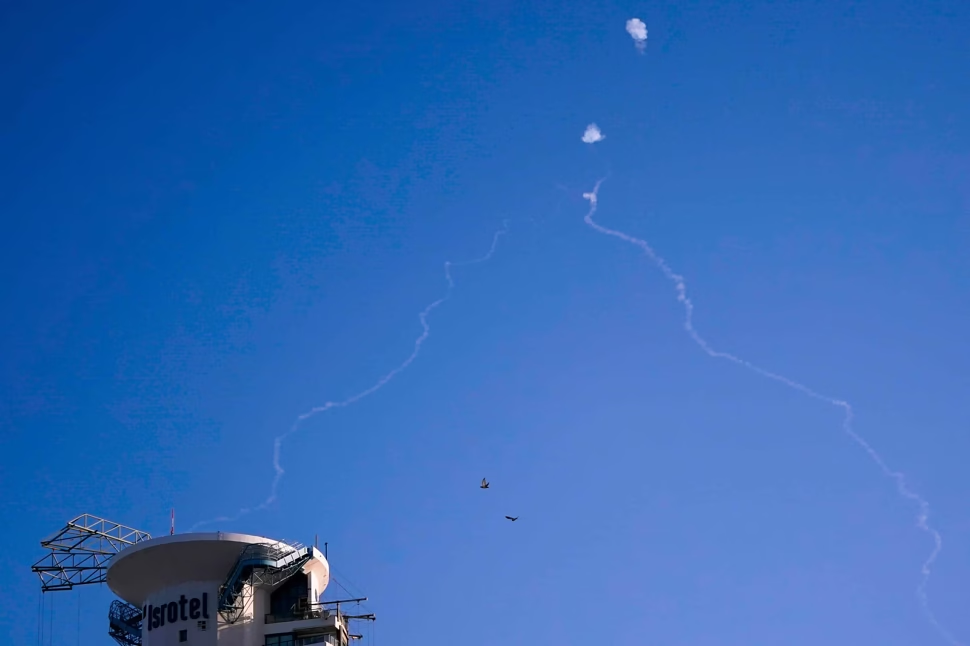
Kuwait dropped a diplomatic bomb this Tuesday: it accused Iran of orchestrating an attempted attack against Bubiyan Island, that piece of land in the Persian Gulf that is today key for the megaport financed by China. According to authorities, a commando linked to the Iranian Revolutionary Guard tried to sneak in on May 1.

Four detained, two fugitives. The Kuwaiti government claims that they managed to catch four alleged members of the group, while two others escaped. This is not a simple border friction: Bubiyan not only has strategic value, but is the heart of an infrastructure project that puts Beijing on the regional map.

“An armed group linked to the Iranian Revolutionary Guard attempted to infiltrate the area” — Kuwaiti authorities.

And now what? The authorities have already increased surveillance on the island and reinforced port security. Everything is “under control,” they say, but the maximum alert remained. The interrogations of the detainees seek to know if this was just the tip of the iceberg or there are more cells sleeping.

RelatedUS and Israel launch massive attack against Iran

What worries me is the pattern. It is not the first time that Iran plays with tension with its Gulf neighbors, but here the Chinese ingredient changes the game. Kuwait, which always tried to keep a low profile against Tehran, is now forced to show its teeth. And in the middle, families who live near the island wondering if the next movement will be louder.

Israeli attack in Gaza leaves six dead, including two girls

Attack in Gaza breaks the truce: two girls and a journalist among the dead.

Attack in Gaza

Israel carried out an attack in the Gaza Strip this Saturday, killing at least six people. Among the victims were two girls and a cameraman for the Al Jazeera network, according to Palestinian officials.

The attack occurs despite a ceasefire agreed in October between Israel and Hamas. Since then, Israel has attacked the territory almost daily, leaving more than 1,000 Palestinians dead, according to the Gaza Health Ministry.

The bodies of the two sisters, Zina, 4, and Lana, 14, were taken to the Shifa Hospital morgue. They lay in white bags, surrounded by their families.

This incident highlights the continuity of violence in the region, despite diplomatic efforts to achieve lasting peace.

Continue reading

Iran closes the Strait of Hormuz and strains negotiations with the US

Iran closes the Strait of Hormuz while delicate negotiations with the US begin in Switzerland.

Negotiations in the midst of the crisis

Iran announced on Saturday the closure of the Strait of Hormuz, in retaliation for Israeli attacks on Lebanon. The decision was made known just as his negotiators arrived in Switzerland to talk with the United States.

Donald Trump reacted with a threat: impose tolls on that waterway if there is no final agreement in 60 days. The American president justified the measure as payment for “services provided as the Guardian Angel to the countries of the Middle East.” In his message on networks, he clarified that the pact provides for free transit during that period.

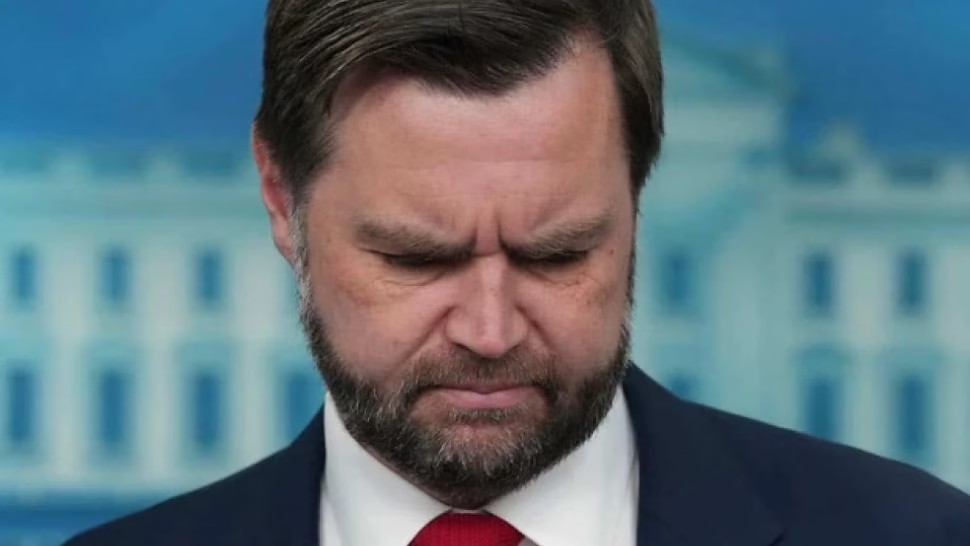
Technical talks between Washington and Tehran will begin on Sunday, according to key mediator Pakistan, with support also from Qatar. Vice President JD Vance left for Switzerland on Saturday and told reporters he would be there “for a day or two,” although he was optimistic about progress on the nuclear issue and a ceasefire in southern Lebanon.

On the Iranian side, the delegation includes the president of Parliament, Mohammad Bagher Qalibaf; to the chancellor, Abbas Araghchi; and officials from the central bank and the oil sector. Billions of dollars of Iranian assets are expected to be unfrozen.

Originally scheduled for Friday, the talks were delayed by escalating hostilities in Lebanon. Negotiators from the United States and Qatar, with help from Iran, reached a preliminary agreement between Israel and Hezbollah to reduce tensions, according to US and regional officials who requested anonymity.

Continue reading

Iran conditions nuclear dialogue on cessation of Israeli attacks

The Iranian absence in Switzerland slows down talks on the nuclear program and the Strait of Hormuz.

Pause in conversations

The attempt by the United States and Iran to begin talks on Tehran’s nuclear program and the restoration of oil transit in the Strait of Hormuz was suspended. Iranian officials did not attend the planned meeting in Switzerland.

According to regional sources, Iran conditioned the resumption of dialogue on Israel stopping its attacks against Hezbollah in Lebanon. The situation occurred while both parties were analyzing a provisional agreement that opened two months of negotiations.

US Vice President JD Vance was scheduled to lead technical talks in Switzerland, but the White House postponed his trip. Washington alleged logistical complications; However, sources indicated that the Iranian position influenced the decision.

Details of the provisional agreement

The pact provides for limits on the Iranian nuclear program and international supervision of enriched material. Differences persist over their scope. While sectors in the United States question the agreement, Iran considers that it is coming to the dialogue from a more solid position.

Tension increased after new clashes in southern Lebanon. Authorities reported deaths from Israeli airstrikes and casualties among Israeli soldiers. Although Israel and Hezbollah are not part of the bilateral agreement, their actions directly affect the negotiations.

The situation reflects how regional tensions affect the future of the Iranian nuclear program and the talks between the powers involved.

Continue reading