The new leadership of Hamas
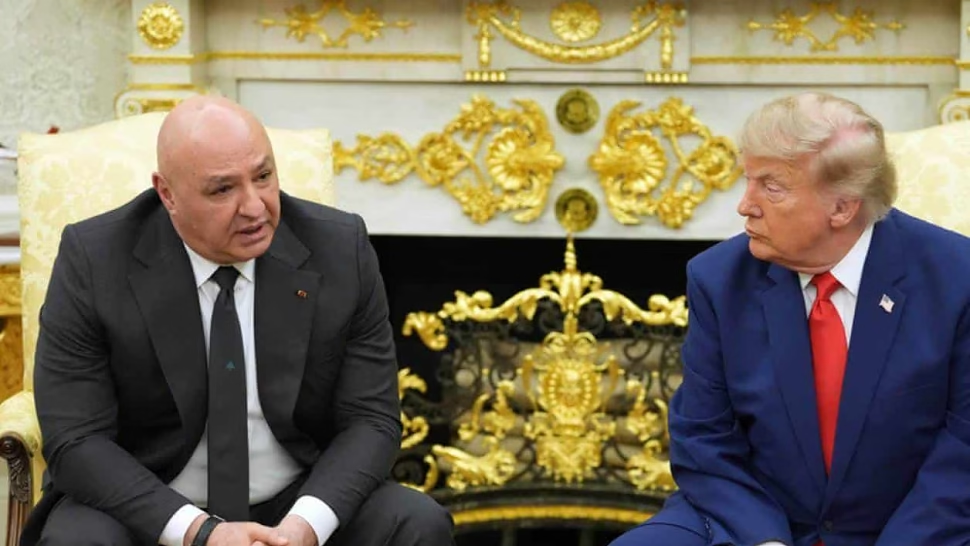
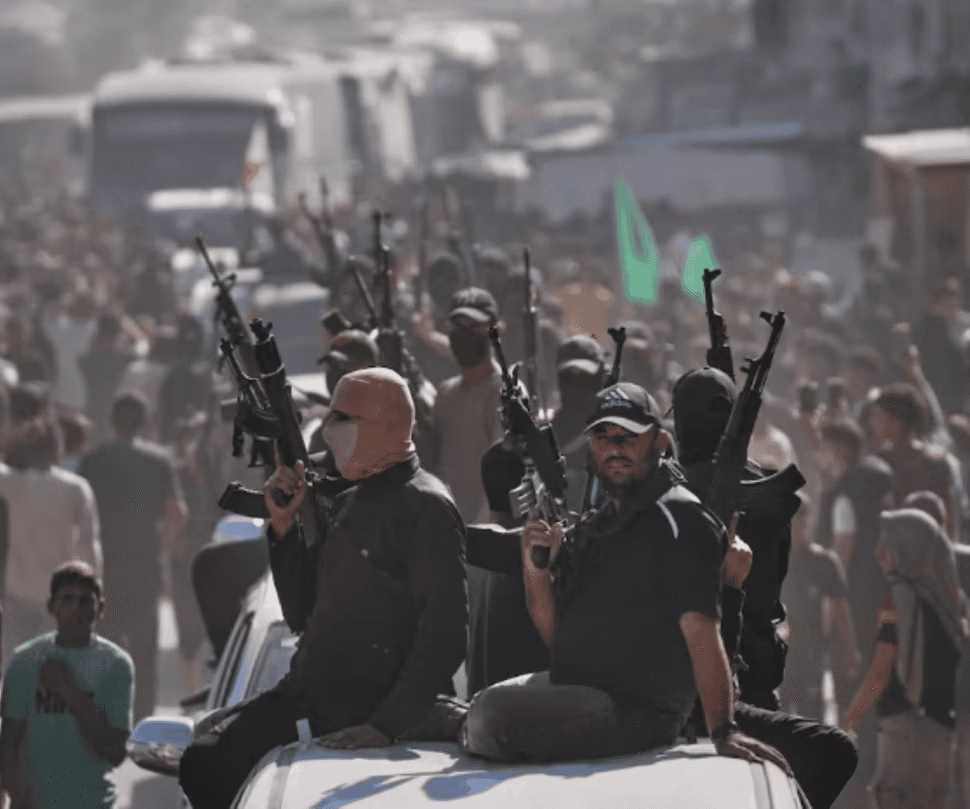
The Palestinian organization Hamas announced the election of Khalil al-Hayya as head of its political office. The position had been vacant since October 2024, when Yahya Sinwar was killed in an Israeli operation in Rafah.
Al-Hayya prevailed over Khaled Mashal in an internal vote that the organization described as “highly complex and secret for security reasons.” Representatives of Palestinians detained in Israeli prisons also participated.
According to internal sources cited by agencies, Al-Hayya won “by an overwhelming majority.” However, the Qatari newspaper Al-Araby reported that the difference was “barely one vote,” citing another movement source.
Continuity in the political line
The appointment of Al-Hayya implies continuity with the strategy of Sinwar and the previous leader, Ismail Haniyeh, who also died in an Israeli operation in Tehran in July 2024. Both maintained alignment with the so-called “axis of resistance” led by Iran, despite the fact that Hamas has a Sunni majority.
His arrival reinforces Gaza as the central axis of the Palestinian cause, in contrast to the current of Mashal, born in the West Bank and considered closer to Qatar and Turkey. During his leadership until 2017, Mashal broke with Syrian President Bashar al Assad, distancing the movement from the Iranian axis.
At the same time, Hamas has reinforced its presence in its headquarters in Istanbul, to the detriment of its center in Doha.
Impact on negotiations with Israel
Al-Hayya, 64, is a founder of Hamas and was Sinwar’s top deputy in Gaza. Before October 7, he left the Strip on instructions from Sinwar to direct affairs from abroad. According to The New York Times, in July 2023 he discussed attack plans with a general in the Iranian Revolutionary Guard.
He has survived several attacks attributed to Israel, including one in Doha in September 2025 where his son Hamman died. Three other children also died in Israeli attacks.
Currently, Al-Hayya is Hamas’ main negotiator in indirect contacts with Israel, which last October led to a ceasefire agreement and the release of hostages. He has met personally with US envoys Steve Witkoff and Jared Kushner.
In the talks that continue in Cairo, Al-Hayya maintains an inflexible position and rejects the disarmament of Hamas. According to various assessments, the stalemate could lead to a new Israeli offensive on the Strip.