Rescue of historical memory
Guatemala faces a race against the clock to protect some 60,000 files of victims of the internal armed conflict (1960-1996). The documents, compiled over a decade by the National Reparations Program (PNR), seek to compensate those who suffered abuse. The government of President Bernardo Arévalo has until January 2028 to achieve this.
The PNR was born in 2003 after the 1996 Peace Accords, but during the governments of Jimmy Morales (2016-2020) and Alejandro Giammattei (2020-2024) the program became inactive and its liquidation was ordered. The testimonies were abandoned.
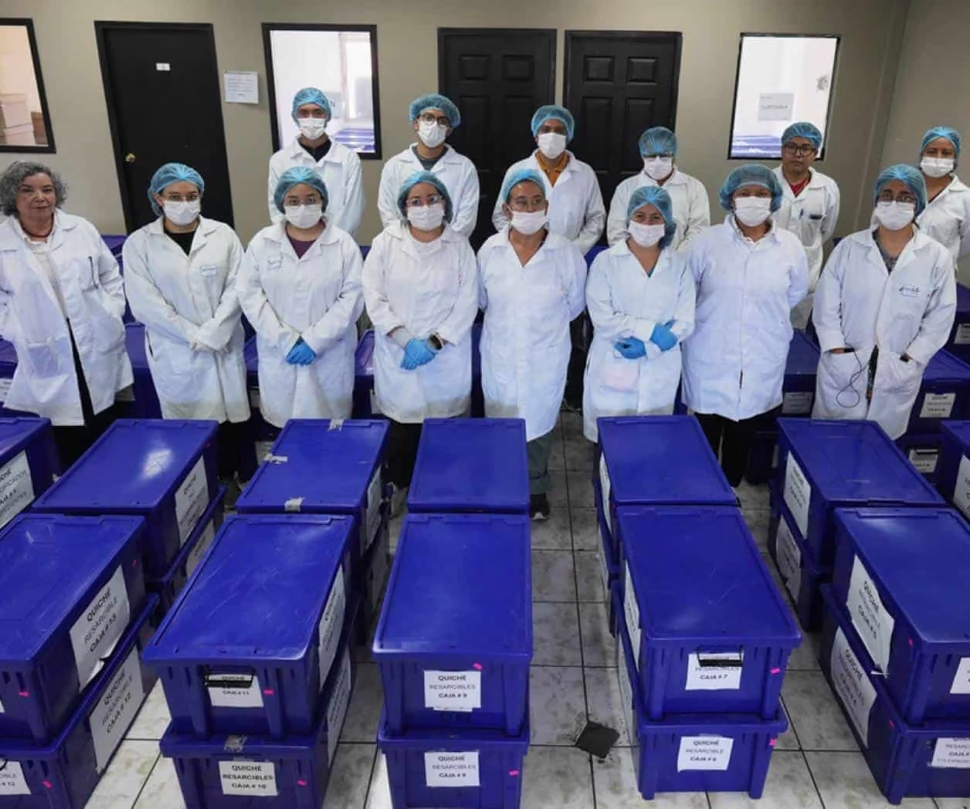
Workers from a UNESCO-funded project try to recover the archive. Erick Briones, archive assistant, described the conditions: “Damp boxes, piled up, incomplete, broken files.” The goal is for this collection to be declared the world’s documentary heritage.
Among the cases is that of Manuel Botom Uz, who at the age of 4 was disappeared in 1982. According to testimony, he and his four brothers were attacked in Quiché by members of the army and civil patrolmen. His brothers were handed over to relatives, but Manuel disappeared. Twenty years later, his body was located and identified in a clandestine grave.
Elvin Díaz, presidential commissioner of Human Rights, said: “There was an intention by the Morales and Giammattei governments to erase collective memory.” He also explained that the purpose of the PNR was humanitarian aid, but the files contain “relevant information for a criminal investigation.”
The files detail homicides, forced disappearances, sexual assaults and forced recruitment. According to reports, the conflict left some 200,000 dead and 45,000 missing.
Future project plans to digitize the archive for universal access. A UN report on forced disappearances, issued last month, indicated that during the Morales and Giammattei governments “a systematic policy of dismantling institutions for peace and justice” operated.
The files will go to the Reparation and Dignification Plan for victims announced by Arévalo. This seeks to centralize the dispersed information to continue compensation and include cases of disappearance in the Humanitarian Search Mechanism.