Escalation in the Middle East
The conflict between Iran and the United States reached its tenth day this Tuesday with no signs of de-escalation. While clashes continue in Iranian territory and in the Persian Gulf, diplomats are intensifying efforts to save the provisional agreement that sought to reduce tensions.
The Iranian Minister of the Interior, Eskandar Momeni, began a visit to Pakistan, a country that acts as a mediator. In Islamabad he met with the head of the Pakistani Army, Asim Munir, and Prime Minister Shehbaz Sharif. The latter expressed concern about the military escalation and urged all parties to act with restraint, seeking to resume negotiations.
The United States reported attacking command centers, air defense, and missile and drone launch sites in Iran. In response, Tehran intensified operations in the Strait of Hormuz, where a tanker was attacked and its crew had to evacuate the ship.
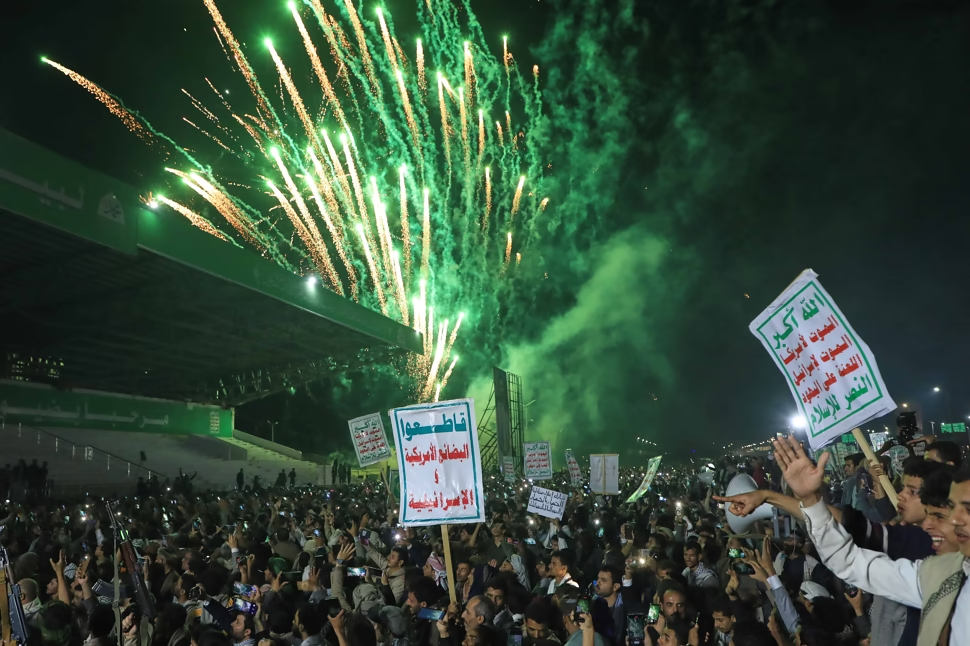
The tension spread to the Red Sea. Yemen’s Iran-backed Houthi rebels announced a naval blockade against Saudi Arabia and warned shipping companies about transiting Bab el-Mandeb. The interruption of these routes raised international concern about oil supply, driving the price of crude oil above $90 per barrel.
Despite diplomatic efforts, a climate of mistrust persists. US Secretary of State Marco Rubio stated that his government keeps the possibility of negotiating open, but warned that any agreement must offer real guarantees. The continuity of bombings and attacks on energy infrastructure keep the international community on alert regarding the risk of an expansion of the conflict in the Middle East.