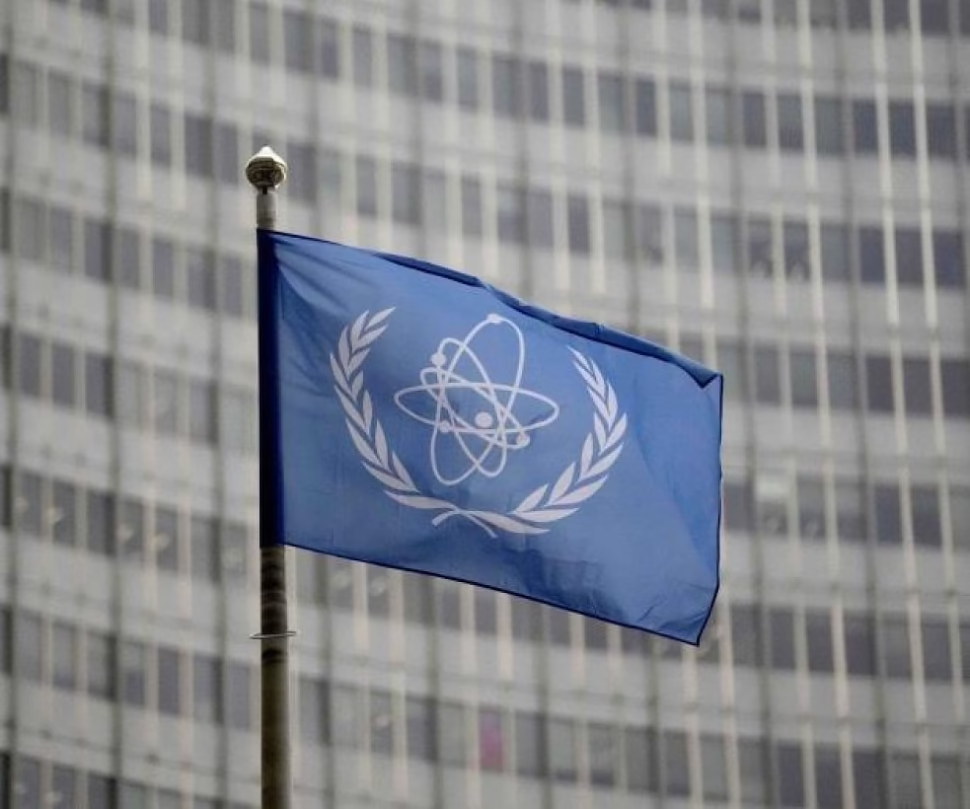
IAEA board declares Iranian non-compliance after 20 years
In an unprecedented vote, the International Atomic Energy Agency (IAEA) determined this Thursday that Iran violated its nuclear obligations, marking the first failure in two decades. The resolution, backed by 19 countries – including Western powers – could reactivate UN sanctions and deepen tensions in the Middle East. Russia, China and Burkina Faso opposed it, while 11 nations abstained.
Immediate response from Tehran: new enrichment plant
Iran announced the construction of a third underground facility for uranium processing, described by the head of its atomic agency as “invulnerable”. Behrouz Kamalvandi, Iranian nuclear spokesman, warned that they will replace obsolete centrifuges at Fordo with advanced models, which “will significantly increase the production of enriched material.” These actions contradict the Non-Proliferation Treaty, which requires transparency in nuclear activities.
Geopolitical context and risks of escalation
The draft resolution – pushed by the US, France, Germany and the UK – links the findings of undeclared uranium at three sites to an alleged nuclear weapons program until 2003. Western diplomats insist the measure is intended to pressure Iran before the legal window to impose sanctions expires in October. Meanwhile, The United States reinforced security alerts for its personnel in Israel, where there is speculation of possible preventive military operations.
Diplomacy under pressure
Although the text recognizes the negotiations in Oman between Washington and Tehran, it emphasizes that the “inability of the IAEA to verify peaceful purposes” could refer the case to the Security Council. A senior European official said that if there was no Iranian cooperation, an extraordinary session would be called in the summer. The parties maintain irreconcilable positions: Iran alleges a “necessary response to a political resolution”, while the West demands technical explanations for the traces of uranium.
Technical and legal implications
The IAEA report details that inspectors found enriched uranium particles in a former textile plant – revealed in 2018 by Israeli Prime Minister Benjamin Netanyahu – and two other undeclared locations. Under the safeguards of the nuclear treaty, Iran must allow inspections to demonstrate that it is not diverting material for war purposes. The resolution emphasizes that these findings “compromise international trust” and justify multilateral actions.
Chronology of a latent conflict
This episode aggravates the crisis that began in 2018 with the US withdrawal from the nuclear agreement (JCPOA). Since then, Iran has increased its enrichment to 60% purity—a threshold close to military grade—and limited inspector access. Analysts warn that, without diplomatic progress, the scenario could lead to:
- Automatic sanctions through JCPOA “snapback”
- Increased Iranian nuclear activity in armored facilities
- Selective military interventions against strategic targets
What’s next? The international community is watching whether Iran will take advantage of the Oman summit to defuse the crisis or accelerate its nuclear program, risking further isolation.
Share this analysis on your social networks and stay informed on key developments in global security. Explore more content on geopolitics and nuclear technology in our specialized section.