Tunnel collapse in India leaves 12 dead and 13 missing

The accumulation of methane gas would have caused an explosion at a construction site near China.

Explosion in Teesta tunnel in Sikkim

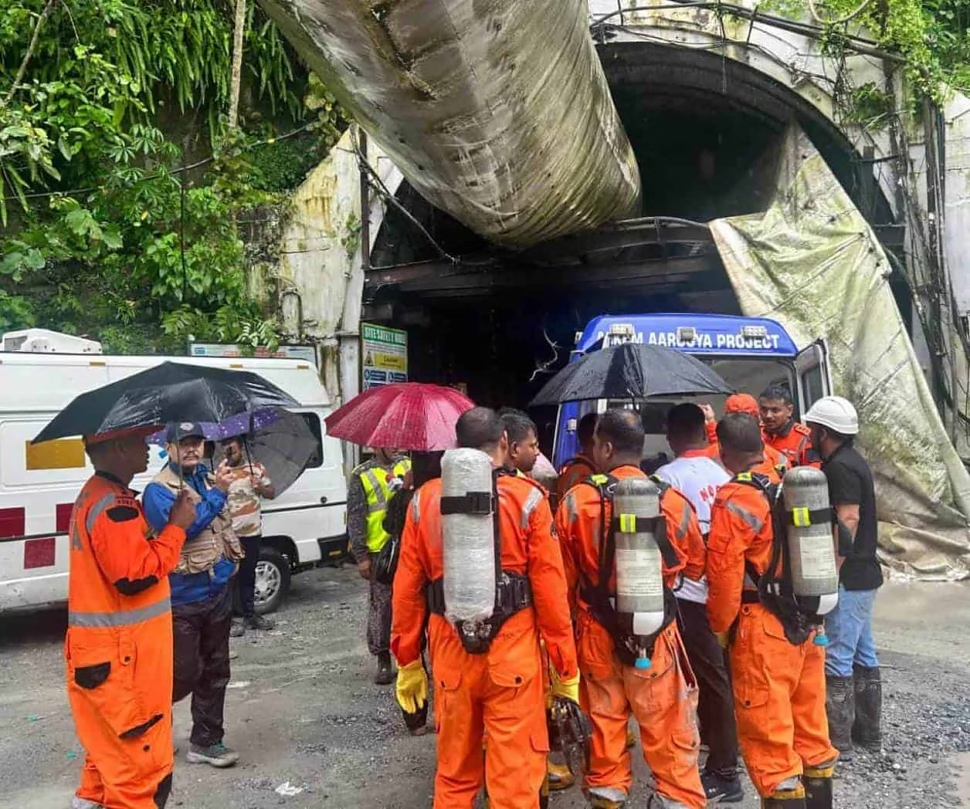
At least 12 people died and 13 remain missing after the collapse of a tunnel under construction of the Teesta hydroelectric project, located in the state of Sikkim, northeast of India. The accident occurred on Monday in the village of Samardung, near the border with China.

The authorities attributed the incident to an explosion caused by the accumulation of methane gas inside the work. State chief minister Prem Singh Tamang said 27 workers were initially trapped. Two people managed to escape alive, but several rescuers and officials who entered later were also trapped.

RelatedSix dead in tunnel collapse to steal fuel in Edomex

Rescue work in extreme conditions

Teams from the National Disaster Response Force (NDRF) continue the search amid toxic gases such as methane, carbon monoxide and hydrogen sulfide. So far 12 bodies have been recovered, while efforts continue to locate the missing. Conditions in the tunnel are extremely dangerous, making it difficult for rescuers to advance.

Putin thanks North Korea for its military support

The Kremlin receives the North Korean chancellor in a context of global tensions.

Meeting in the Kremlin

Russian President Vladimir Putin held a meeting in the Kremlin with North Korean Foreign Minister Choe Son Hui. The meeting reaffirmed the growing alliance between both nations.

Putin expressed his gratitude to the North Korean government for its support of Russian military operations in Ukraine. The visit was carried out at the invitation of the Russian Foreign Minister, Sergei Lavrov.

Although not confirmed, speculation is circulating about a possible visit by North Korean leader Kim Jong Un to Russia. The meeting reflects the strategic closeness between Moscow and Pyongyang in a complex international context.

The alliance between both countries has strengthened amid global tensions. This approach could have repercussions on regional geopolitics.

Continue reading

Lebanon and Trump agree on steps toward lasting peace

Aoun seeks to consolidate the truce with Israel after meeting with Trump in Washington.

Meeting at the White House

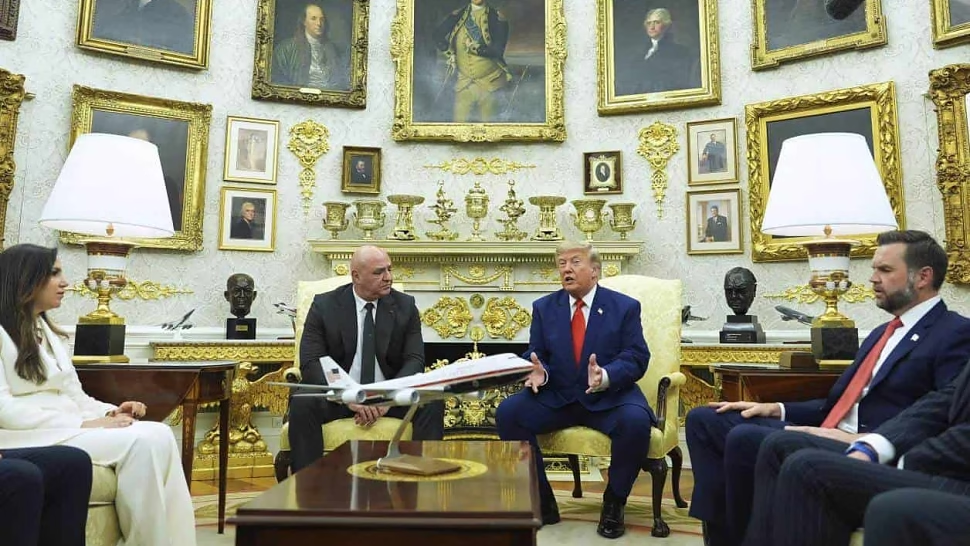
The President of Lebanon, Joseph Aoun, closed a four-day official visit to Washington on Tuesday with a meeting in the Oval Office with Donald Trump. The objective: to shore up the truce after months of clashes between Israel and Hezbollah.

The talks, mediated by the United States, seek to withdraw Israeli troops from southern Lebanon and strengthen the presence of the Lebanese army in areas where the Iranian-backed group operated. At the end of June, both countries agreed on a framework that includes the Israeli withdrawal, the disarmament of Hezbollah and the first steps towards an eventual peace agreement.

Military deployment and doubts on the border

As part of the process, the Lebanese army began preparing troops in Zawtar al-Gharbieh, a village included in a pilot area. However, Israeli authorities indicated that the withdrawal had not yet begun. Residents of the region expressed concern about security and the severe damage caused by the conflict.

Aoun also met with Secretary of State Marco Rubio, who reiterated Washington’s support for the agreement. Rubio stated that Lebanon’s stability depends on the government’s monopoly on force and replacing Hezbollah’s military influence. In addition, he offered to promote international investments for reconstruction.

Persistent obstacles

Despite diplomatic progress, Hezbollah rejects direct negotiations with Israel and maintains its support for talks between the United States and Iran for a broader agreement. The Lebanese government insists that the Israeli withdrawal and the strengthening of its army are indispensable conditions for sustainable peace and avoiding a new escalation.

Continue reading

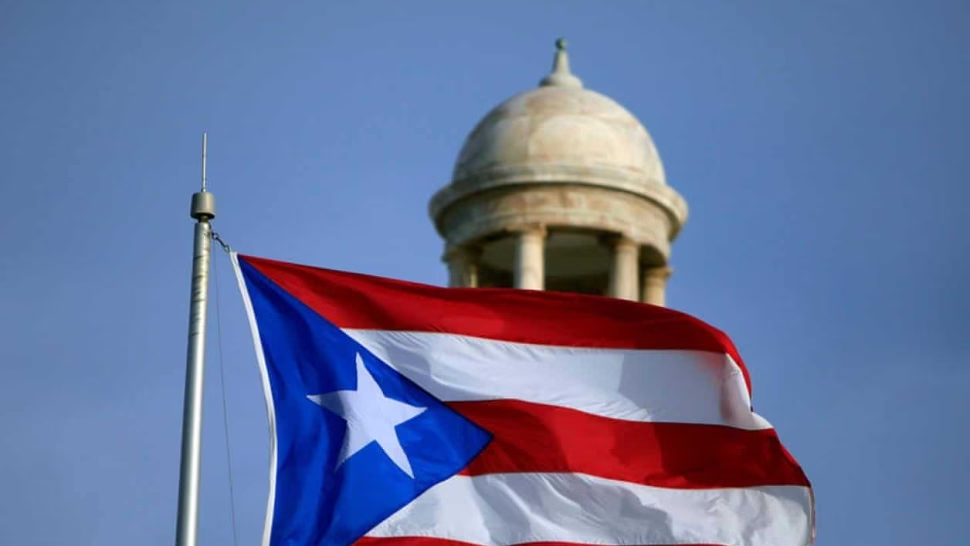
Puerto Rico: chiefs of staff resign due to allegations of irregularities

The governor announces departures from her team after accusations of interference in contracts.

The political crisis in Puerto Rico

Governor Jenniffer González announced that her chief of staff, Francisco Domenech, and deputy chief, Itza García, will leave their positions in August. Both are investigated by an independent state agency after allegations of irregularities in the Permit Management Office.

Domenech also serves as executive director of the Financial Advisory Authority and Tax Agency. The accusations arose when former economic development chief Sebastián Negrón resigned in May and alleged government interference in the agency. More than ten officials also resigned.

Negron accused Domenech of contract irregularities and improper interference, which he has denied. García was singled out for pressuring Negrón to appoint the wife of the president of Politank—a lobbying firm that Domenech founded—to the permitting office.

“I return to my private life with the peace of mind of having served with integrity,” said Domenech.

García said that he grew professionally in the position and that his stage concludes, but not his commitment to the island. The governor thanked her for her work and loyalty, stating that she would not allow her administration to be “silenced” by “agendas and attacks.”

Domenech filed sworn statements against Negron alleging corruption, which Negron has denied. On Friday, Domenech said the Office of the Special Independent Prosecutor Panel is investigating him following allegations he called “riddled with lies.”

Federal lawmakers have questioned the use of federal funds. Juan Dalmau, of the Puerto Rican Independence Party, criticized the departure: “It is a discarded whitewash. Allowing notable officials to leave almost with State honors is a mockery.”

Domenech will leave office on August 7 and García on August 15. No replacements have been announced yet.

Continue reading