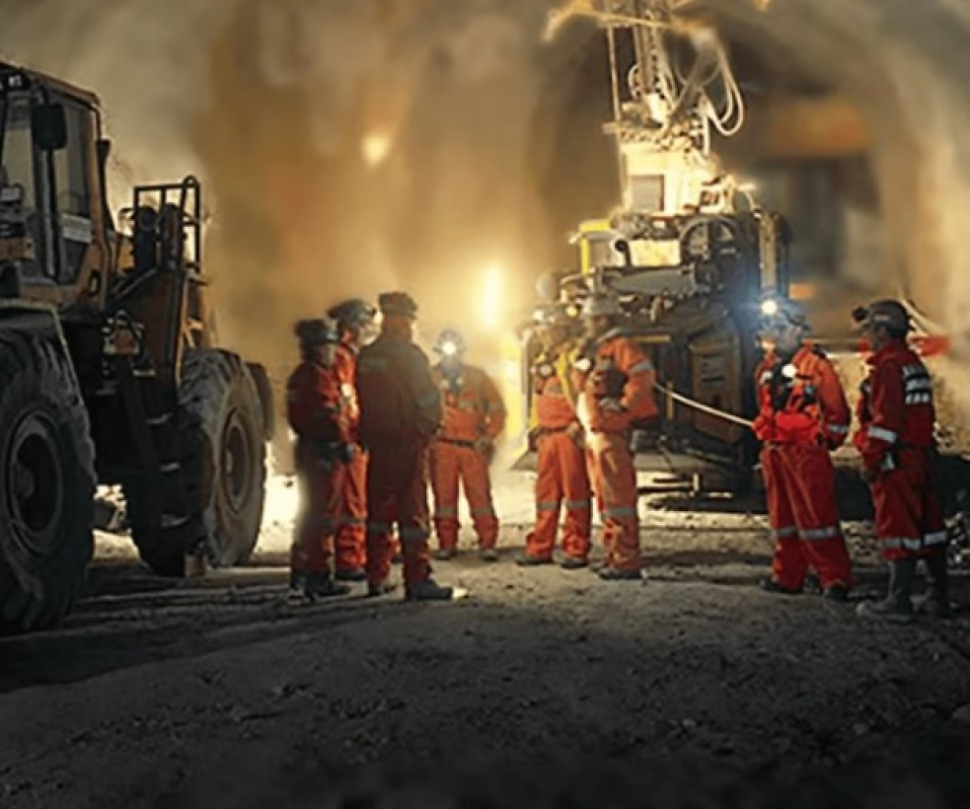
Because the Earth decided to play Jenga with a mine
Ah, Chile, that country where earthquakes are as common as bread with avocado, but this time nature (or perhaps human negligence, who knows) decided to play tricks on El Teniente, the largest underground copper mine in the world. Because, of course, what better place for a spectacular collapse than a labyrinth of 4,500 kilometers of tunnels? Five workers were trapped, one died, and nine more were bruised, because mining safety always seems to be a suggestion rather than a priority.
The next 48 hours are key (or so they say)
Andrés Music, director of El Teniente, declared with all the solemnity of a news anchor: “The next 48 hours are key.” What a revelation! Were they planning to wait a week before starting to move rubble? Meanwhile, the rescuers—heroic as always—fight against 300 meters of severely damaged tunnels and another 400 moderately destroyed ones, because in mining even disasters have categories. Of course, not all is lost: among the rescuers there are veterans of the famous rescue of the 33 miners in 2010, because in Chile the expertise in pulling people out of holes is, unfortunately, a booming business.
The prosecution, for its part, has already opened an investigation for “quasi-homicide” (that charming legal term that means “someone screwed up, but accidentally”). Was it a natural earthquake or internal explosions in the mine? Nobody knows, but in the meantime, the rain—because that detail was missing—makes the work even more complicated. As if that were not enough, the drones trying to map the area must deal with collapsed galleries, because nothing says “technological advance” like having to dig like 19th century moles.
Protocols, speeches and the eternal question: what now?
President Boric, in a gesture that mixes genuine concern and political obligation, suspended his agenda to “put all resources” into the rescue. Very noble, although one wonders if those resources include a magic wand to clear landslides. Meanwhile, the Minister of Mining, Aurora Williams, arrived at the scene to confirm the obvious: there is no contact with those trapped. Brilliant deduction, considering they are under hundreds of meters of rock.
And so, between seismic aftershocks, torrential rain and rescue teams advancing at a snail’s pace, Chile revives its eternal love-hate relationship with mining. Because, in the end, copper pays the bills, but landslides take lives. Moral? Maybe we should start building mines with more stable materials… like cotton candy.
Are you outraged? Share this note and demand better working conditions. Or, if you prefer to ignore the problem, at least spread the hashtag #RescateEnElTeniente so that the algorithm takes pity on those trapped.