


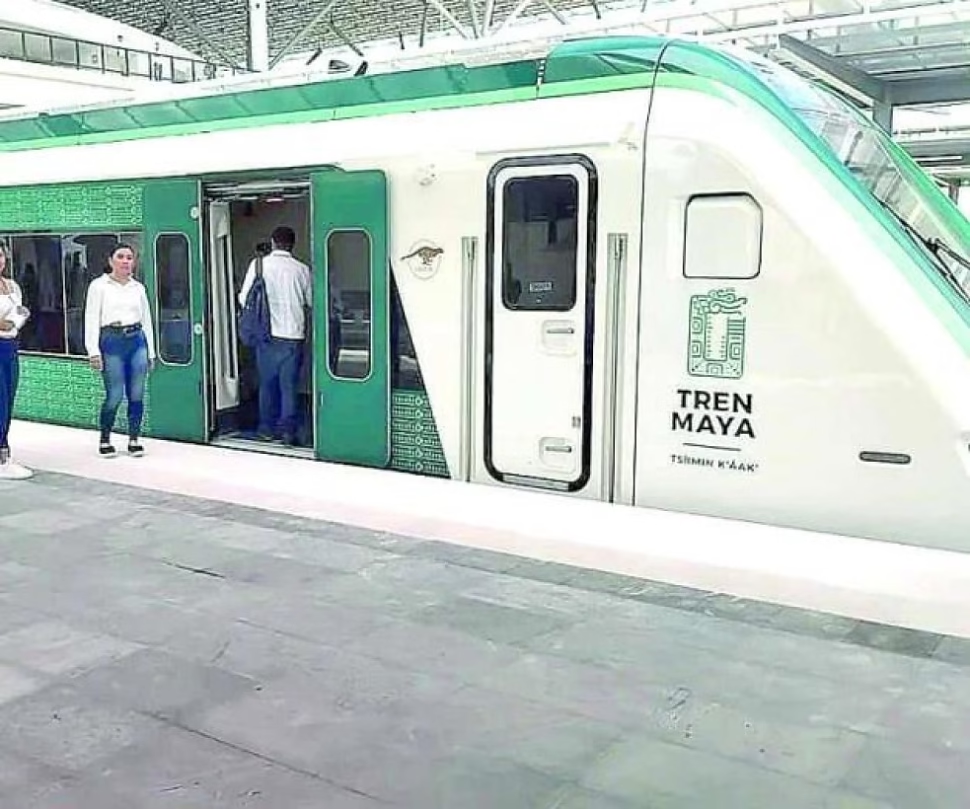
A railway dream (or logistical nightmare) that knows no borders
Because of course, what better way to demonstrate the “success” of the Mayan Train than to export its model to the neighbors? The governments of Mexico, Guatemala and Belize—in a burst of collective enthusiasm—decided that it is not enough to have a controversial railway project in one country: we must share the joy with the entire region. The goal? Connect the now famous (or infamous, depending on who you ask) Mayan Train with Guatemala and, why not, to Belize. Because if there’s one thing we need, it’s more locomotives crossing jungles and borders, right?
Promises, studies and the classic phrase “it will not affect protected areas”
In a conference that seemed more like an act of faith than a technical announcement, President Claudia Sheinbaum and her Guatemalan counterpart, Bernardo Arévalo, assured that this will not be an ecocide on rails. “The train will not pass through protected areas,” Arévalo said, as if repeating it would automatically make it true. And the routes already destined for transport? Well, those are fair game. Who cares about a little more concrete and noise in areas that are already half destroyed?
Sheinbaum, for his part, did not miss the opportunity to boast that the Mayan Train has already transported one and a half million people (although he did not mention how many of them traveled voluntarily). And as if that were not enough, it will now also have freight mode, because nothing says “progress” like converting a tourist train into a truck with steel wheels. Of course, the president clarified—with that seriousness that only politicians can pretend—that Mexico will not build anything in Guatemala or Belize. No no. He will only “lend” them his expertise in pharaonic projects.
The interoceanic corridor and other railway fantasies
To sweeten the deal, they also announced a second rail link across the Pacific, because one is never enough when it comes to spending public money on infrastructure that maybe, maybe, one day, will be profitable. Of course, the technical details were conspicuous by their absence. Costs? Mystery. Deadlines? Flexible. Environmental impact? Depending on who evaluates it. But hey, the important thing is that the presidents took smiling photos in Calakmul, Campeche, where—oh, surprise—more details will be revealed later. Because there’s nothing like announcing first and planning later.
So get ready, Central America: the Mayan Train is coming for you. And if you thought that controversies over inflated budgets, ecological damage and dubious profitability were just a Mexican problem, think again. International cooperation has never been so… questionable.
Are you intrigued by this project or do you think it’s another white elephant on rails? Share this article and join the debate. And if you want more analysis on Pharaonic works and their consequences, explore our related content.


