The United States carries out a new attack in the Pacific

A new military action on the high seas intensifies the controversial strategy and deploys unprecedented naval power in the region.

Military Action on the High Seas

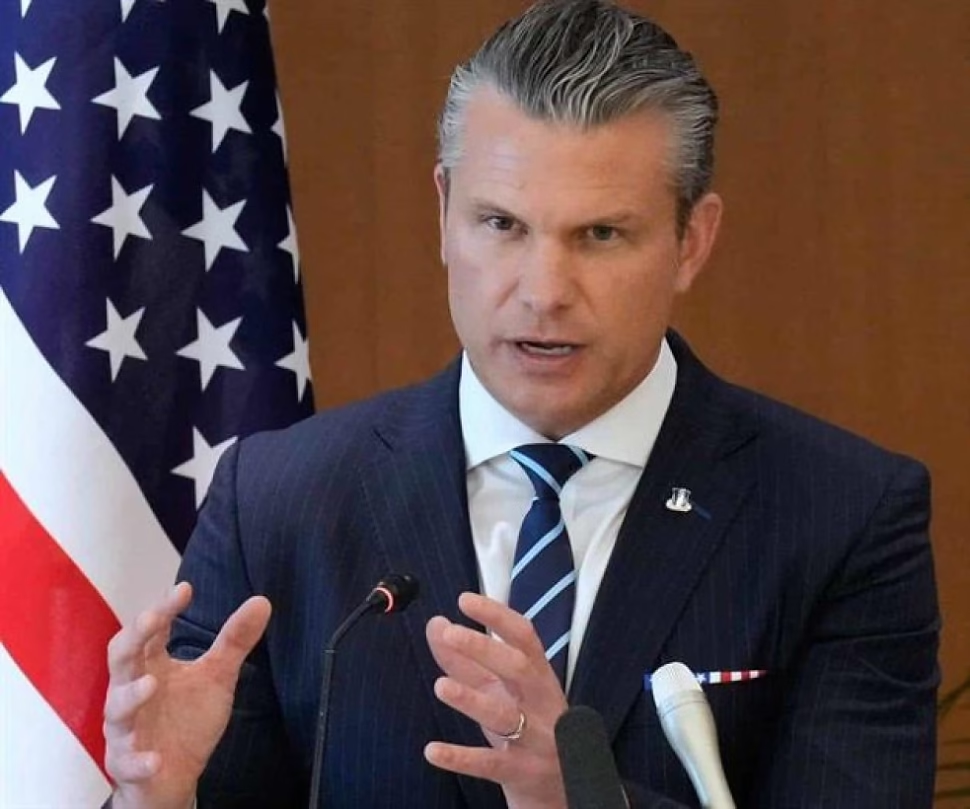
The Secretary of Defense of the United States, Pete Hegseth, confirmed this Wednesday that the US armed forces carried out a new offensive raid against a vessel in international waters of the Pacific Ocean. According to the official report, the operation resulted in the elimination of four individuals who were on board the ship, which was identified by the intelligence services as a narcotics transport that was transiting a previously identified maritime drug trafficking route.

The information, disclosed by Hegseth himself through his social media channels during his tour of Japan and Malaysia, was accompanied by audiovisual material that shows the moment in which the boat is hit and bursts into flames. This episode represents the fourteenth military intervention of this type carried out by the United States against vessels in South American waters since the beginning of its campaign in early September. The accumulated balance of this offensive amounts to a minimum of 61 people dead.

RelatedThe United States carries out its first anti-drug attack in the Pacific off Colombia

Strategic Deployment and Geopolitical Context

In parallel to these operations, there has been an unusual buildup of US naval and air capabilities in the region. This significant display of military power, which includes warships and combat aircraft, has generated intense debate and speculation among analysts and governments about its ultimate strategic objectives. One of the most widespread hypotheses suggests that these movements could be aimed at exerting maximum pressure on the government of Venezuelan President Nicolás Maduro, whom the US administration has publicly accused of narcoterrorism.

An aspect that has generated deep concern in legal and legislative circles is the legal framework under which these attacks are carried out. The actions have been carried out without a prior legal investigation and without a formal declaration of war by the United States Congress, as required by traditional protocols. This circumstance has led several legislators to publicly question the lack of conclusive and transparent evidence to justify the deaths that occurred in these interventions.

To legitimize these operations, President Donald Trump has argued that the attacks against the boats are a necessary measure to interrupt the flow of narcotics into US territory. The administration maintains that the United States is immersed in an “armed conflict” against drug cartels, a legal figure that finds its precedent in the authority used by the George W. Bush government when it declared the global war against terrorism after the attacks of September 11, 2001.

However, to date, the Trump administration has not provided public evidence to corroborate its claims about the illicit nature of the attacked vessels, their link to specific criminal organizations, or the identity of the deceased. This lack of transparency fuels doubts about the strategy and its repercussions on international law and regional stability.

Share this analysis of the complex geopolitical situation on social networks and explore more content related to global security and foreign policy.
Médicos sin pago ni recursos ante brote de ébola en Congo

Médicos en Congo enfrentan impagos y escasez ante brote de ébola.

Crisis en la primera línea contra el ébola

El personal médico que combate uno de los brotes de ébola más letales en la República Democrática del Congo enfrenta una crisis: falta de recursos, pagos irregulares y jornadas extenuantes.

El doctor Richard Lokudu, director del Hospital General de Referencia de Mongbwalu, denunció que él y sus colegas han atendido pacientes durante semanas sin recibir la compensación prometida. Las alertas por nuevos casos aumentan en la región oriental.

RelatedNuevo brote de ébola en RD Congo deja 65 fallecidos

Las autoridades sanitarias señalan que el brote del tipo Bundibugyo pudo comenzar en la zona minera de Mongbwalu. El hacinamiento, la falta de servicios básicos y el constante movimiento de trabajadores facilitaron la propagación del virus.

Cifras y desafíos

Hasta el viernes, se habían confirmado 488 casos y 86 fallecimientos a nivel nacional. Los trabajadores de salud reportan que la respuesta se complicó por la escasez inicial de equipos de protección, medicamentos y personal especializado.

La Organización Mundial de la Salud anunció un plan de apoyo por cientos de millones de dólares. No obstante, los especialistas advierten que contener el ébola requiere fortalecer el sistema sanitario, la cooperación comunitaria y el respaldo constante a quienes arriesgan su vida para atender a los pacientes.

Continue reading

Papa León XIV preside misa multitudinaria en Madrid

El pontífice reunió a más de un millón de fieles en Madrid durante la festividad del Corpus Domini.

Más de un millón de fieles en Madrid

El papa León XIV encabezó este domingo una misa masiva en Madrid, con motivo del Corpus Domini. La celebración reunió a más de un millón de personas en la capital española, según las autoridades locales.

Durante la homilía, el pontífice describió la tradición religiosa de España como una “escuela de fe” vigente para las nuevas generaciones. La frase fue coreada por los asistentes, que llenaron la plaza y las calles aledañas.

RelatedCelebrities say goodbye to Pope Francis with emotional messages

Recorrido en papamóvil y alfombras florales

A su llegada, León XIV recorrió el lugar en papamóvil. Los fieles lo recibieron con vítores y muestras de entusiasmo. La ceremonia incluyó una procesión sobre alfombras elaboradas con más de 30 mil flores, una de las expresiones más representativas de la religiosidad popular española.

La misa formó parte de la visita pastoral de una semana que el papa realiza al país. Hasta ahora, ha sido uno de los eventos más relevantes de su agenda.

Sin incidentes reportados, la jornada transcurrió en un ambiente de recogimiento y celebración. Las autoridades destacaron la organización del evento y la participación ciudadana.

Continue reading

Sismo de 7.8 sacude Filipinas; alerta de tsunami en el Pacífico

Un sismo de magnitud 7.8 sacudió el sur de Filipinas. Autoridades pidieron evacuar zonas costeras.

Un sismo de magnitud 7.8 afectó el lunes la región sur de Filipinas. Las autoridades activaron una alerta de tsunami para las costas cercanas.

Detalles del movimiento telúrico

El epicentro se localizó a 13 kilómetros al suroeste de General Santos, en la isla de Mindanao. El Instituto Filipino de Vulcanología y Sismología reportó una profundidad de 10 kilómetros. El sismo ocurrió a las 7:37 de la mañana, hora local.

RelatedJapan assesses damage after powerful earthquake and tsunami warning

Se reportaron cortes de electricidad en la zona. Hasta el momento no hay información sobre daños estructurales o personas afectadas.

Advertencia de tsunami y réplicas

El Centro de Alerta de Tsunamis del Pacífico indicó que podrían registrarse olas de hasta 3 metros de altura en algunas costas de Filipinas. En zonas de Indonesia y Malasia, las olas podrían alcanzar 1 metro.

“Recomendamos a la gente evacuar a zonas más altas o ir más hacia el interior”, declaró Teresito Bacolcol, jefe del instituto filipino.

También hay posibilidad de olas en Taiwán, Japón, Guam, Papúa Nueva Guinea y otras islas del Pacífico occidental. No hay amenaza para Hawái ni la costa continental de Estados Unidos.

El Servicio Geológico de Estados Unidos reportó réplicas de hasta magnitud 6.1. Ese organismo midió el sismo original a una profundidad de 55 kilómetros. Es habitual que haya diferencias en las mediciones iniciales entre agencias.

Filipinas, ubicada en el Anillo de Fuego del Pacífico, es uno de los países con mayor actividad sísmica y volcánica del mundo. Cada año también enfrenta unos 20 tifones y tormentas tropicales.

Continue reading