The impact of automation
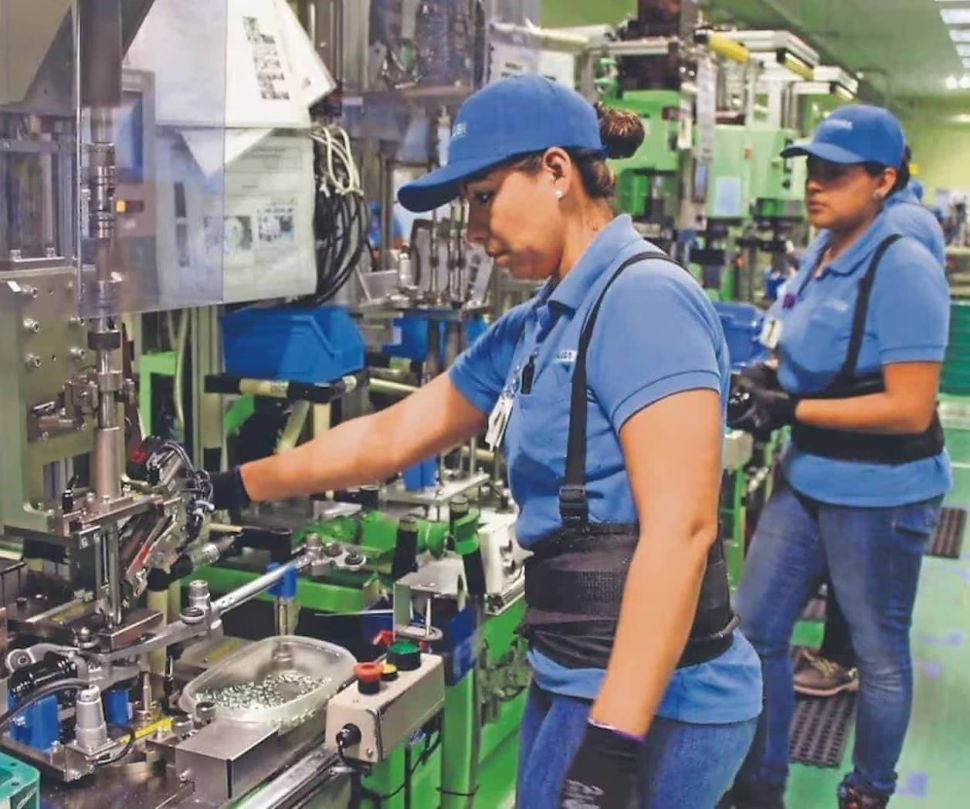
The wave of layoffs in the maquiladoras does not stop. The growing use of robots in production, especially at the border, has accelerated job losses. Added to this are higher minimum wages, increased vacation days, trade uncertainty and US tariffs.
According to data from Inegi, establishments with the Immex program had 3.19 million workers in May, 3% less than two years ago. That is equivalent to 100 thousand fewer places. Companies began laying off staff from the end of 2023.
Analysts consulted by EL UNIVERSAL point out that the combination of factors—automation, insecurity and tariffs—is behind this trend.
Humberto Martínez Cantú, president of the National Council of the Maquiladora and Export Manufacturing Industry (Index), explained that maquiladoras are being automated in the country. The process was accelerated by the increase in labor costs and external commercial pressure.
The northern border, a traditional bastion of the maquiladora industry, is the most affected area. There, robotization advances faster than in the rest of the country.
Official data reflect a sustained contraction. The sector is losing dynamism and with it, sources of formal employment for thousands of Mexicans.
Although the government has promoted incentives for investment, the reality is that technology replaces repetitive tasks. The least skilled workers are the most vulnerable.
Trade uncertainty with the United States and threats of additional tariffs complicate the outlook. Maquiladoras, which depend on global supply chains, adjust their workforces to remain competitive.
The immediate challenge is how to retrain the workforce. Without training and retraining policies, the loss of positions could worsen.