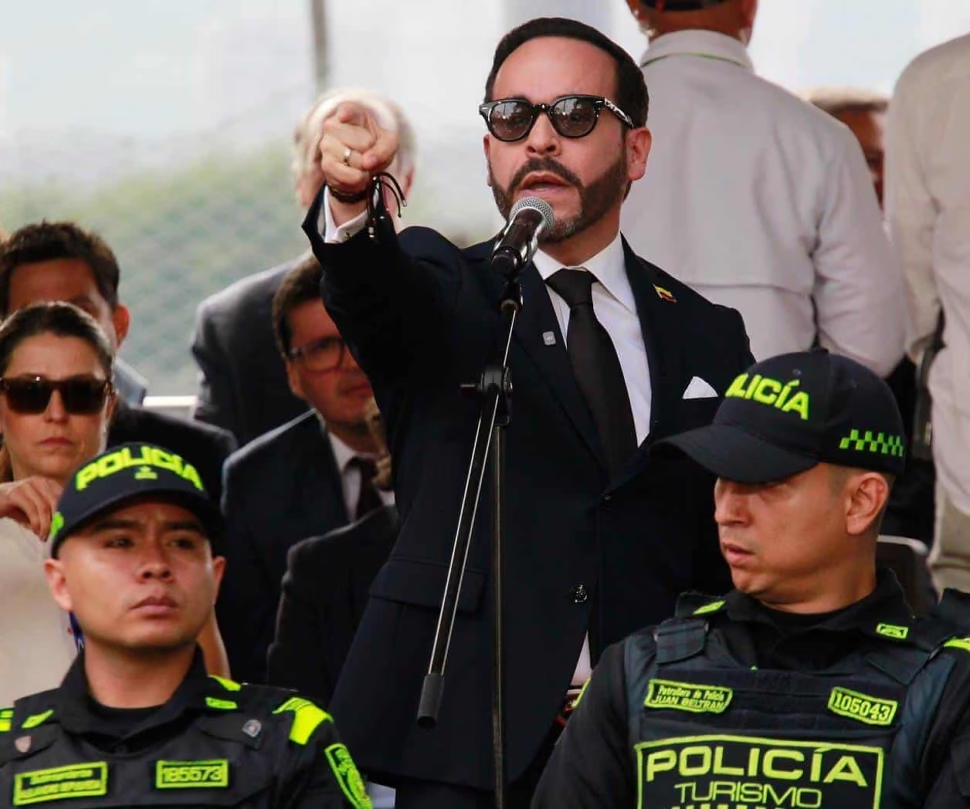
The president of Ecuador, Daniel Noboa, revealed that he held conversations with the elected leaders of Colombia and Peru, Abelardo de la Espriella and Keiko Fujimori. From these dialogues, preliminary agreements emerged on two fronts: border security and energy supply.
In terms of security, Noboa raised the need for a greater military presence of the armed forces of both countries on their respective borders with Ecuador. “Their presence at the border is going to be crucial,” he said in a radio interview. The border area is the focus of activities of drug trafficking groups linked to international cartels. According to the UN, 80% of the narcotics that enter Ecuador come from Colombia and the rest from Peru. The president had previously pressed a tariff war against Colombia, without receiving a response, and recently suspended it following a resolution from the Andean Community.
Regarding energy, Colombia will resume the sale of electricity to Ecuador. Noboa indicated that they will be able to receive up to 380 additional megawatts with a binational rate of about 30 cents per kilowatt/hour. The sale had been suspended by President Gustavo Petro in response to tariffs imposed by Ecuador. Now, with the agreement, the flow resumes. Ecuador faces a dry season that reduces hydroelectric generation – which provides 75% of electricity – and registers a deficit of at least 800 megawatts. At the end of 2024, Ecuadorians suffered blackouts of up to 14 hours a day due to the worst drought in six decades.
With Peru, the agreement consists of the provision of gas to generate electricity more cheaply in Ecuador. “That way we truly work together,” Noboa concluded.
The agreements reflect the political affinity between Noboa, De la Espriella and Fujimori, with a conservative profile, and seek to address two simultaneous crises: insecurity linked to drug trafficking and the energy emergency.