They accuse violations of the rights of migrants detained in Guantánamo

They denounce inhumane conditions and violations of due process at the naval base, according to court documents.

They denounce extreme conditions at the Guantánamo naval base

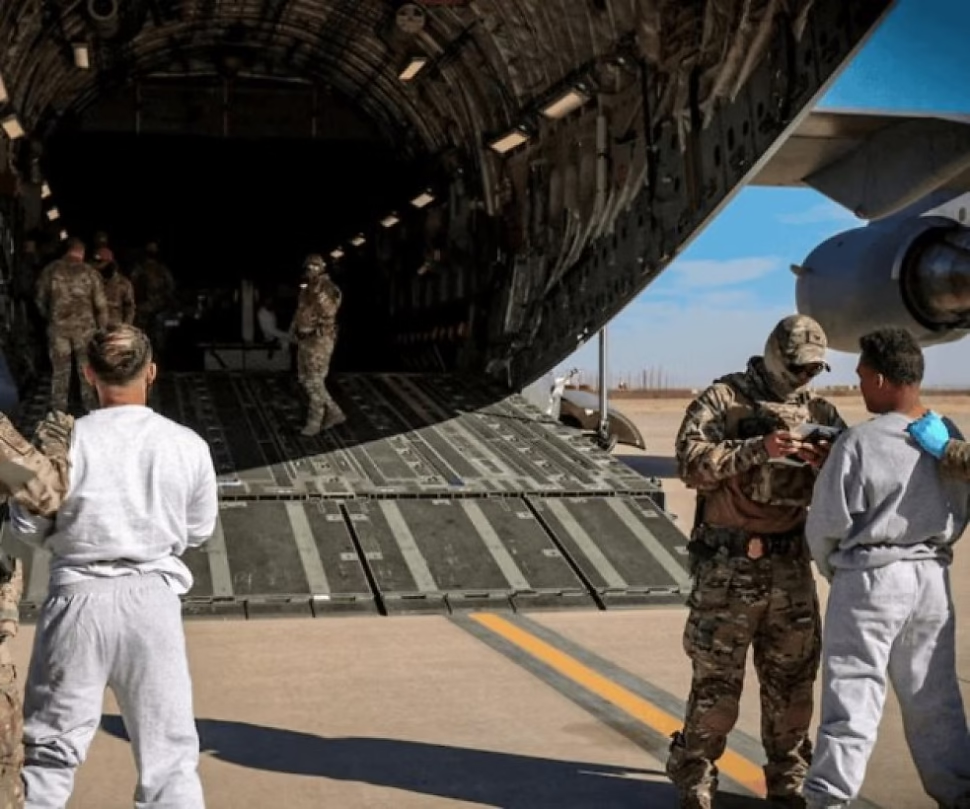
Organizations defending human rights and civil rights have filed a lawsuit that exposes the serious detention conditions faced by migrants at the Guantánamo naval base. According to the document presented before a federal court in Washington, the detainees suffer extreme isolation, restrictions on access to legal advice and constant surveillance of their communications, which violates fundamental constitutional guarantees.

Climate of intimidation and lack of due process

The lawsuit, filed on behalf of two Nicaraguan citizens, details an environment of “extreme fear and intimidation” where migrants fear retaliation if they speak freely with their attorneys. The conditions described exceed in severity those of conventional penitentiary centers and even those of military installations in war contexts. Among the reported practices, the following stand out:

RelatedThey denounce inhuman treatment of African migrants deported by the US
  • Legal communications monitored by loudspeaker, with agents present.
  • FBI interrogations in the presence of military personnel.
  • Punishments such as confinement in cells without light for days.

Johon Suazo-Muller, one of the plaintiffs, said in a court statement that he has only been able to contact his family on rare occasions, with calls limited to five minutes and under strict supervision. “I cannot reveal details about my situation or my location,” he said.

Political context and institutional responses

The Guantánamo base, historically used to detain combatants in the “war on terrorism,” has been repurposed under recent immigration policies to house people with deportation orders. The US government justifies these measures as part of an effort to expedite mass deportations, although critics call them arbitrary and violating international law.

The US Southern Command, in charge of managing the base, declined to comment on the lawsuit, while the Department of Homeland Security did not respond to requests for information. This lack of transparency has generated greater concern among activists, who point out a pattern of opacity in the treatment of migrants.

Legal and social impact: The lawsuit seeks not only to improve conditions for current detainees, but also to set a precedent that prevents future transfers to the facility. Experts in immigration law emphasize that the case could expose fissures in the US judicial system regarding the protection of basic guarantees.

Are you concerned about respect for human rights in immigration policies? Share this information to make the issue visible and explore more analysis on global justice on our portal.

Sources: Judicial documents, statements from defense organizations and testimonies of detainees.
Lula conditions his position on US tariffs

Brazil's president will wait for Trump to speak before responding to the tariff increase.

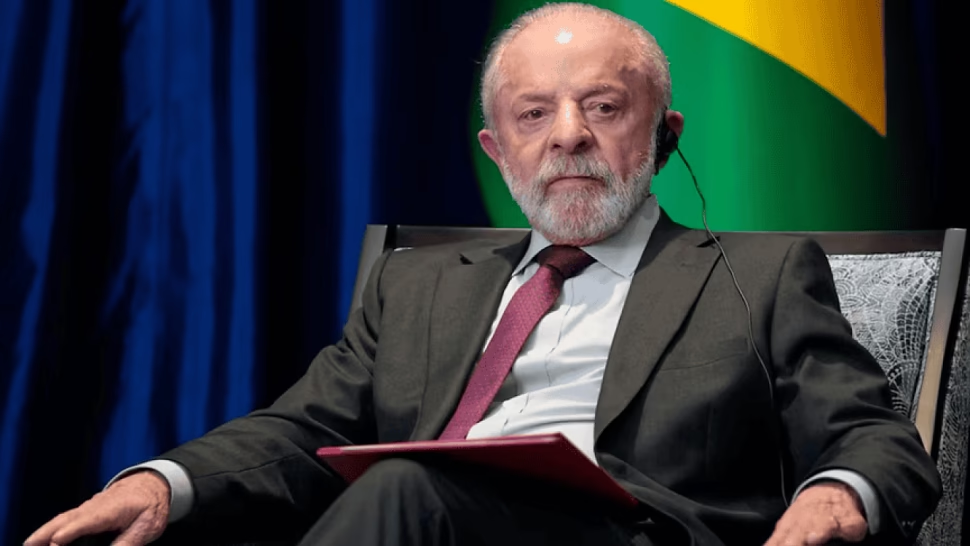
President Luiz Inácio Lula da Silva stated that Brazil does not accept being offended by any nation, in apparent reference to the tariff increase imposed by the United States. However, he warned that he will only comment on the measure after his colleague Donald Trump does so.

“This country must hold its head high because we do not accept that any other nation in the world wrongs Brazil. We want respect, in the same way that we will respect everyone,” he declared during an official event in Rio de Janeiro, accompanied by several ministers and Governor Ricardo Couto de Castro.

Strategic waiting

Lula added that he will wait for Trump’s statements before referring to the “increase in tariffs,” thus avoiding a direct exchange of accusations. “I’m going to wait to talk about the tariff when Trump speaks out. As long as he doesn’t speak, I won’t speak either, because we are going to show that no one beats Brazil with lies,” he said.

The Brazilian government, through its ministers, described as “unjustified” the 25% increase in the rates applied to the South American country’s exports. Washington’s decision has generated trade tension, although Lula opts for a prudent and conditional stance.

Regional context

The US measure impacts key sectors of the Brazilian economy, such as steel and aluminum. Brazil has historically maintained a complex trade relationship with the United States, alternating conflicts and agreements. Lula’s strategy seeks to avoid an escalation while evaluating possible retaliation or negotiations.

Analysts believe that the president’s momentary silence seeks to pressure Trump to take the first step, preventing Brazil from being seen as the initiator of a trade war. The international community is closely watching the development of this dispute between two of the largest economies on the continent.

Continue reading

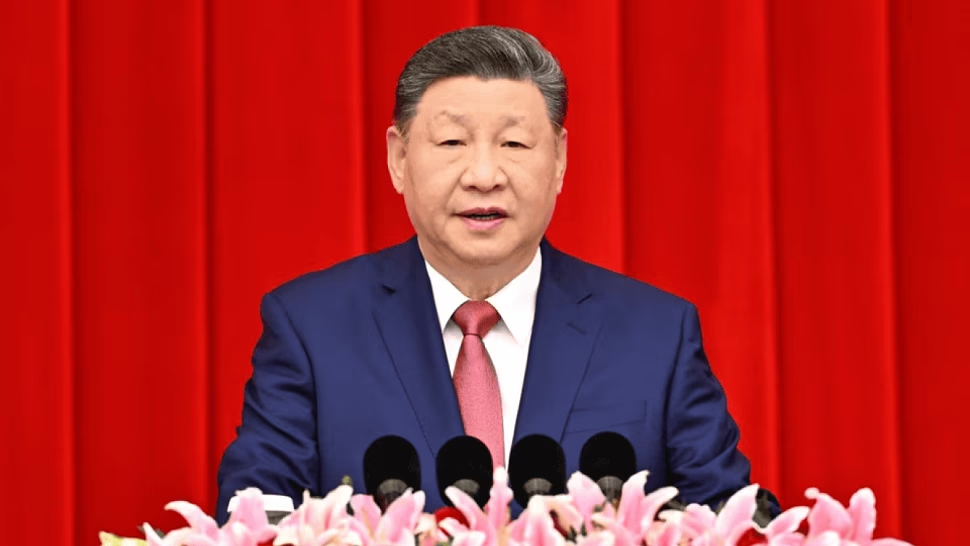
China rejects Trump’s accusations of electoral interference

China rejects Trump's accusations and calls for stability in bilateral relations.

Accusations that strain the bilateral relationship

The president of the United States, Donald Trump, accused China of alleged interference in American electoral processes. The declaration conditions the diplomatic scenario between Washington and Beijing, just two months after Xi Jinping received Trump on a state visit.

The spokesperson for the Ministry of Foreign Affairs, Lin Jian, rejected the allegations, classifying them as fabrications and slander. He added that China has no interest in intervening in internal affairs or US elections, and urged maintaining communication channels under criteria of stability and mutual certainty.

The exchange occurs in a context of persistent commercial and technological rivalry. Washington maintains restrictions against Chinese technology firms, and Beijing has responded with regulatory countermeasures. Negotiations on semiconductors and foreign trade controls are at a standstill, threatening the rapprochement planned for Xi Jinping’s official visit to US territory in September.

Specialists consider that Trump’s accusations respond to internal political dynamics, since they were not accompanied by new sanctions or punitive measures. However, they move the dispute from the commercial sphere to that of national security, which increases the unpredictability in the relationship between both powers.

Continue reading

Iran hits desalination plant in Kuwait

An Iranian attack damaged a water and power plant in Kuwait, affecting drinking supplies.

Attack on strategic plant in Kuwait

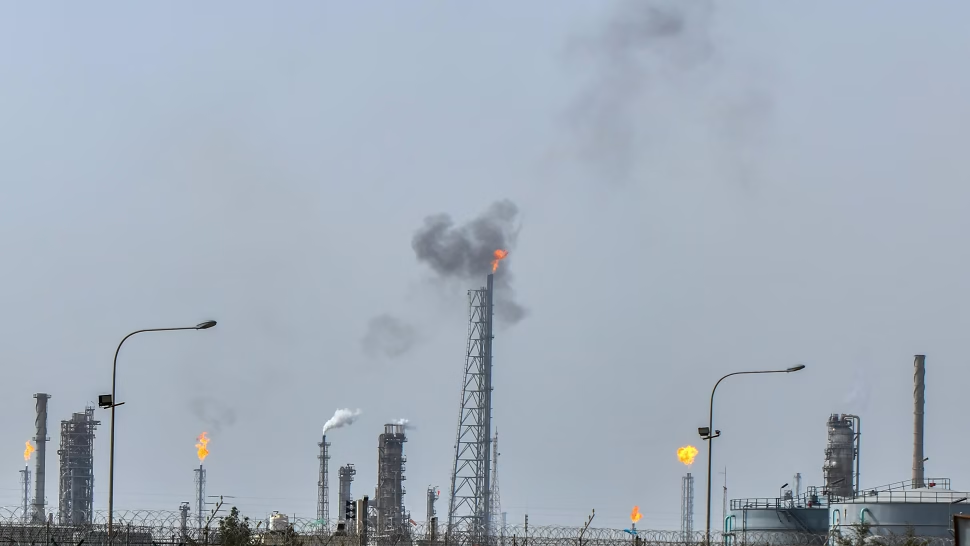
On Friday, an Iranian attack hit a power and desalination plant in Kuwait, causing damage to several power generation units and a fire that was controlled by emergency crews. Kuwaiti authorities activated contingency plans to maintain the supply of water and electricity.

Kuwait relies on desalination for about 90% of its drinking water, similar to other Gulf countries such as Oman and Saudi Arabia. Most of these facilities are on the Persian Gulf coast, making them vulnerable to missile or drone attacks.

This incident highlights the fragility of critical infrastructure in the Middle East amid regional escalation.

Continue reading