Accusations that strain the bilateral relationship
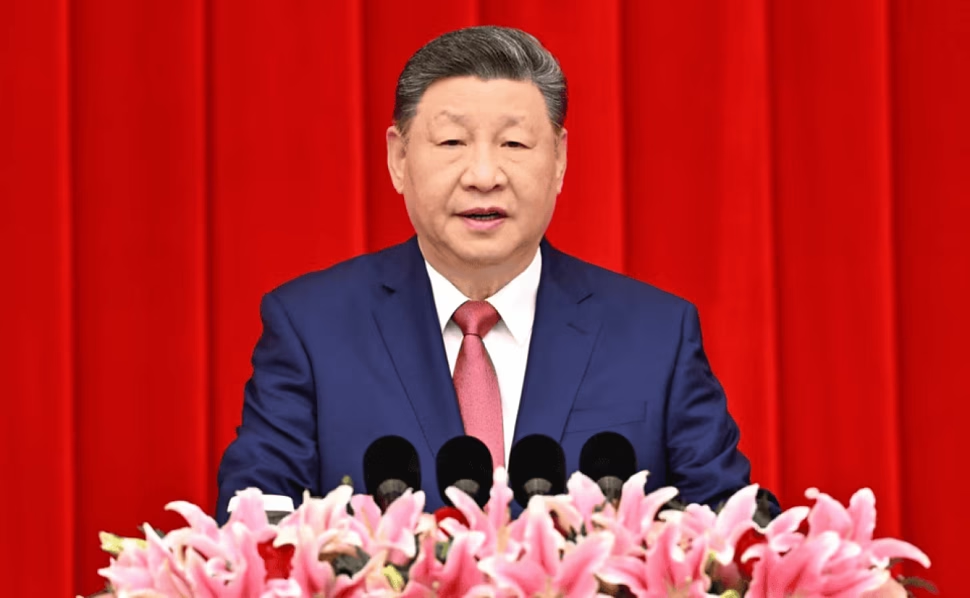
The president of the United States, Donald Trump, accused China of alleged interference in American electoral processes. The declaration conditions the diplomatic scenario between Washington and Beijing, just two months after Xi Jinping received Trump on a state visit.
The spokesperson for the Ministry of Foreign Affairs, Lin Jian, rejected the allegations, classifying them as fabrications and slander. He added that China has no interest in intervening in internal affairs or US elections, and urged maintaining communication channels under criteria of stability and mutual certainty.
The exchange occurs in a context of persistent commercial and technological rivalry. Washington maintains restrictions against Chinese technology firms, and Beijing has responded with regulatory countermeasures. Negotiations on semiconductors and foreign trade controls are at a standstill, threatening the rapprochement planned for Xi Jinping’s official visit to US territory in September.
Specialists consider that Trump’s accusations respond to internal political dynamics, since they were not accompanied by new sanctions or punitive measures. However, they move the dispute from the commercial sphere to that of national security, which increases the unpredictability in the relationship between both powers.