920 dead and criticism for delay in rescues in Venezuela

International rescuers arrive in Venezuela while families dig with their hands.

The toll of the earthquakes of magnitude 7.5 and 7.2 that shook northern Venezuela on Wednesday amounted to 920 deaths and 3,360 injuries this Saturday. Search efforts continue among collapsed buildings, while complaints grow about the slowness in the arrival of rescue teams.

Among the victims is the Italian Francesca Mannina, whose body was identified after she had been missing for two days. His partner was rescued alive the day before.

RelatedDouble earthquake shakes Venezuela: more than 200 victims

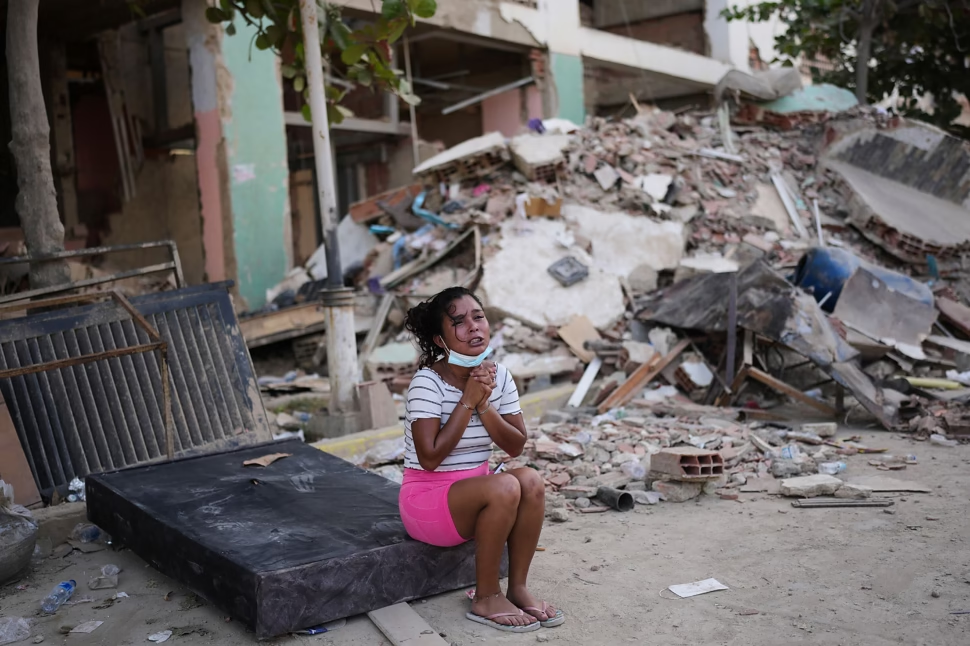
Criticism points to the initial response of the authorities. Opposition leaders, led by Juan Pablo Guanipa, denounced the lack of heavy machinery and specialized equipment to free trapped people, especially in La Guaira. “We have people alive under the rubble and we need heavy machinery,” said a resident of Catia La Mar in a video broadcast on the networks. Witnesses pointed out that for hours the inhabitants themselves dug with their hands.

Faced with the emergency, the United States deployed one of the largest international assistance operations. More than 250 rescuers — firefighters, doctors, engineers, urban search specialists and 18 trained dogs — were dispatched. The operation includes two military ships, aircraft and a humanitarian aid package for 150 million dollars. Major General Kevin Jarrard arrived in Caracas to coordinate logistics with the Simón Bolívar airport as the main center.

An Italian civil protection mission also arrived.

The health emergency is worsening in Caracas. Hospitals such as Pérez Carreño and Domingo Luciani are working at their limit after receiving hundreds of injured people from La Guaira. Doctors report shortages of supplies and depend on volunteers to maintain care.

The aftershocks continue. Funvisis reported this Saturday a 4.9 magnitude earthquake north of Maracay, also felt in Caracas, La Guaira, Miranda and Carabobo. Since the main earthquake, at least thirteen minor movements have been recorded.

In the midst of the crisis, teams from El Salvador rescued alive, after more than 50 hours, a 15-year-old teenager with her dog, trapped on the ninth floor of a collapsed building in Playa Grande. Hours earlier, the same rescuers saved another woman who had been under the rubble for two days.

Venezuelan sport suffered a loss: the Venezuelan Football Federation confirmed the death of midfielder Yimvert Berroterán, 18, a member of the U-20 team and the Central University of Venezuela, who had remained missing since the collapse of several buildings in La Guaira.

While the search efforts continue, the government of Interim President Delcy Rodríguez restricted access to the most affected areas. The opposition maintains that this measure hinders the arrival of aid and humanitarian work.
Venezuela: hospital crisis after earthquakes and thousands of people affected

The earthquakes in Venezuela left more than 1,700 dead and a health crisis that overwhelmed hospitals.

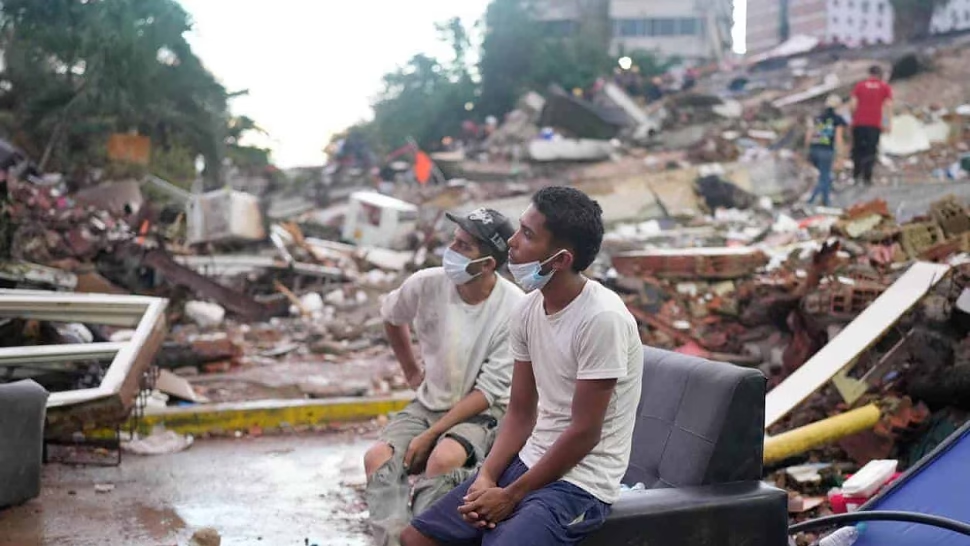
Last week’s earthquakes in Venezuela have collapsed the health system. More than 1,700 people died and thousands were injured. Hospitals operate at their limit, according to international organizations.

Hospital damage and disease risk

The WHO reports dozens of hospitals affected, several out of service. Those that work face overcrowding, lack of staff and delays in surgeries. In addition, thousands of displaced people live in makeshift shelters. The UN warns of possible outbreaks of measles, dengue, malaria and yellow fever due to overcrowding.

Figures and call for help

Venezuelan authorities count more than 15,000 affected, but the number could be higher, according to international organizations. NASA estimates that 59,000 buildings were damaged or destroyed. UNICEF estimates that 680,000 children need humanitarian assistance. While search and rescue efforts continue, national and international organizations are asking to reinforce humanitarian and medical aid. The priority is to care for the affected population, prevent the spread of diseases and strengthen the response capacity of the health system to the magnitude of the emergency.

Continue reading

The ‘Flemish Revolution’ shakes Albania against Kushner’s project

Albanian environmentalists use foam flamingos to protest a tourism project linked to Jared Kushner.

The ‘flamingo revolution’ that challenges a Kushner project in Albania

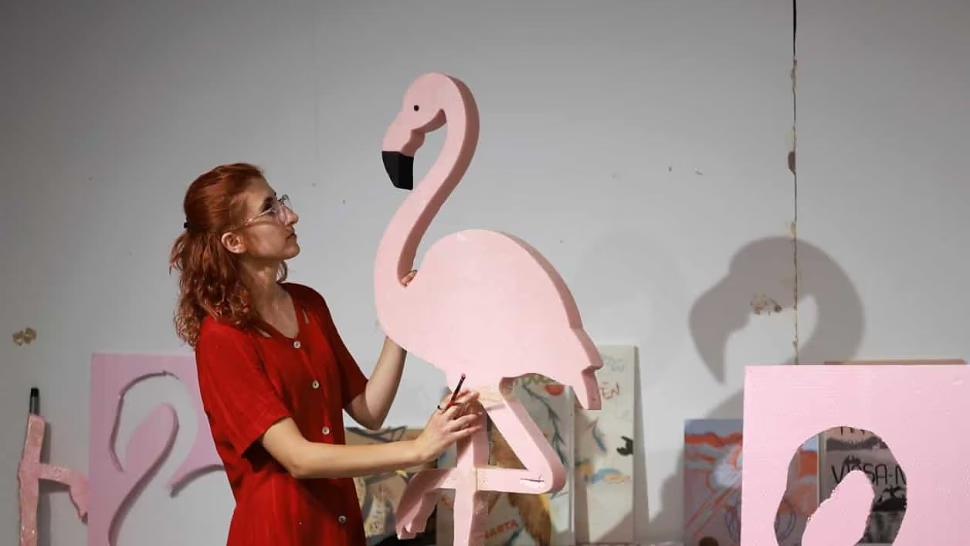
Thousands of people have demonstrated in Tirana against a luxury tourism megaproject linked to Jared Kushner, son-in-law of US President Donald Trump. The mobilizations, baptized as the “flamingo revolution”, have a peculiar symbol: figures of flamingos made of foam by the activist Natma Paja, used to make visible the rejection of development.

The project includes hotels, villas, apartments and a marina on Sazan Island and Narta Lagoon, a protected area that is home to migratory birds. Civil organizations denounce a risk to biodiversity and demand the suspension of the works.

The government defends investment

Prime Minister Edi Rama has backed the project, arguing that it will boost high-end tourism, strengthen the economy and support Albania’s aspiration to join the European Union. But the opposition does not give in.

As protests continue, the Special Prosecutor’s Office against Corruption and Organized Crime opened an investigation into the case, without revealing details. The European Union, for its part, monitors that the initiative complies with the environmental standards required of the candidate country.

Rama has reiterated that he will not stop the project, which he describes as a historic opportunity. The conflict keeps open the debate between economic growth, environmental protection and transparency in large investments.

Continue reading

US Supreme Court rejects Trump order on citizenship

The highest court maintains the right of birthright citizenship with a vote of 6-3.

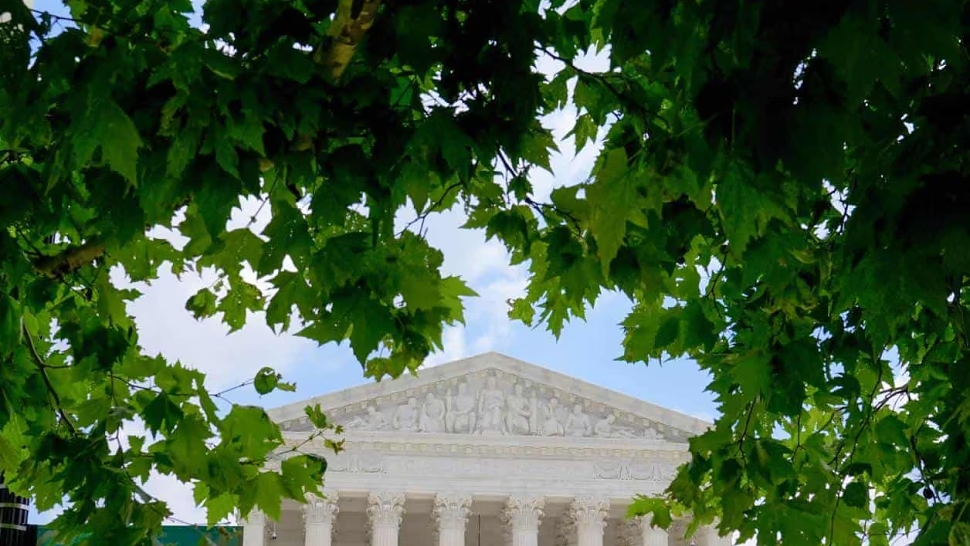
The United States Supreme Court confirmed this Tuesday the principle of citizenship by birth. With a vote of 6-3, the highest court rejected President Donald Trump’s executive order that sought to deny nationality to children of people in an irregular immigration situation or with temporary status.

The weight of the Fourteenth Amendment

The president of the Court, John Roberts, noted that citizenship represents “the right to have rights.” He recalled that the Fourteenth Amendment extended that guarantee to every person born in United States territory. The decision reaffirms that, with limited exceptions — such as children of diplomats or occupying forces — anyone born in the U.S. acquires nationality at birth.

The executive order never went into effect. It was suspended by federal courts considering that it contravened the Constitution and the precedent of the case United States v. Wong Kim Ark(1898). The Trump administration argued that children of non-citizens or temporary residents were not fully under the country’s jurisdiction. But the majority of the justices rejected that interpretation.

Impact on the migrant community

According to estimates by specialized organizations, the measure would have affected more than 250,000 babies born each year in the United States to non-citizen parents. It includes children of undocumented migrants, foreign students and people waiting for permanent residency. The decision represents a setback for one of Trump’s most visible immigration proposals.

Continue reading