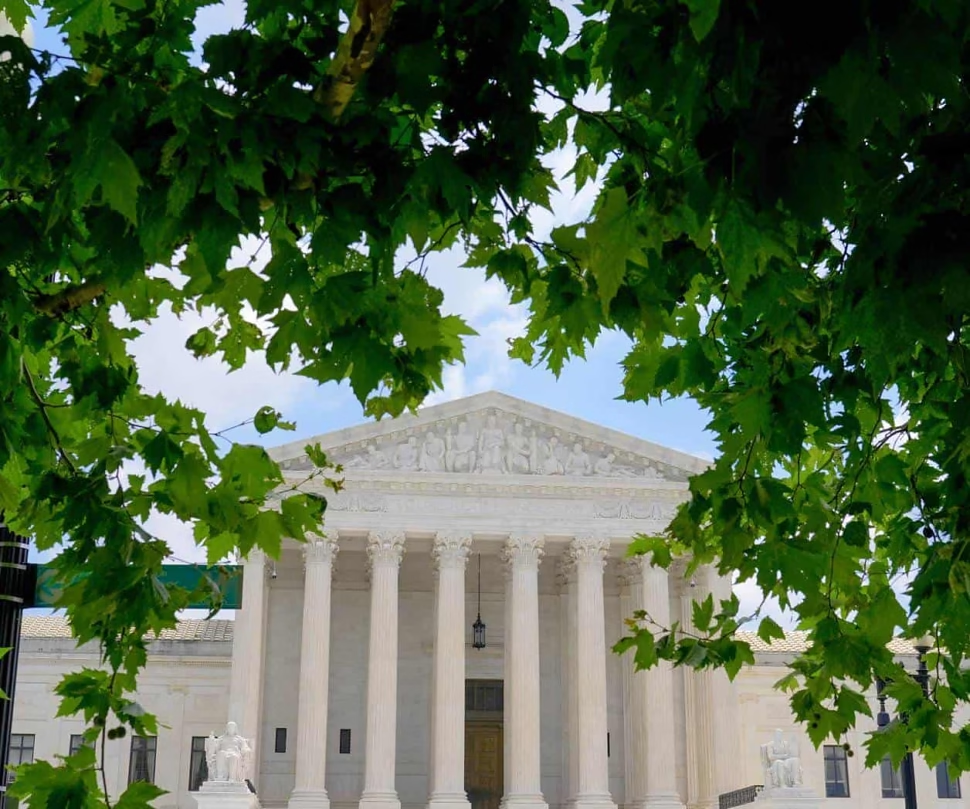
The United States Supreme Court confirmed this Tuesday the principle of citizenship by birth. With a vote of 6-3, the highest court rejected President Donald Trump’s executive order that sought to deny nationality to children of people in an irregular immigration situation or with temporary status.
The weight of the Fourteenth Amendment
The president of the Court, John Roberts, noted that citizenship represents “the right to have rights.” He recalled that the Fourteenth Amendment extended that guarantee to every person born in United States territory. The decision reaffirms that, with limited exceptions — such as children of diplomats or occupying forces — anyone born in the U.S. acquires nationality at birth.
The executive order never went into effect. It was suspended by federal courts considering that it contravened the Constitution and the precedent of the case United States v. Wong Kim Ark(1898). The Trump administration argued that children of non-citizens or temporary residents were not fully under the country’s jurisdiction. But the majority of the justices rejected that interpretation.
Impact on the migrant community
According to estimates by specialized organizations, the measure would have affected more than 250,000 babies born each year in the United States to non-citizen parents. It includes children of undocumented migrants, foreign students and people waiting for permanent residency. The decision represents a setback for one of Trump’s most visible immigration proposals.