The forensic ‘solution’: bury the problem
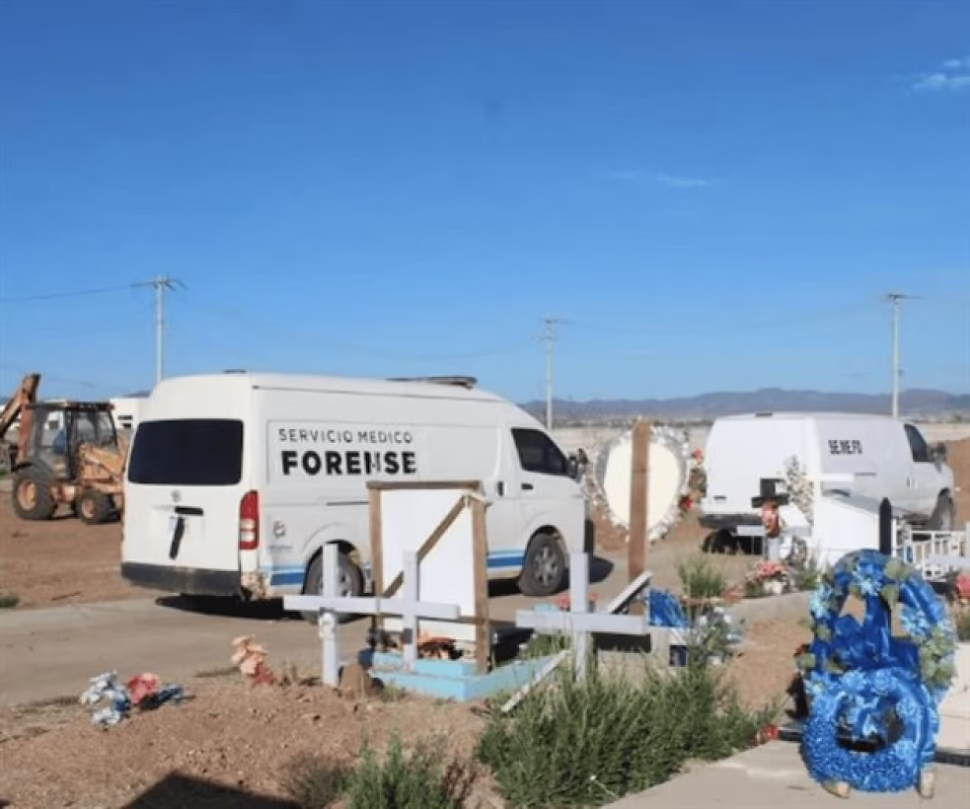
The Prosecutor’s Office of the Western Zone of Chihuahua announced with some administrative relief the burial of 41 bodies. They weren’t numbers in a report, they were people: 37 men, three women and one whose gender they couldn’t even determine.
“The burial will allow the facilities of the Forensic Medical Service to be partially relieved,” declared prosecutor Juan Carlos Portillo Coronado.
There you have it. Official language turns a human tragedy into a logistical problem. ‘Release facilities’. As if they were talking about warehouses full of merchandise, not human remains waiting for a name.
Deaths that narrate a violent reality
The causes of death are the macabre catalog of our failures: homicide, suicide, traffic accidents, falls… and one case that is especially painful: starvation. Severe malnutrition. In the 21st century.
The authorities insist that they did what was protocol. Edmundo Chacón Lazo, forensic coordinator, explains that samples were taken for possible future identification. The technically correct procedure that consoles no one.
“If someone comes in the future […] the samples are taken, the corresponding comparison is made,” explained Chacón Lazo.
That ‘future’ is the fragile hope of families who may not even know what to look for here. The system works retroactively: first you bury, then you identify if someone shows up asking.
Meanwhile, 41 stories remain suspended in bureaucratic limbo. Their deaths certified, their identities pending. And the forensic facilities, temporarily ‘unburdened’, ready to receive the next shipment of anonymity.