Crucial Advances in Research
The Prosecutor’s Office of the State of Mexico has achieved a significant arrest after eleven days of intense investigation and anguish for the family, apprehending two individuals linked to the disappearance of Kimberly Hilary Moya González. The 16-year-old teenager was reported missing on October 2, generating community mobilization and an exhaustive investigation by the authorities. The detained subjects, whose ages are 57 and 36 years old, were identified through the meticulous analysis of the recordings of the video surveillance systems that captured the journey that the young woman took back to her home, after having made some photocopies in the San Rafael Chamapa neighborhood, located southwest of the municipality of Naucalpan.
As part of the investigation proceedings, the authorities proceeded to carry out a search in the mechanical workshop where one of the suspects, identified as Gabriel Rafael “N”, worked in the trade of turner. During this search, the investigative police officers made a very important discovery: a pair of boots with blood stains. The subsequent expert analysis, carried out by specialists in forensic genetics, established a match between the DNA samples recovered from the boots and the genetic profiles provided by Kimberly’s parents. This discovery constitutes physical evidence of high evidentiary value within the file, as detailed in an official statement issued this Monday. Despite this substantial progress, neither of the two detained individuals has provided any information about the teenager’s current location, keeping the case in a critical search phase.
Reconstruction of the Facts and Digital Evidence
The reconstruction of the events of October 2 has been based mainly on digital evidence obtained from urban security cameras. The apprehended individuals, Gabriel Rafael “N” and Paulo Alberto “N”, were captured on video surveillance images traveling through the same streets that Kimberly walked moments before her disappearance. The sequential analysis of the recordings made it possible to establish that the older suspect, Gabriel Rafael “N”, intercepted the young woman at the intersection of Diagonal Minas and the closed Filomeno Matas. The images show that the subject approached her and led her to a gray Volkswagen sedan, colloquially known as a “vocho”, which was driven by his accomplice, Paulo Alberto “N”.
The workshop where the search took place and the boots were seized is a focal point in the investigation. The establishment, where Gabriel Rafael “N” carried out his work as a turner, was subjected to a meticulous inspection by experts. The brown-colored boots that had apparently bloody stains not only constitute a physical indication, but also directly correlate with the clothing that the detainee himself was wearing in the filming of the day of the event. The expert opinion in forensic genetics was conclusive in determining that the genetic profile of the blood found coincides with the reference samples of the victim’s parents, which statistically represents a high probability that said evidence belongs to the victim. This forensic evidence substantially strengthens the Prosecutor’s hypothesis, although the lack of cooperation of the detainees keeps Kimberly’s location in suspense.
Context of Disappearance and Social Mobilization
The timeline of events indicates that Kimberly disappeared on October 2 at approximately 4:14 p.m., at which time peripheral security systems permanently lost track of her. The teenager had left her home with the specific purpose of making some photocopies required for an academic assignment at her educational institution. Surveillance cameras recorded her entering a stationery store at 4:06 p.m., and later, beginning her return journey. However, it never reached its destination, triggering an immediate alert.
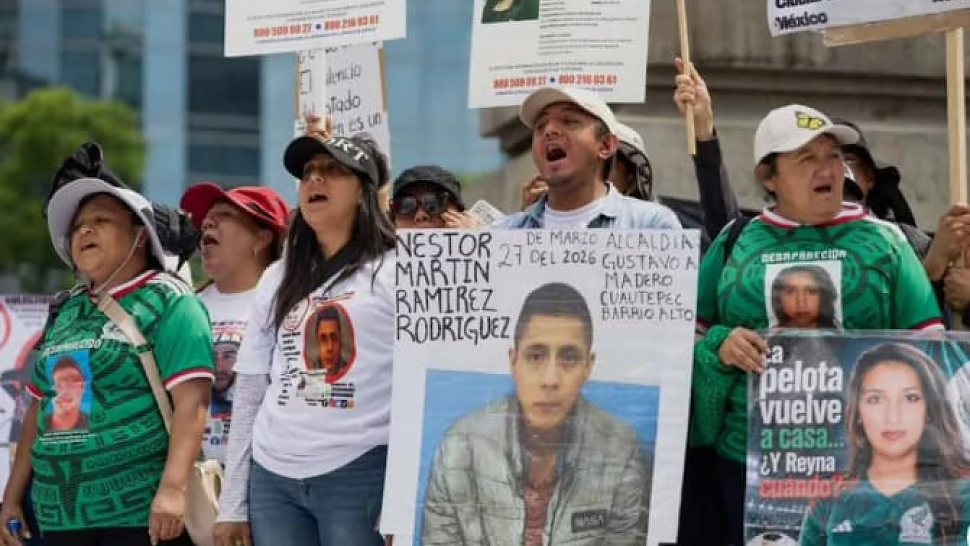
Given the perceived initial slowness in the proceedings, Kimberly’s mother, Jaqueline González, has undertaken a series of public demonstrations in a desperate attempt to make the case visible and demand an agile and effective investigation. Their actions, which included the symbolic blockade of the Periférico highway, sought to capture the attention of the authorities and society in general. In an emotional statement offered from the Prosecutor’s Office facilities the day after the disappearance, González described his daughter as “a happy, noble young woman, full of dreams”, a testimony that has moved the community and has galvanized citizen solidarity in the search for answers. Family persistence and social pressure have been determining factors in keeping the investigation a priority for law enforcement agencies.
The investigation of forced disappearances represents a complex challenge for justice systems, requiring the integration of multiple disciplines such as criminology, forensic genetics and intelligence analysis. The correct preservation of the chain of custody of evidence, such as the seized boots, is essential to guarantee its validity in an eventual legal process. Likewise, prompt intervention and the collection of testimonies and digital material in the first hours are critical for the success of the investigation. This case highlights the importance of urban video surveillance systems and inter-institutional cooperation in solving crimes with high social impact. The hope of the family and the community lies in that scientific evidence and the perseverance of the authorities will lead to the complete clarification of the facts and the whereabouts of Kimberly.
Share this report to keep the search alive and help make critical cases visible. Explore our news section to stay up to date with the latest updates on this and other topics of social relevance.