Xi Jinping calls for global AI governance without unilateral dominance

China proposes international cooperation in artificial intelligence and offers training to developing countries.

China bets on global governance of AI

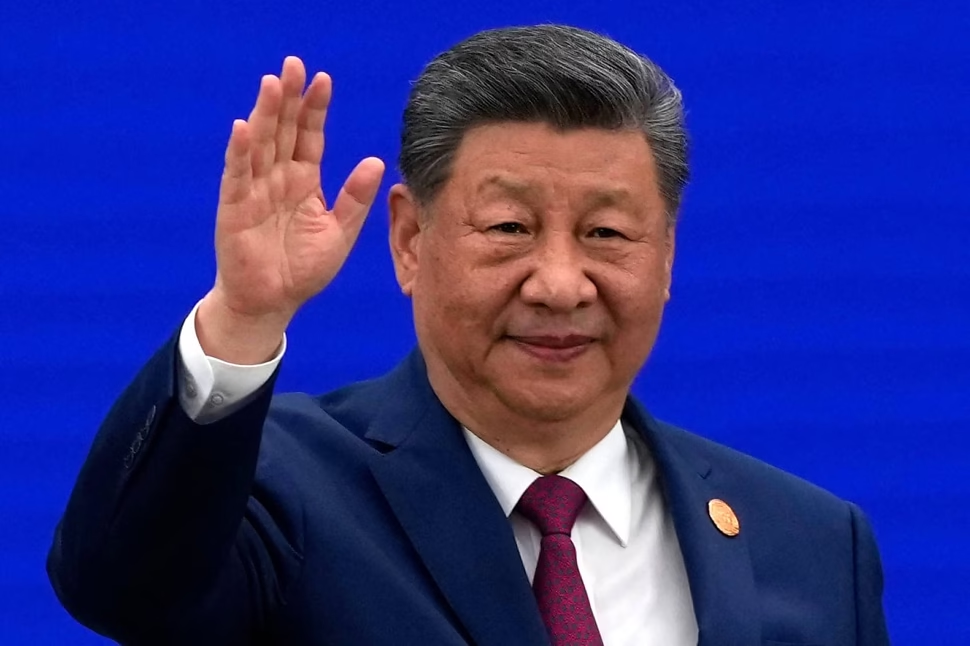
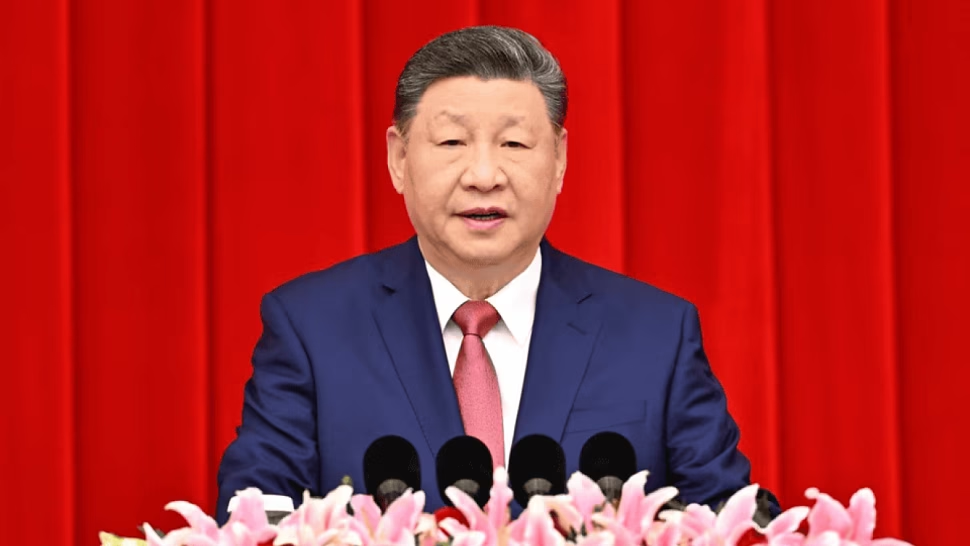
Chinese President Xi Jinping urged the promotion of global governance of artificial intelligence (AI) and stated that its development should not belong to a single country. During the opening of the World Conference on Artificial Intelligence in Shanghai, he questioned what he called an “overreach” of the concept of national security in this area, in clear reference to the technological restrictions imposed by the United States.

“Artificial intelligence must become a symphony of global cooperation, not an isolated competition between nations,” Xi said.

As part of its strategy, China will strengthen AI collaboration with organizations such as ASEAN, the Arab League, the African Union, CELAC and the BRICS countries. In addition, it will offer five thousand training opportunities for developing countries in the next five years.

RelatedChina promotes a new global order at the Shanghai summit

Multilateral agreement in Shanghai

Before the event, 29 countries—including Russia, Pakistan and Kazakhstan—signed an agreement with Beijing to create a World Artificial Intelligence Cooperation Organization, based in Shanghai. Analysts interpret this initiative as China’s response to the US Pax Silica framework, which seeks to strengthen AI supply chains with its allies.
Lula conditions his position on US tariffs

Brazil's president will wait for Trump to speak before responding to the tariff increase.

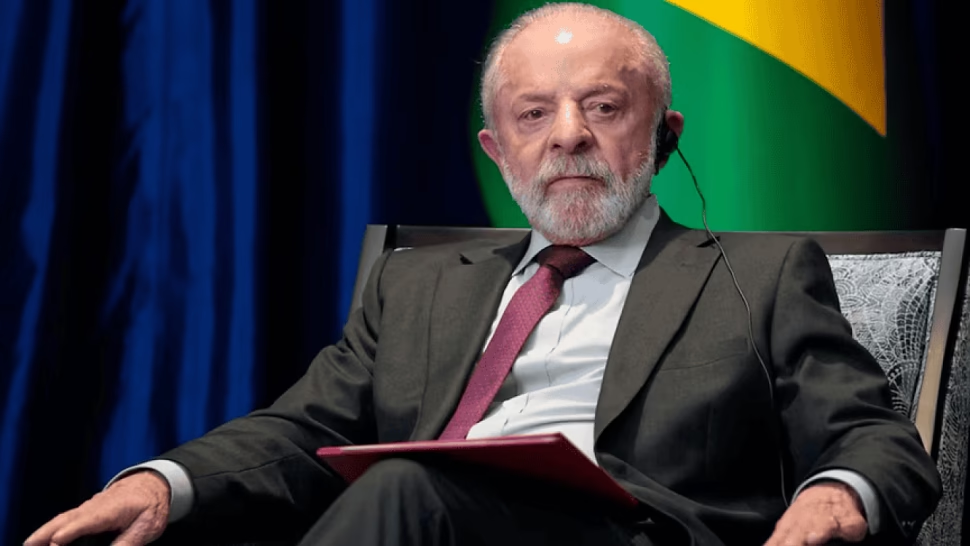
President Luiz Inácio Lula da Silva stated that Brazil does not accept being offended by any nation, in apparent reference to the tariff increase imposed by the United States. However, he warned that he will only comment on the measure after his colleague Donald Trump does so.

“This country must hold its head high because we do not accept that any other nation in the world wrongs Brazil. We want respect, in the same way that we will respect everyone,” he declared during an official event in Rio de Janeiro, accompanied by several ministers and Governor Ricardo Couto de Castro.

Strategic waiting

Lula added that he will wait for Trump’s statements before referring to the “increase in tariffs,” thus avoiding a direct exchange of accusations. “I’m going to wait to talk about the tariff when Trump speaks out. As long as he doesn’t speak, I won’t speak either, because we are going to show that no one beats Brazil with lies,” he said.

The Brazilian government, through its ministers, described as “unjustified” the 25% increase in the rates applied to the South American country’s exports. Washington’s decision has generated trade tension, although Lula opts for a prudent and conditional stance.

Regional context

The US measure impacts key sectors of the Brazilian economy, such as steel and aluminum. Brazil has historically maintained a complex trade relationship with the United States, alternating conflicts and agreements. Lula’s strategy seeks to avoid an escalation while evaluating possible retaliation or negotiations.

Analysts believe that the president’s momentary silence seeks to pressure Trump to take the first step, preventing Brazil from being seen as the initiator of a trade war. The international community is closely watching the development of this dispute between two of the largest economies on the continent.

Continue reading

China rejects Trump’s accusations of electoral interference

China rejects Trump's accusations and calls for stability in bilateral relations.

Accusations that strain the bilateral relationship

The president of the United States, Donald Trump, accused China of alleged interference in American electoral processes. The declaration conditions the diplomatic scenario between Washington and Beijing, just two months after Xi Jinping received Trump on a state visit.

The spokesperson for the Ministry of Foreign Affairs, Lin Jian, rejected the allegations, classifying them as fabrications and slander. He added that China has no interest in intervening in internal affairs or US elections, and urged maintaining communication channels under criteria of stability and mutual certainty.

The exchange occurs in a context of persistent commercial and technological rivalry. Washington maintains restrictions against Chinese technology firms, and Beijing has responded with regulatory countermeasures. Negotiations on semiconductors and foreign trade controls are at a standstill, threatening the rapprochement planned for Xi Jinping’s official visit to US territory in September.

Specialists consider that Trump’s accusations respond to internal political dynamics, since they were not accompanied by new sanctions or punitive measures. However, they move the dispute from the commercial sphere to that of national security, which increases the unpredictability in the relationship between both powers.

Continue reading

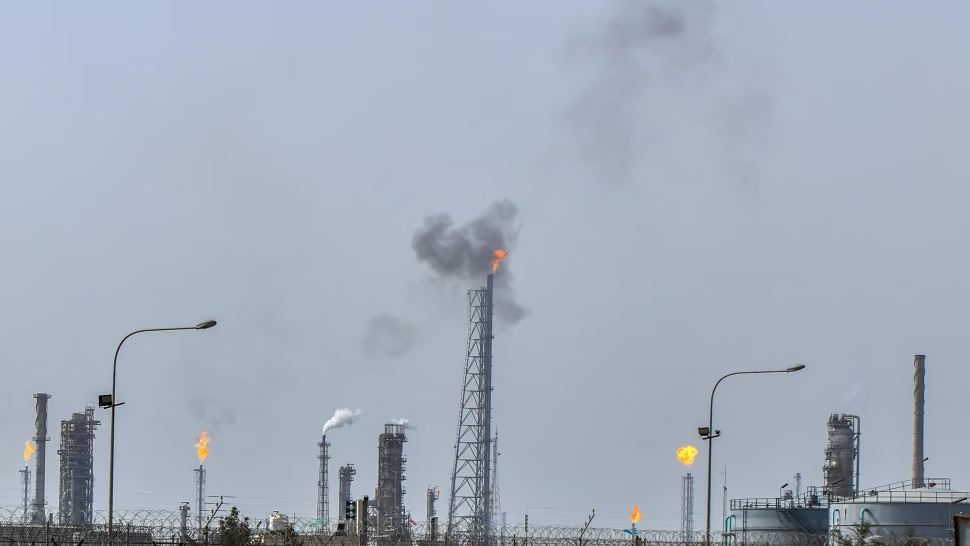
Iran hits desalination plant in Kuwait

An Iranian attack damaged a water and power plant in Kuwait, affecting drinking supplies.

Attack on strategic plant in Kuwait

On Friday, an Iranian attack hit a power and desalination plant in Kuwait, causing damage to several power generation units and a fire that was controlled by emergency crews. Kuwaiti authorities activated contingency plans to maintain the supply of water and electricity.

Kuwait relies on desalination for about 90% of its drinking water, similar to other Gulf countries such as Oman and Saudi Arabia. Most of these facilities are on the Persian Gulf coast, making them vulnerable to missile or drone attacks.

This incident highlights the fragility of critical infrastructure in the Middle East amid regional escalation.

Continue reading