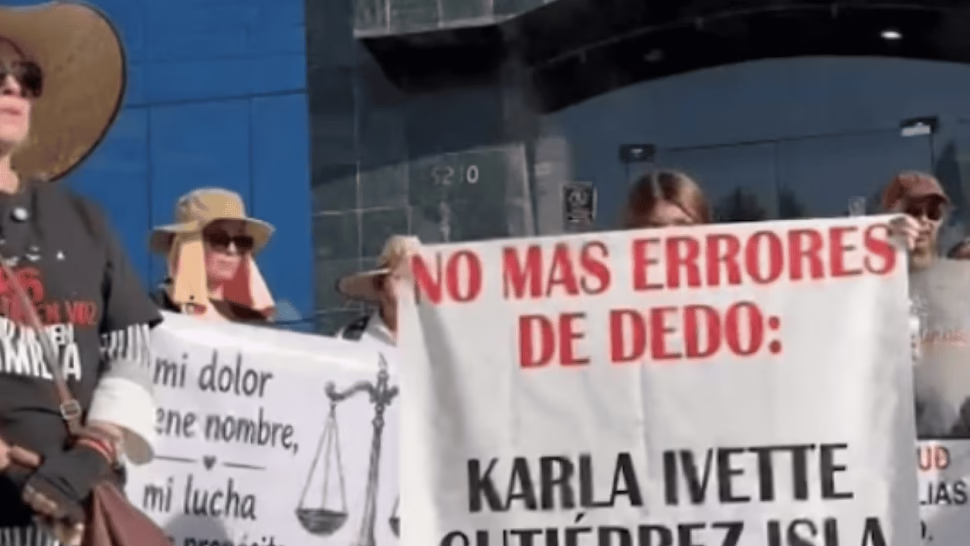
Inmate charged with femicide inside prison in Juárez

An already imprisoned man is linked to the murder of his partner during a conjugal visit in a prison.

The death that occurred behind bars

The Gender Prosecutor’s Office of the Northern Zone has just achieved something that should be routine, but in this country it is news: that a judge links a man to trial for femicide. The accused is José Francisco C. C.

And here comes the first fact that makes your blood run cold. The crime did not occur on a dark street, but inside a prison. Specifically, in the Social Reintegration Center No. 3 in Ciudad Juárez.

RelatedCelebrities say goodbye to Pope Francis with emotional messages

A crime during the ‘intimate visit’

On March 2, during what the prison system euphemistically calls a “conjugal visit,” this man ended the life of his romantic partner. In a room intended for that purpose.

The Prosecutor’s Office detailed that the cause of death was asphyxiation due to strangulation, using a constricting object.

The irony is macabre. A space that should serve to maintain human ties became the scene of the latest act of violence.

And now, the twist that explains many things. José Francisco C. C. was already behind bars. Serving a 16-year sentence since 2016 for another crime. It was not his first detour with justice.

The precautionary measure issued is preventive detention (as if he were not already imprisoned). They have four months to close the complementary investigation. The clock is ticking.

The only thing certain is that a woman died where the State was supposed to have total control. And that is the most uncomfortable truth of all.
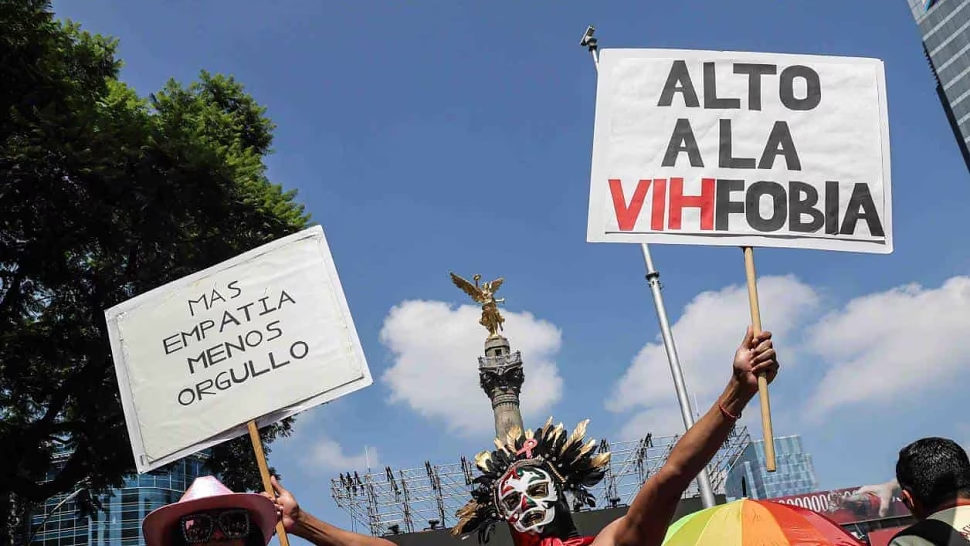
Pride 2026: health, housing and education for trans people

Thousands march in CDMX to demand an end to discrimination and lethal violence.

Demands and resistance in the Zócalo

Neither the rain, the wind nor the World Cup Fan fest stopped the crowd. The Pride March, in its 48th edition, arrived at the capital’s Zócalo with a clear demand: guarantee health, housing and education for trans people.

Hundreds of thousands of people celebrated their identity, but also raised their voices for those who are no longer here. The protest reiterated the urgency of eradicating discrimination, stigma and hate crimes against the LGBTTTIQ+ community.

From 9 a.m. on Saturday, June 28, groups of relatives of missing people, organizations supporting trans women, LGBT people with disabilities, sex workers and HIV patients took to the streets. They demanded security and attention to these populations, and shouted between multicolored flags:

“It’s a march, it’s not a business. Companies with a homophobic history are marketing a historic movement.”

The speeches denounced the exclusion of sexual diversity from social programs. They demanded that the government and companies not take ownership of the fight. “This march does not belong to those who profit from our identities,” they stated.

People from various generations and states walked hand in hand. Mothers proudly accompanied their gay and lesbian children. In 2026, many LGBT youth still face family rejection.

Search groups demanded recognition of the social family—friends who search for their missing people. The Contingent Against LGBTTTIQ+ Disappearances pointed out in front of the Glorieta de Las y Los Desaparecidos:

“We demand that the State harmonize the General Law of Victims to fully recognize the social family.”

Trans and non-binary activists called for an end to the criminalization of the sit-in that they have held at the Ministry of the Interior for 10 days. They were the only group monitored by hundreds of police, despite their peaceful protest. They declared:

“They judge us for our sexual orientation, not for the human being we are. That has made our lives impossible.”

People with disabilities, patients with HIV, victims of hate and workplace discrimination joined in. The march traveled along emblematic avenues to the Zócalo, where there were open microphones and hours of joy. In the end, a slogan united everyone: stop hate crimes and transfemicides.

Continue reading

Mexico and the US inaugurate a binational sterile fly plant in Chiapas

The cooperation between Mexico and the United States produces results: 100 million sterile flies weekly to protect livestock.

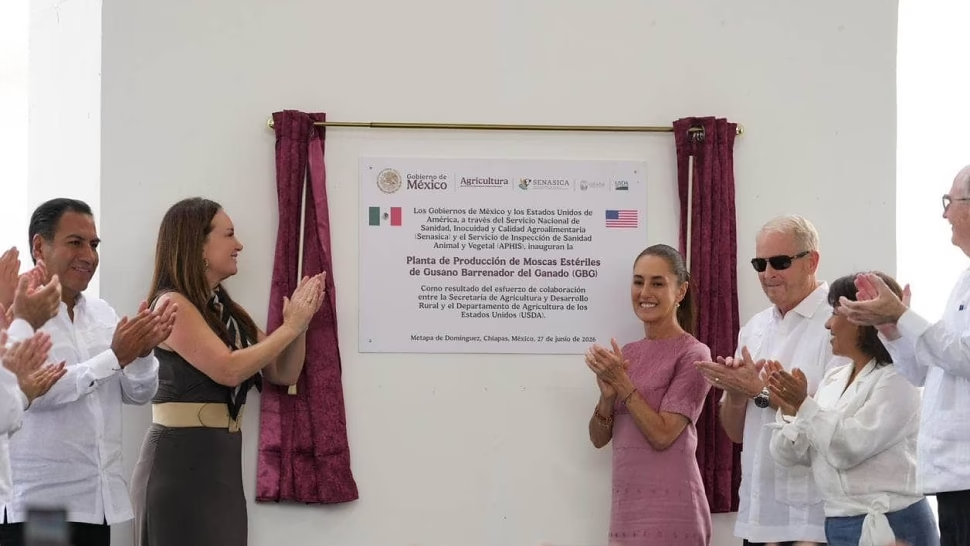
President Claudia Sheinbaum inaugurated the Production Plant for Sterile Livestock Screwworm Flies (GBG) in Metapa de Domínguez, Chiapas. It is a binational facility that will produce 100 million insects each week to control the pest that affects livestock.

Cooperation that pays off

The president highlighted that this project is the result of joint work between Mexico and the United States. The US government provided most of the resources, as well as technical expertise. Sheinbaum thanked President Trump and US Secretary of Agriculture Brooke Rollins.

“This Plant represents the conviction that development cooperation produces results. Animal diseases, pests and food security challenges know no borders,” said Sheinbaum.

Rollins called the inauguration a great achievement and recognized Sheinbaum as an extraordinary ally.

The United States ambassador to Mexico, Ronald Johnson, announced an additional investment of $83.8 million to strengthen pest control and increase the production of sterile flies in Mexico.

Operation details

Construction of the plant lasted 12 months. As part of the containment strategy, 5.3 million heads of cattle have been inspected, more than 84 thousand shipments have been verified and 7 billion sterile flies have been released. 2 thousand specialists, more than 400 thousand planters and 4 thousand technicians from the Sembrando Vida program participated. 578 thousand artisanal traps were installed, with which more than 13 million flies were captured.

Sheinbaum closed with a message: “Cooperation between sovereign countries will always be more powerful than confrontation when it comes to protecting the well-being of our people.”

Continue reading

One year after the discovery in a crematorium, families march for justice

One year after the discovery of 386 bodies, families demand justice and an end to corruption.

March for justice one year later

On Saturday afternoon, groups of families affected by the Plenitude crematorium case demonstrated. The discovery of 386 bodies turns one year old, and the bereaved demand answers.

The protest began at the Latinoamericana funeral home, one of those identified by family members. From there, the protesters walked towards the State Attorney General’s Office (FGE).

Dora Elena Delgado, spokesperson for the Justicia para Nuestros Deudos collective, reported that at least 1,500 families were affected. The central demand: no more impunity, no more corruption and full justice.

Actions pending by the authority

The protesters carried blankets with messages of justice. They demand action against Coespris officials involved in the case, as well as the recapture of José Luis A. C., owner of the crematorium. He was released by a federal judge, and a red card from Interpol is expected to arrest him again.

So far, of the 386 bodies found, the FGE reports that 135 remain to be identified. The identification process continues.

The collective Memory, Dignity and Justice joined the mobilization. They placed a permanent memorial in the shape of a cross outside the Prosecutor’s Office, as a reminder of the victims.

Continue reading