Mexico and the US inaugurate a binational sterile fly plant in Chiapas

The cooperation between Mexico and the United States produces results: 100 million sterile flies weekly to protect livestock.

President Claudia Sheinbaum inaugurated the Production Plant for Sterile Livestock Screwworm Flies (GBG) in Metapa de Domínguez, Chiapas. It is a binational facility that will produce 100 million insects each week to control the pest that affects livestock.

Cooperation that pays off

The president highlighted that this project is the result of joint work between Mexico and the United States. The US government provided most of the resources, as well as technical expertise. Sheinbaum thanked President Trump and US Secretary of Agriculture Brooke Rollins.

“This Plant represents the conviction that development cooperation produces results. Animal diseases, pests and food security challenges know no borders,” said Sheinbaum.

Rollins called the inauguration a great achievement and recognized Sheinbaum as an extraordinary ally.

RelatedSterile fly plant inaugurated in Chiapas; key binational cooperation

The United States ambassador to Mexico, Ronald Johnson, announced an additional investment of $83.8 million to strengthen pest control and increase the production of sterile flies in Mexico.

Operation details

Construction of the plant lasted 12 months. As part of the containment strategy, 5.3 million heads of cattle have been inspected, more than 84 thousand shipments have been verified and 7 billion sterile flies have been released. 2 thousand specialists, more than 400 thousand planters and 4 thousand technicians from the Sembrando Vida program participated. 578 thousand artisanal traps were installed, with which more than 13 million flies were captured.

Sheinbaum closed with a message: “Cooperation between sovereign countries will always be more powerful than confrontation when it comes to protecting the well-being of our people.”

Warrior Hounds demand expedited genetic studies of bodies in Navolato

Collective asks to accelerate DNA tests to identify three bodies found in the sea.

The group Sabuesas Guerreras asked the authorities to accelerate forensic genetic analyzes to identify three bodies found floating in the sea, wrapped in blankets and tied with fishing nets, in the area of ​​El Castillo, Navolato.

Through a statement, the organization said that scientific identification will allow families to find peace. The bodies were in an advanced state of decomposition when they were located.

The searchers called on those who have missing relatives and suspect that they may be in that area, to approach the judicial authorities. They offered support to facilitate the recognition process.

The discovery occurred on Friday afternoon, when activists from the group observed strange objects floating in Altata Bay. Upon checking, they found the bodies. They immediately notified the State Attorney General’s Office, which secured the area and rescued the remains during the night.

The authorities sent the bodies to the Forensic Medical Service to begin forensic studies. The Warrior Hounds reiterated their commitment to continue searching for their loved ones and supporting other families experiencing this same situation.

“We hope that the Prosecutor’s Office will soon conclude the forensic genetic work to know the names of the deceased,” they noted in the text.

Continue reading

Mexico sends humanitarian support to Venezuela after earthquakes

Topos Azteca and Cruz Roja join the rescue team sent by the SRE.

After the 7.2 and 7.5 magnitude earthquakes that shook Venezuela on June 24, Mexico increased its humanitarian assistance. The official balance exceeds 1,430 deaths and more than 3,300 injuries.

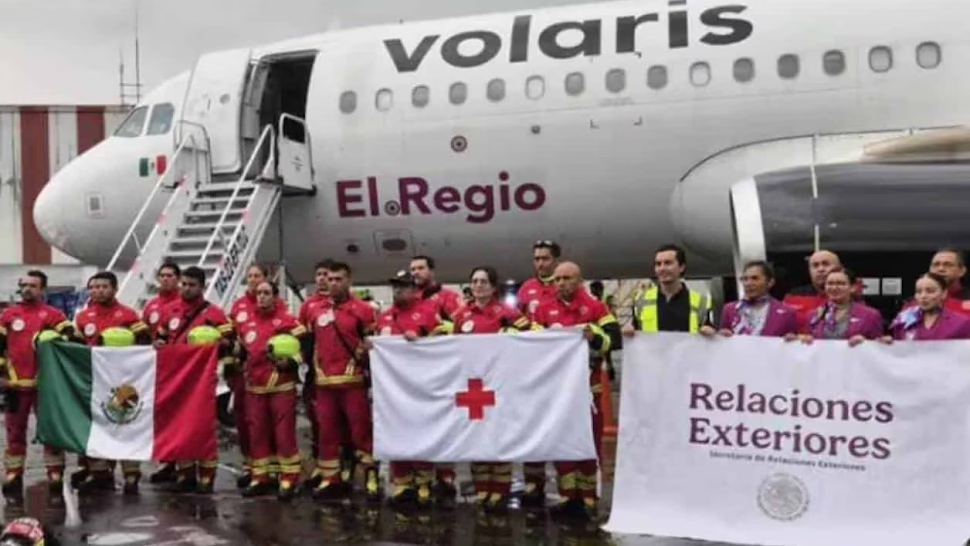
The Ministry of Foreign Affairs (SRE) coordinated with the Mexican Red Cross and the airline Volaris to send a specialized team.

“This afternoon a support team made up of 25 specialists from the Urban Search and Rescue Unit (USAR) of the Red Cross, and the Cancún International Rescue Brigade (USAR BRIC), as well as a brigade element from the Azteca Topos left for Venezuela,” the SRE reported.

The mission includes five canine pairs and 3.5 tons of equipment and tools for search and rescue work.

“With this, Mexico reaffirms its solidarity and commitment to the Venezuelan people in these difficult times,” said the agency.

This shipment is in addition to the previous support sent by the Mexican government after the seismic emergency in Venezuela.

Continue reading

Pride 2026: health, housing and education for trans people

Thousands march in CDMX to demand an end to discrimination and lethal violence.

Demands and resistance in the Zócalo

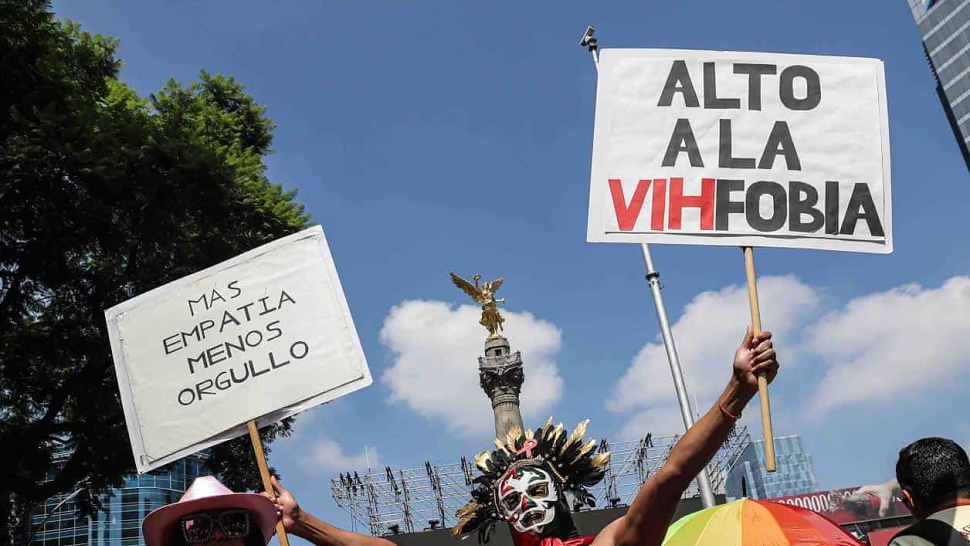
Neither the rain, the wind nor the World Cup Fan fest stopped the crowd. The Pride March, in its 48th edition, arrived at the capital’s Zócalo with a clear demand: guarantee health, housing and education for trans people.

Hundreds of thousands of people celebrated their identity, but also raised their voices for those who are no longer here. The protest reiterated the urgency of eradicating discrimination, stigma and hate crimes against the LGBTTTIQ+ community.

From 9 a.m. on Saturday, June 28, groups of relatives of missing people, organizations supporting trans women, LGBT people with disabilities, sex workers and HIV patients took to the streets. They demanded security and attention to these populations, and shouted between multicolored flags:

“It’s a march, it’s not a business. Companies with a homophobic history are marketing a historic movement.”

The speeches denounced the exclusion of sexual diversity from social programs. They demanded that the government and companies not take ownership of the fight. “This march does not belong to those who profit from our identities,” they stated.

People from various generations and states walked hand in hand. Mothers proudly accompanied their gay and lesbian children. In 2026, many LGBT youth still face family rejection.

Search groups demanded recognition of the social family—friends who search for their missing people. The Contingent Against LGBTTTIQ+ Disappearances pointed out in front of the Glorieta de Las y Los Desaparecidos:

“We demand that the State harmonize the General Law of Victims to fully recognize the social family.”

Trans and non-binary activists called for an end to the criminalization of the sit-in that they have held at the Ministry of the Interior for 10 days. They were the only group monitored by hundreds of police, despite their peaceful protest. They declared:

“They judge us for our sexual orientation, not for the human being we are. That has made our lives impossible.”

People with disabilities, patients with HIV, victims of hate and workplace discrimination joined in. The march traveled along emblematic avenues to the Zócalo, where there were open microphones and hours of joy. In the end, a slogan united everyone: stop hate crimes and transfemicides.

Continue reading