Ten days of tireless search
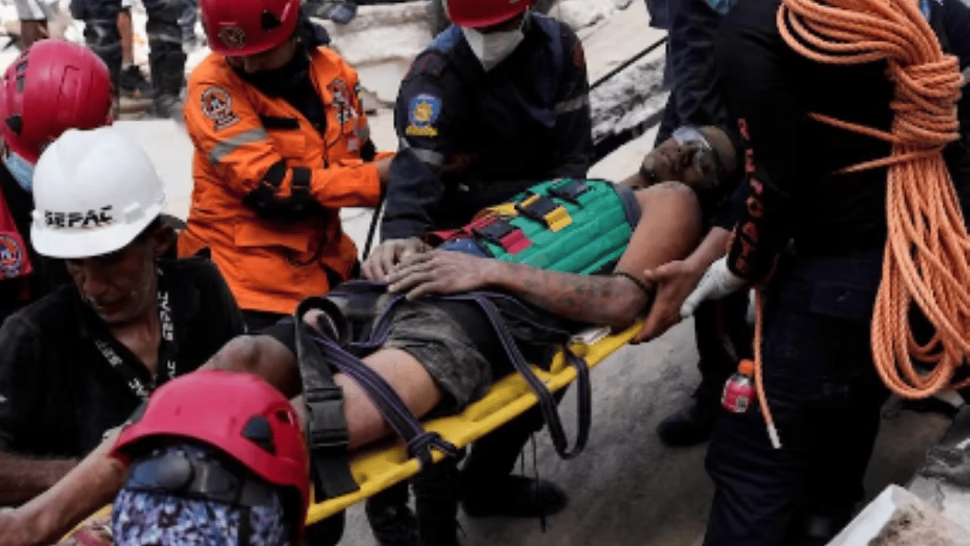
Ten days after the June 24 earthquakes, families in the most affected areas in Venezuela continue to remove debris in the hope of finding their loved ones alive. In La Guaira, the hardest hit region, parents and relatives cling to the possibility that their children may appear under the remains of collapsed buildings.
Pedro Fernández, 50, lost his mother, wife, two daughters, a nephew and his wife’s grandmother at a family kiosk on the beach. “It’s not easy at all, but I have to get up,” he summarizes.
Official figures and climate challenges
The official balance sheet for Friday, July 3, released by the president of the National Assembly, Jorge Rodríguez, reported 2,645 deaths and 12,666 injuries. The authorities count 6,462 people rescued alive, 15,050 displaced without housing and 885 buildings damaged, of which 189 completely collapsed. 59 temporary camps have been set up to serve 86,117 families. Since the earthquake, 890 aftershocks have been recorded.
The arrival of Tropical Wave 22 this Saturday could complicate rescue operations. The rains increase the risk of landslides in unstable areas and make working with heavy machinery difficult. In the camps, humidity and possible leaks increase vulnerability to respiratory diseases.
In Aragua, authorities confirmed 15 deaths: 13 of them in the collapse of Tower 4 of the Bosque Lindo residential complex. Rescue efforts continue with canine brigades and volunteers. 843 properties were evaluated; 45 are in critical condition.
Resumption of classes and international aid
School activities remain suspended in the affected areas (La Guaira, Caracas, Aragua, Carabobo, Miranda and Falcón). The Ministry of Education announced that this Monday, July 6, classes will resume in regions without direct damage, with security measures and risk management content. The 2025-2026 school year will conclude on July 31 with discreet events.
International aid continues to arrive from Latin America, Europe, the United States, the UN and the Red Cross, with rescue equipment, food and medical supplies. However, families and volunteers are requesting greater logistical support to accelerate the removal of debris and serve the thousands of displaced people facing reconstruction and inclement weather.