La Guaira: 72 hours of uncertainty after the earthquakes

The smell of decomposition and few rescue teams mark the area most devastated by the earthquakes.

Rescues in La Guaira: 72 hours of uncertainty

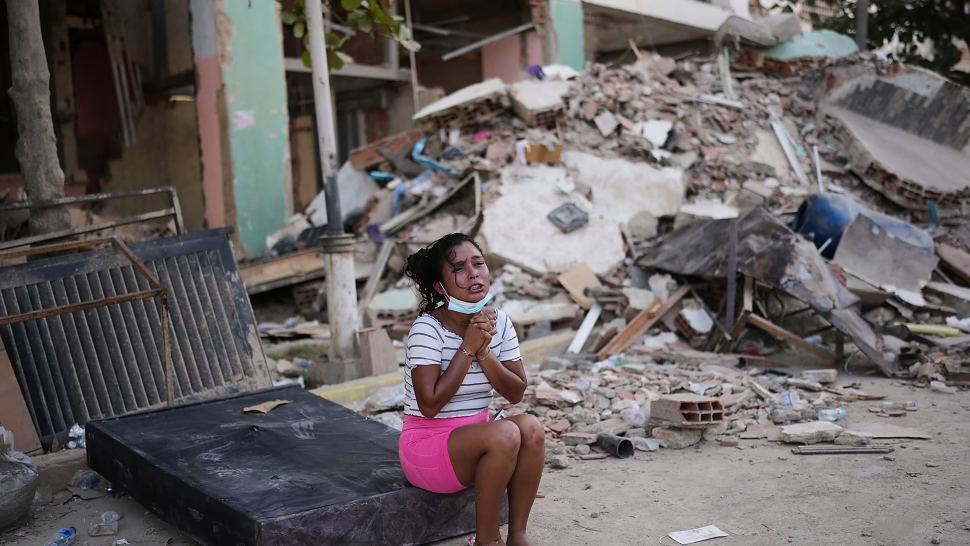
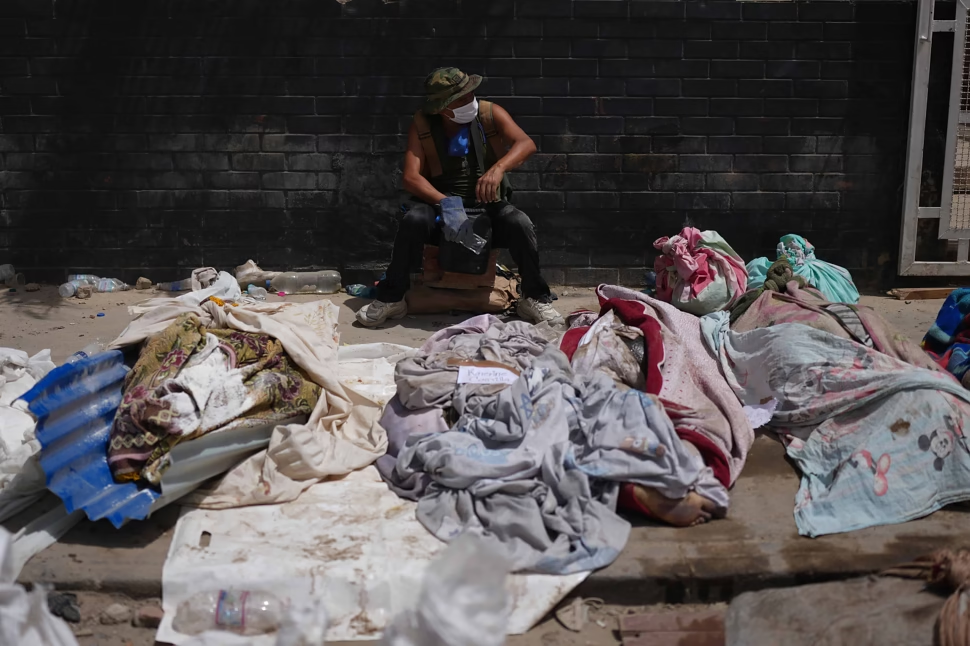
72 hours after the two earthquakes that shook northern Venezuela, the La Guaira area faces a humanitarian crisis. Activists from Provea, the country’s oldest human rights organization, report the smell of decomposition and few body recovery units.

“We smelled decomposition—a sign of unrecovered bodies under rubble—and there are also few body recovery units,” they told ANSA after a tour of the area.

The earthquakes, magnitude 7.2 and 7.5 according to the USGS, occurred consecutively. The epicenter was located in Yaracuy, 300 km from Caracas, but La Guaira, just 30 km from the capital, suffered the greatest structural impact. The UN, through Tom Fletcher, estimated that more than 50,000 people were missing.

RelatedThree brothers rescued after earthquake in La Guaira, Venezuela

Journalist León Hernández, present on Friday, described the magnitude of the tragedy:

“I was there… there are really thousands. This Friday night the key 72 hours for rescues were completed. In many collapsed buildings, it has been only civil servants and in many cases volunteers in charge of continuing to rescue people.”

He added that thousands of victims were left in makeshift shelters or on the streets for fear of aftershocks. Temperatures reach 40 degrees Celsius, combining debris and unrecovered bodies, creating a growing health risk.

Interim President Delcy Rodríguez reported damage in seven states, but the tragedy is concentrated in La Guaira. The government announced the sending of machinery and closing access from Friday for order and security. However, activists question the insufficient response in the first critical hours.

The families demand transparency in the figures, dignified access to the bodies and a state response in line with the catastrophe. The search efforts continue, but the slowness and scarce official presence mark the panorama in this coastal region.
1,430 dead and 3,238 injured left by earthquakes in Venezuela

Official balance reports 1,430 deaths and more than 3,000 injured after two earthquakes in Venezuela.

Official figures after the earthquakes in Venezuela

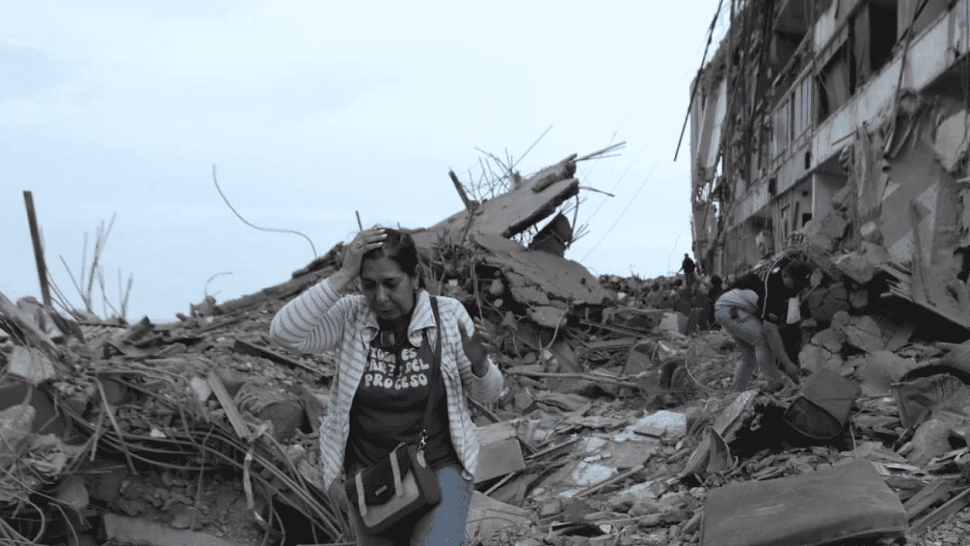
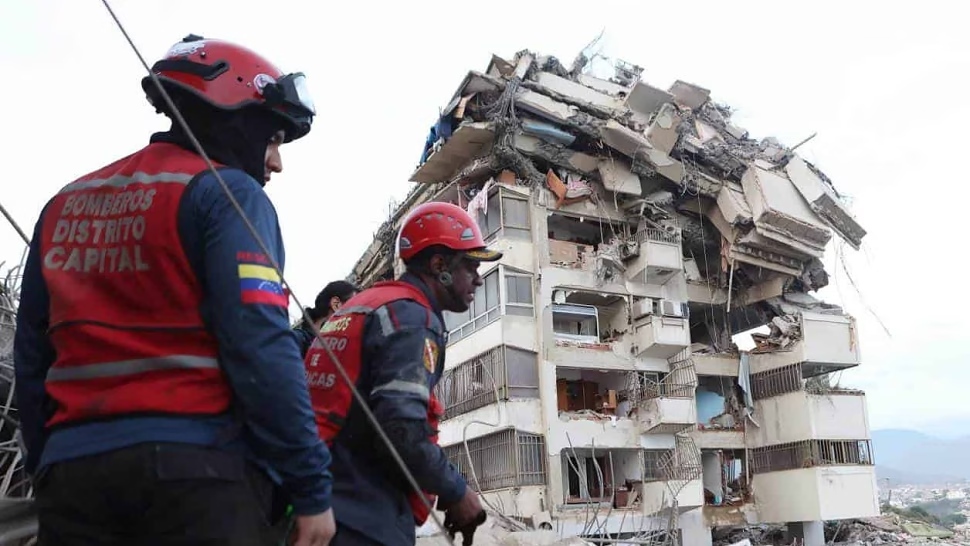
The president of the National Assembly, Jorge Rodríguez, updated the balance of the two earthquakes that shook the country. So far there are 1,430 deaths and 3,238 injuries. Search and rescue efforts continue in the most affected areas.

Rodríguez specified that 3,142 families were affected and are being cared for in shelters distributed in the seven affected states. In addition, 430 aftershocks of the earthquakes have been recorded.

According to the open online platform, the missing number 50,947. The official, brother of interim president Delcy Rodríguez, reiterated the call to citizens not to enter La Guaira and deposit their aid in authorized collection centers.

Continue reading

La Guaira: smell of decomposition and slowness in rescues after earthquakes

After 72 hours of the earthquakes, activists report unrecovered bodies and little official response.

La Guaira: 72 hours after the earthquakes

In Caraballeda, a residential area of La Guaira, the smell of decomposition was clearly perceived on Friday night. The first 72 hours after the earthquakes had passed, a key period for life rescues.

Activists from Provea, the oldest human rights NGO in Venezuela, confirmed to ANSA that during a tour of that area “we smelled decomposition (a sign of unrecovered bodies under rubble).” In addition, they pointed out that “there are few body recovery units.”

72 hours after the two earthquakes that devastated the region, activists observed “bodies that have not yet been transferred with dignity.” They recalled that “the State has the obligation to guarantee dignified recovery operations for each victim and their families.”

The earthquakes, magnitude 7.2 and 7.5, occurred consecutively this Wednesday, according to the United States Geological Survey (USGS). The epicenter was located in Yaracuy, about 300 km west of Caracas, but La Guaira, just 30 km from the capital, suffered the greatest structural impact.

The head of Humanitarian Affairs of the UN, Tom Fletcher, estimated that more than 50,000 people were missing. Journalists and observers indicated that the majority is concentrated in La Guaira, where images on networks show numerous lifeless bodies.

Journalist León Hernández, who was in La Guaira on Friday, told ANSA: “I was there… there are really thousands. This Friday night the key 72 hours for rescues were completed.” He added that “in many collapsed buildings, only civil servants and volunteers have been in charge of continuing to rescue people.” He explained that “the damage is of enormous proportions, thousands of victims. I saw complete buildings from which only one person was taken alive.”

This Saturday, interim president Delcy Rodríguez said that seven states were affected, but that the catastrophe hit La Guaira. The government reported the sending of machinery and military personnel, and the closure of access to La Guaira since Friday night, justifying it for reasons of order and security. However, local activists and journalists question the prioritization and insufficient response in the first 72 hours.

Thousands of victims remain in makeshift shelters or on the streets for fear of aftershocks. The combination of debris, heat (up to 40°C) and unrecovered bodies creates an increasing health risk. The families demand transparency in the figures, dignified access to the bodies and a state response in line with the scale of the catastrophe.

Continue reading

920 dead and criticism for delay in rescues in Venezuela

International rescuers arrive in Venezuela while families dig with their hands.

The toll of the earthquakes of magnitude 7.5 and 7.2 that shook northern Venezuela on Wednesday amounted to 920 deaths and 3,360 injuries this Saturday. Search efforts continue among collapsed buildings, while complaints grow about the slowness in the arrival of rescue teams.

Among the victims is the Italian Francesca Mannina, whose body was identified after she had been missing for two days. His partner was rescued alive the day before.

Criticism points to the initial response of the authorities. Opposition leaders, led by Juan Pablo Guanipa, denounced the lack of heavy machinery and specialized equipment to free trapped people, especially in La Guaira. “We have people alive under the rubble and we need heavy machinery,” said a resident of Catia La Mar in a video broadcast on the networks. Witnesses pointed out that for hours the inhabitants themselves dug with their hands.

Faced with the emergency, the United States deployed one of the largest international assistance operations. More than 250 rescuers — firefighters, doctors, engineers, urban search specialists and 18 trained dogs — were dispatched. The operation includes two military ships, aircraft and a humanitarian aid package for 150 million dollars. Major General Kevin Jarrard arrived in Caracas to coordinate logistics with the Simón Bolívar airport as the main center.

An Italian civil protection mission also arrived.

The health emergency is worsening in Caracas. Hospitals such as Pérez Carreño and Domingo Luciani are working at their limit after receiving hundreds of injured people from La Guaira. Doctors report shortages of supplies and depend on volunteers to maintain care.

The aftershocks continue. Funvisis reported this Saturday a 4.9 magnitude earthquake north of Maracay, also felt in Caracas, La Guaira, Miranda and Carabobo. Since the main earthquake, at least thirteen minor movements have been recorded.

In the midst of the crisis, teams from El Salvador rescued alive, after more than 50 hours, a 15-year-old teenager with her dog, trapped on the ninth floor of a collapsed building in Playa Grande. Hours earlier, the same rescuers saved another woman who had been under the rubble for two days.

Venezuelan sport suffered a loss: the Venezuelan Football Federation confirmed the death of midfielder Yimvert Berroterán, 18, a member of the U-20 team and the Central University of Venezuela, who had remained missing since the collapse of several buildings in La Guaira.

While the search efforts continue, the government of Interim President Delcy Rodríguez restricted access to the most affected areas. The opposition maintains that this measure hinders the arrival of aid and humanitarian work.

Continue reading