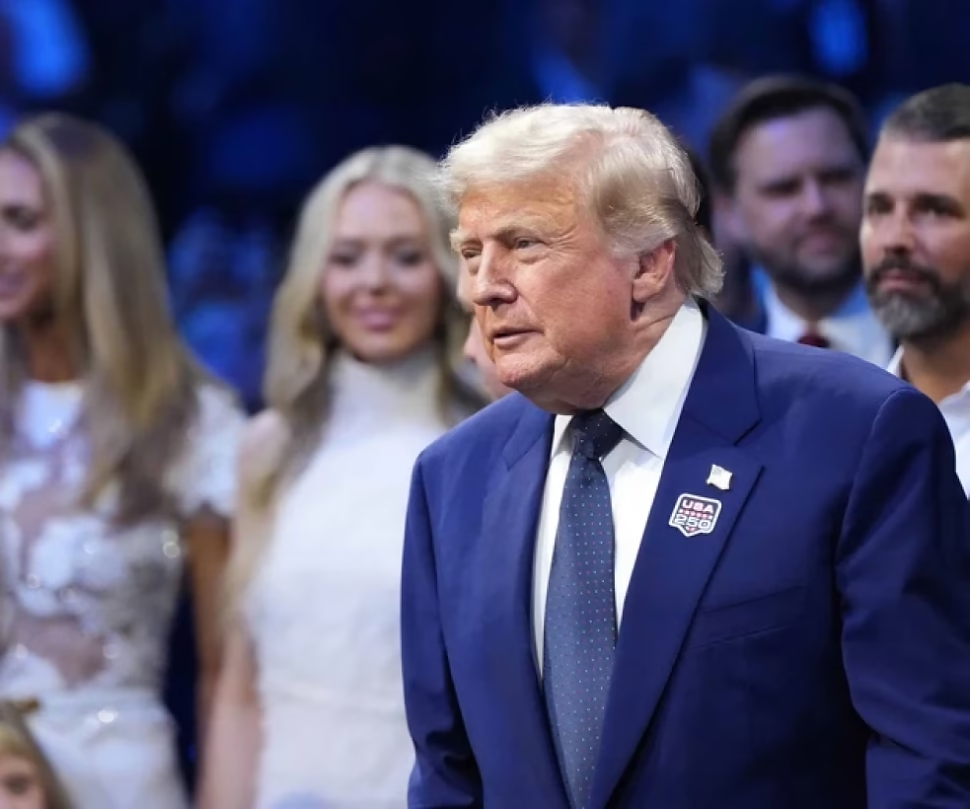
US President Donald Trump landed in Evian-les-Bains, France, on Monday to participate in the G7 summit. He did so after announcing an understanding that, he claimed, would end the conflict with Iran. The announcement occurs in the midst of high international tension and still fragile negotiations.
Although Iranian and White House officials had signaled progress, the situation remained volatile. Especially after new clashes between Israel and Iranian-backed militias in Lebanon. The possible pact seeks to unblock the Strait of Hormuz and reduce pressure in a key region for energy trade.
Expectations about the pact
The agreement comes at a delicate political moment. The war raised oil prices and drew criticism from Washington’s allies. In the G7, European leaders have questioned the lack of prior coordination, although they showed cautious optimism regarding possible regional stability.
One of the central points will be the future of the Strait of Hormuz. A significant portion of the world’s crude oil passes through there. The demining of the area and the conditions for resuming safe maritime transit will also be discussed.
Doubts and next steps
The text of the agreement has not yet been published nor does it have complete details. Legislators and analysts doubt its real scope. Meanwhile, the international community is closely following the talks at the G7. A pact with Iran could redefine the diplomatic dynamics in the Middle East and the global energy balance.