Trump revives accusations against Obama and Russian interference
President Donald Trump this Tuesday reopened the debate on the investigation of Russian interference in the 2016 elections, an issue that marked his first term. He did so following an intelligence report that questions previous findings about Moscow’s role, generating a new political confrontation.
Unfounded accusations and unusual response
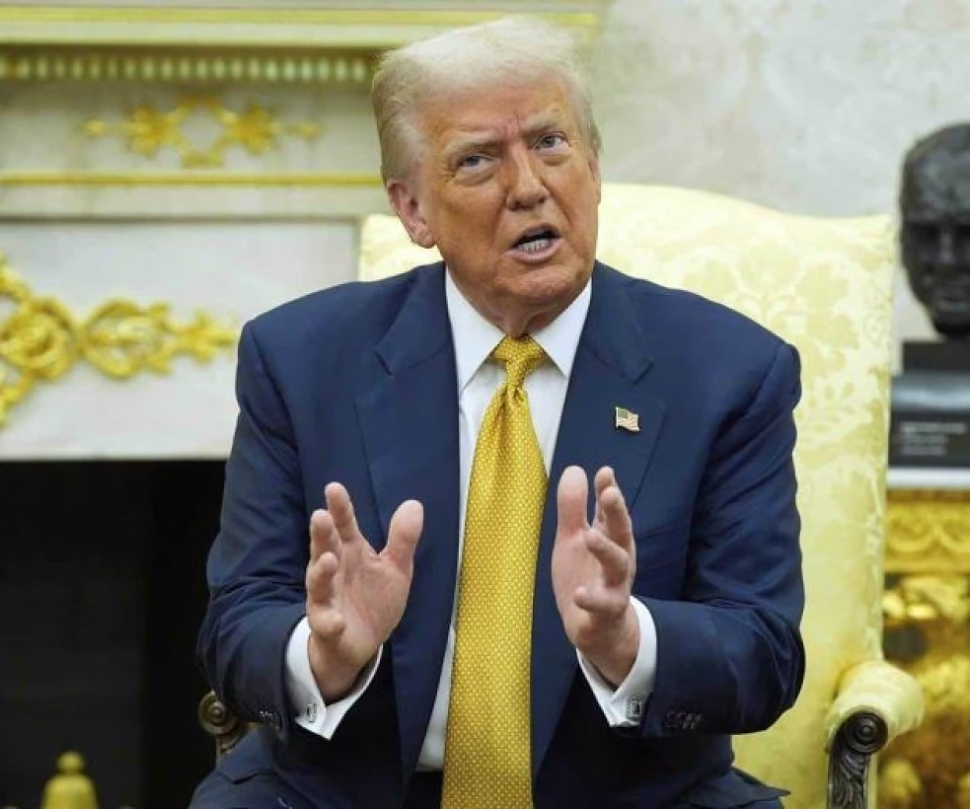
From the Oval Office, Trump repeated unproven claims against former President Barack Obama and other officials, calling their actions “treason at the highest level.” This rhetoric, although recurring in the president, becomes relevant because it coincides with federal investigations against his critics, including former people responsible for the Russia investigation.
Obama’s office, which usually ignores Trump’s attacks, issued an unprecedented response. “These accusations are ridiculous and a weak attempt at distraction,” declared Patrick Rodenbush, spokesman for the former president, pointing out the seriousness of the accusations.
The context: the revised intelligence report
Trump’s speech occurred during the Philippine president’s visit, but its focus was a report from the Director of National Intelligence, Tulsi Gabbard. The document, published on Friday, minimizes Russian interference by highlighting Obama-era emails that rule out Moscow hacking electoral systems to alter votes.
However, experts point out that the report omits other key findings: the hacking operation against Democrats, the leaks coordinated with WikiLeaks and the disinformation campaign on social networks. Bipartisan investigations—such as that of prosecutor Robert Mueller and congressional commissions—had already confirmed these facts.
Political reactions and consequences
Democrats such as Senator Mark Warner accused Gabbard of “politicizing intelligence” to support Trump conspiracy theories. Meanwhile, Republicans close to the president took advantage of the report to question previous narratives, despite the fact that figures from their own party – such as Marco Rubio – endorsed the conclusions about Russia at the time.
The episode reflects a broader strategy: Trump seeks to mobilize his base in the face of challenges such as the Epstein case and internal disagreements. However, analysts warn that these tactics could undermine the credibility of security agencies at a time of complex global threats.
What’s next?
The conflict seems far from being resolved. With elections approaching, both sides are likely to use the issue as a political weapon. Meanwhile, the shadow of foreign interference continues to pose challenges to American democracy.
Are you interested in the impact of these accusations on current politics? Share this analysis with your networks and explore more content on national security and elections on our site.