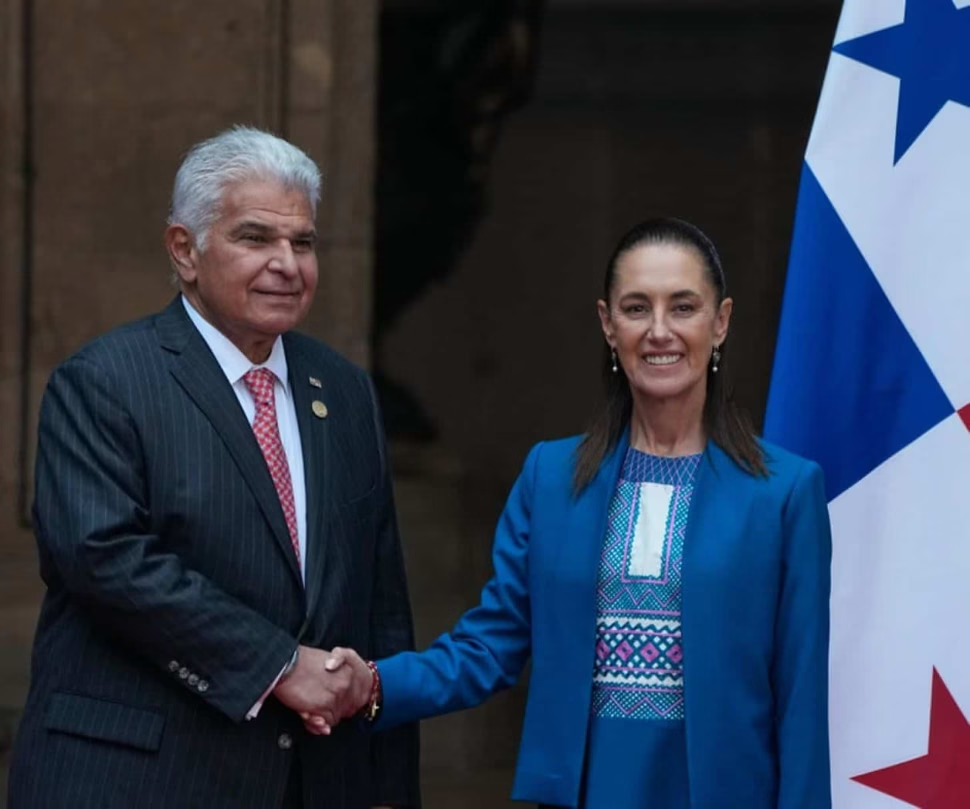
Mexico formalized its support for the neutrality protocol of the Panama Canal, an interoceanic waterway that the Panamanian government seeks to shield against global tensions. President Claudia Sheinbaum announced the decision after meeting with her counterpart José Raúl Mulino at the headquarters of the Panamanian Executive.
Support for Panamanian sovereignty
Sheinbaum stated that he shares with Mulino the conviction that current challenges are faced with collaboration and strengthening the sovereignties and institutions of each country. The neutrality protocol is part of the treaties signed in 1977 by Jimmy Carter and Omar Torrijos. There, the transfer of the canal to Panama was agreed in December 1999, after more than 80 years of US control.
At least 40 countries have joined the protocol. This establishes that the canal will remain safe and open for the peaceful transit of ships of all nations, both in peace and war, and that it will not be the target of reprisals in any armed conflict.
Wider cooperation
In addition to supporting the channel, Sheinbaum and Mulino agreed to strengthen cooperation in trade, agribusiness, security, tourism, investments and infrastructure. Mulino thanked the support for Panamanian sovereignty and described the canal as a “neutral tool of world trade.” He also urged other countries in the region to join the protocol.
Last April, Mulino expressed concern about the increase in detentions of Panamanian ships in Chinese ports, and noted that Panama was left in the middle of tensions between the United States and China.
Strategic importance
The 82-kilometer Panama Canal connects the Atlantic with the Pacific. Approximately 14,000 ships transit through it a year, making it a vital infrastructure for international trade. In light of the conflict in the Middle East and the temporary closure of the Strait of Hormuz, the canal has gained greater relevance as a safe route for global maritime cargo.